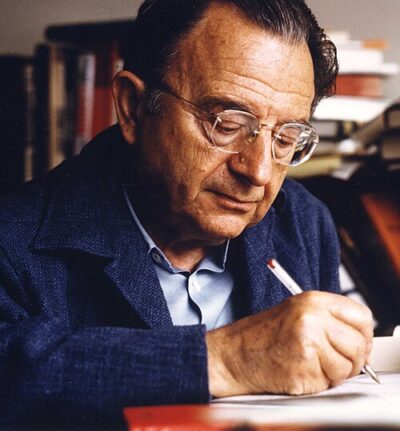
To Have or to Be?
To Have or to Be? is a book by Erich Fromm. It came out in 1976. It was written by Erick Fromm.
- Published
- 1976
- Written by
- Erick Fromm
- Genre
- essay
- Country of origin
- United States
All 6 facts, and where they come from
Facts
6 facts · 0 confirmed by two sources · 0 cited · 6 from one source
Where this comes from
Papalocal keeps its own record. It started from these sources; what each one said is kept here as it was copied, so a change on their side never changes this page by itself. Tap one to read its version.
What Wikidata says · copied November 16, 2026 · revision 2532270552
- Described as
- book by Erich Fromm
- What it is
- written work
- Written by
- Erick Fromm
- Genre
- essay
- Published
- 1976
- Language
- English
- Country of origin
- United States
- Wikipedias with a page
- 11
Wikidata item Q1566734 (wikidata.org/wiki/Q1566734), public domain (CC0). Copied 2026-11-16.
What Wikipedia says · copied November 16, 2026 · revision 1384342514
To Have or to Be? is a 1976 book by psychoanalyst Erich Fromm, in which he differentiates between having and being. It was originally published in the World Perspectives book series edited by Ruth Nanda Anshen for Harper & Row publishing firm.
Fromm writes that modern society has become materialistic and prefers "having" to "being". He mentions the great promise of unlimited happiness, freedom, material abundance, and domination of nature. These hopes reached their highs when the industrial age began. One could feel that there would be unlimited production and hence unlimited consumption. Human beings aspired to be Gods of earth, but this wasn’t really the case. The great promise failed due to the unachievable aims of life, i.e. maximum pleasure and fulfillment of every desire (radical hedonism), and the egotism, selfishness and greed of people. In the industrial age, the development of this economic system was no longer determined by the question of what is good for man, but rather of what is good for the growth of the system. So, the economic system of society served people in such a way in which only their personal interests were intended to impart. The people having unlimited needs and desires like the Roman emperors, the English and French noblemen were the people who got the most out of it.
Society nowadays has completely deviated from its actual path. The materialistic nature of people of "having" has been more developed than "being". Modern industrialization has made great promises, but all these promises are developed to fulfill their interests and increase their possessions. In every mode of life, people should ponder more on the "being" nature and not towards the "having" nature. This is the truth which people deny and thus people of the modern world have completely lost their inner selves. The point of being is more important as everyone is mortal, and thus having of possessions will become useless after their death, because the possessions which are transferred to the life after death, will be what the person actually was inside.
From the Wikipedia article “To Have or to Be?” (en.wikipedia.org/wiki/To_Have_or_to_Be?), by its contributors, under CC BY-SA 4.0 (creativecommons.org/licenses/by-sa/4.0/). Copied 2026-11-16; not changed.
Confirmed Two sources agree. Cited One source, and it names where it got it. One source One source, without a reference of its own. Sources disagree The sources disagree. We show the best-supported value and keep theirs below.