
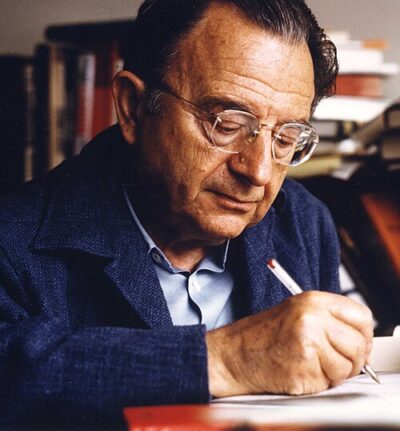
Erick Fromm
Erick Fromm was a German-American sociologist and psychoanalyst. Born March 23, 1900, in Frankfurt. Died March 18, 1980, in Muralto. Known for The Art of Loving, Man for himself and To Have or to Be?. Educated at Goethe University Frankfurt and Heidelberg University. Awards include Humanist of the Year, Nelly Sachs Prize and Goethe Plaque of the City of Frankfurt.
Facts
43 facts · 2 confirmed by two sources · 8 cited · 33 from one source
Where this comes from
Papalocal keeps its own record. It started from these sources; what each one said is kept here as it was copied, so a change on their side never changes this page by itself. Tap one to read its version.
What Wikipedia says · copied November 13, 2026 · revision 1379453981
Erich Seligmann Fromm (, German: [ˈeːʁɪç ˈfʁɔm]; March 23, 1900 – March 18, 1980) was a German-American social psychologist, psychoanalyst, sociologist, humanistic philosopher, and democratic socialist. He was a German Jew who fled the Nazi regime and settled in the United States. He was one of the founders of the William Alanson White Institute of Psychiatry, Psychoanalysis and Psychology in New York City and was associated with the Frankfurt School of critical theory.
- Born, in its opening lines
- March 23, 1900
- Died, in its opening lines
- March 18, 1980
From the Wikipedia article “Erich Fromm” (en.wikipedia.org/wiki/Erich_Fromm), by its contributors, under CC BY-SA 4.0 (creativecommons.org/licenses/by-sa/4.0/). Copied November 13, 2026; not changed.
What Wikidata says · copied November 14, 2026 · revision 2569028497
- Described as
- German-American sociologist and psychoanalyst (1900–1980)
- Other names
- Erick Seligmann Fromm
- Born
- March 23, 1900 · 13 references
- Died
- March 18, 1980 · 11 references
- Born in
- Frankfurt · 3 references
- Died in
- Muralto
- Name at birth
- Erich Seligmann Fromm
- Citizen of
- German Empire; Weimar Republic; Germany · 1 reference; Switzerland · 1 reference
- Occupation
- university teacher; sociologist · 2 references; psychoanalyst · 2 references; writer · 1 reference; psychologist · 3 references; philosopher · 1 reference; economist
- Worked for
- National Autonomous University of Mexico (1949–1973); Columbia University; University of Michigan · 1 reference; New York University (1962–1974) · 1 reference
- Education
- Goethe University Frankfurt; Heidelberg University (–1922); New York University
- Member of
- William Alanson White Institute (1943–)
- Known for
- The Art of Loving; Man for himself; To Have or to Be?; Psychoanalysis and Religion; The Anatomy of Human Destructiveness; The Art of Listening; Escape from Freedom
- Awards
- Humanist of the Year (1966); Nelly Sachs Prize (1979); Goethe Plaque of the City of Frankfurt (1978)
- Field
- philosophy; social psychology · 1 reference; psychoanalysis · 1 reference; social philosophy · 1 reference; ethics · 1 reference; philosophy of religion · 1 reference
- Spouse
- Frieda Fromm-Reichmann (1926–1942); Henny Gurland (1944–1952)
- Website
- https://fromm-online.org
- Wikipedias with a page
- 107
Wikidata item Q57085 (wikidata.org/wiki/Q57085), public domain (CC0). Copied November 14, 2026.
Confirmed Two sources agree. Cited One source, and it names where it got it. One source One source, without a reference of its own. Sources disagree The sources disagree. We show the best-supported value and keep theirs below.
