Toccata and Fugue in D minor, BWV 565
Toccata and Fugue in D minor, BWV 565 is a piece of organ music composed by Johann Sebastian Bach. It came out in 1703.
- Came out
- 1700s (1703–1708)
All 3 facts, and where they come from
Facts
3 facts · 0 confirmed by two sources · 0 cited · 3 from one source
Where this comes from
Papalocal keeps its own record. It started from these sources; what each one said is kept here as it was copied, so a change on their side never changes this page by itself. Tap one to read its version.
What Wikidata says · copied November 17, 2026 · revision 2569053163
- Described as
- piece of organ music composed by Johann Sebastian Bach
- Other names
- Toccata and Fugue in D minor, BWV 565
- What it is
- musical work/composition
- Music by
- Johann Sebastian Bach
- Came out
- 1700s (1703–1708)
- Wikipedias with a page
- 33
Wikidata item Q392734 (wikidata.org/wiki/Q392734), public domain (CC0). Copied 2026-11-17.
What Wikipedia says · copied November 17, 2026 · revision 1385908940
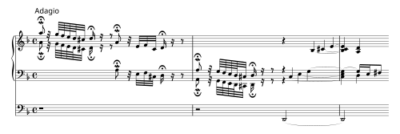
The Toccata and Fugue in D minor, BWV 565, is a piece of organ music from the Baroque period traditionally attributed to the German composer Johann Sebastian Bach. Written between 1704 and the 1750s, it is one of the most famous and widely recognised works in the organ repertoire. The composition opens with an improvisatory, multi-section toccata characterised by dramatic flourishes and parallel octaves, moves into a strict four-voice fugue, and concludes with a free-form recitativo-marked coda. Structurally, it exemplifies the stylus phantasticus typical of the north German organ school.
Because Bach's original autograph score is lost, the piece survives primarily through an undated, mid-18th-century manuscript copy by the scribe Johannes Ringk. The work remained obscure until its first publication in 1833 during the early Bach Revival, largely championed by the composer Felix Mendelssohn, who performed it to critical acclaim in 1840. In the 20th century, its popularity grew significantly through transcriptions for other mediums, most notably Leopold Stokowski's 1927 orchestral arrangement. This version was featured as the opening segment of Walt Disney's 1940 animated feature film Fantasia, securing the piece's place in global popular culture.
The composition has generated diverse, often conflicting musicological analyses. While historically interpreted as program music depicting a storm, its abstract treatment in Fantasia highlighted its qualities as absolute music. Furthermore, its precise origin remains a subject of debate. In 1981, the British musicologist Peter Williams questioned Bach's authorship, suggesting the work might be a later pastiche or an organ arrangement of a lost solo violin piece. While a minority of scholars have proposed alternative creators like Johann Ludwig Krebs or Johann Peter Kellner, prominent authorities such as Christoph Wolff defend the traditional attribution to Bach, and the piece remains firmly positioned under his name in the Bach-Werke-Verzeichnis.
From the Wikipedia article “Toccata and Fugue in D minor, BWV 565” (en.wikipedia.org/wiki/Toccata_and_Fugue_in_D_minor,_BWV_565), by its contributors, under CC BY-SA 4.0 (creativecommons.org/licenses/by-sa/4.0/). Copied 2026-11-17; not changed.
Confirmed Two sources agree. Cited One source, and it names where it got it. One source One source, without a reference of its own. Sources disagree The sources disagree. We show the best-supported value and keep theirs below.
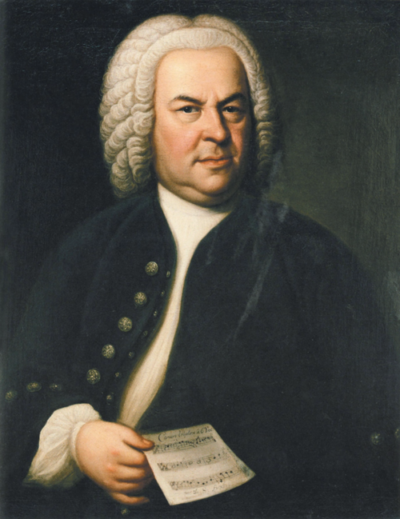
Picture: Romainbehar, via Wikimedia Commons · Public domain