

Tsarskoye Selo Lyceum
Tsarskoye Selo Lyceum is a gymnasium. It was founded in 1811.
- Located in
- Saint Petersburg (1843–1917)
- Country
- Russian Empire
- Founded
- 1811
- What it is
- gymnasium
All 8 facts, and where they come from
Facts
8 facts · 0 confirmed by two sources · 1 cited · 7 from one source
Where this comes from
Papalocal keeps its own record. It started from these sources; what each one said is kept here as it was copied, so a change on their side never changes this page by itself. Tap one to read its version.
What Wikidata says · copied November 17, 2026 · revision 2558189106
- Described as
- gymnasium
- What it is
- gymnasium
- Founded
- 1811
- Ended
- May 29, 1918
- Located in
- Saint Petersburg (1843–1917)
- Country
- Russian Empire; Russia · 1 reference
- Chair
- Vasily Malinovsky (1811–1814); Friedrich von Hauenschild (1814–1816)
- Wikipedias with a page
- 18
Wikidata item Q775909 (wikidata.org/wiki/Q775909), public domain (CC0). Copied 2026-11-17.
What Wikipedia says · copied November 17, 2026 · revision 1383082293
The Imperial Lyceum (Russian: Императорский Царскосельский лицей, romanized: Imperatorskiy Tsarskosel'skiy litsey) in Tsarskoye Selo "Imperial Village" near Saint Petersburg, also known historically as the Imperial Alexander Lyceum after its founder Tsar Alexander I, was an educational institution which was founded in 1811 with the object of educating youths of the best families who would afterwards occupy important posts in the Imperial service.
Its regulations were published on 11 January 1811, but they had received the Imperial sanction on 12 August 1810, when the four-story "new" wing of the Great Palace was appointed for its accommodation. The Tsarskoye Selo Lyceum was opened on 19 October 1811. The first graduates included Alexander Pushkin and Alexander Gorchakov. In January 1844, the Lyceum was moved to St Petersburg.
In May 1918, the Lyceum was closed following order by the Council of People's Commissars.During the 33 years of the Tsarskoye Selo Lyceum's existence at its original location, there were 286 graduates. Over the span of the schools entire existence, the most famous of these, in addition to the above two, were Anton Delvig, Wilhelm Kuchelbecker, Nicholas de Giers, Dmitry Tolstoy, Yakov Grot, Nikolay Danilevsky, Aleksey Lobanov-Rostovsky, Fyodor Shcherbatskoy and Mikhail Saltykov-Shchedrin.
From the Wikipedia article “Tsarskoye Selo Lyceum” (en.wikipedia.org/wiki/Tsarskoye_Selo_Lyceum), by its contributors, under CC BY-SA 4.0 (creativecommons.org/licenses/by-sa/4.0/). Copied 2026-11-17; not changed.
Confirmed Two sources agree. Cited One source, and it names where it got it. One source One source, without a reference of its own. Sources disagree The sources disagree. We show the best-supported value and keep theirs below.
Picture: Wikimedia Commons: Liceum building in Tsarskoe Selo 02.jpg · See Commons file page
People connected 6
Studied here
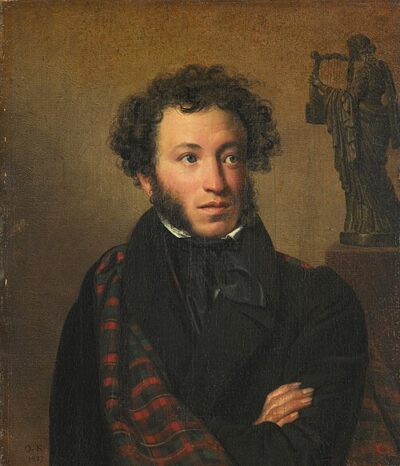 Alexander Pushkin (1811–1817)Russian poet, playwright, and novelist (1799–1837)
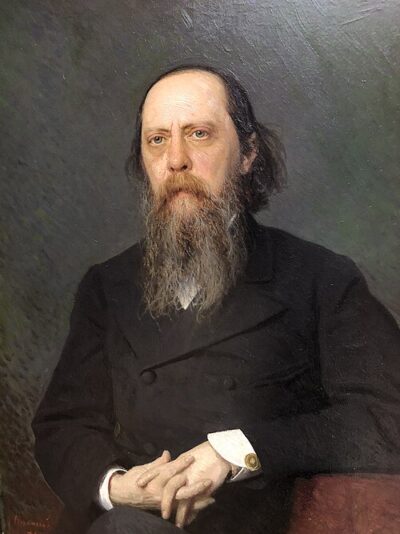 Mikhail Saltykov-ShchedrinRussian writer, journalist, plawright and satirist
 Alexander GorchakovRussian diplomat, minister, chancellor (1798-1883)
 Sergey SazonovRussian statesman and diplomat (1860-1927)
 Anton Delvig (1811–1817)Russian journalist and poet (1798-1831)
 Nikolay DanilevskyRussian academic (1822-1885)
