Turing machine
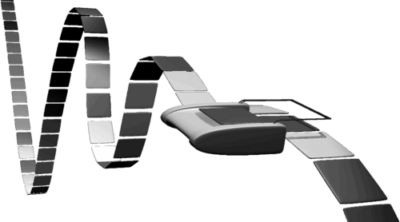
Turing machine is an abstract computation model; mathematical model of computation that defines an abstract machine which manipulates symbols on a strip of tape according to a table of rules. It came out in 1936.
- Came out
- 1936
All 4 facts, and where they come from
Facts
4 facts · 0 confirmed by two sources · 0 cited · 4 from one source
Where this comes from
Papalocal keeps its own record. It started from these sources; what each one said is kept here as it was copied, so a change on their side never changes this page by itself. Tap one to read its version.
What Wikidata says · copied November 17, 2026 · revision 2560714296
- Described as
- abstract computation model; mathematical model of computation that defines an abstract machine which manipulates symbols on a strip of tape according to a table of rules
- Other names
- deterministic Turing machine
- What it is
- conceptual model; model of computation
- Came out
- 1936
- Named after
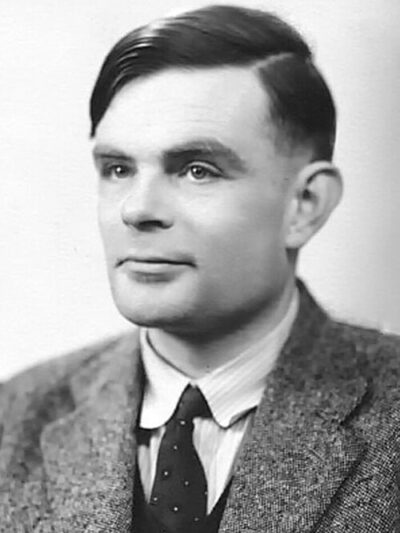
- Alan Turing
- Wikipedias with a page
- 75
Wikidata item Q163310 (wikidata.org/wiki/Q163310), public domain (CC0). Copied 2026-11-17.
What Wikipedia says · copied November 17, 2026 · revision 1385514535
A Turing machine is a mathematical model of computation describing an abstract machine that manipulates symbols on a strip of tape according to a table of rules. Despite the model's simplicity, it is capable of implementing any computer algorithm.
The machine operates on an infinite memory tape divided into discrete cells, each of which can hold a single symbol drawn from a finite set of symbols called the alphabet of the machine. It has a "head" that, at any point in the machine's operation, is positioned over one of these cells, and a "state" selected from a finite set of states. At each step of its operation, the head reads the symbol in its cell. Then, based on the symbol and the machine's own present state, the machine writes a symbol into the same cell, and moves the head one step to the left or the right, or halts the computation. The choice of which replacement symbol to write, which direction to move the head, and whether to halt is based on a finite table that specifies what to do for each combination of the current state and the symbol that is read. As with a real computer program, it is possible for a Turing machine to go into an infinite loop which will never halt.
The Turing machine was invented in 1936 by Alan Turing, who called it an "a-machine" (automatic machine). It was Turing's doctoral advisor, Alonzo Church, who later coined the term "Turing machine" in a review. With this model, Turing was able to answer two questions in the negative:Does a machine exist that can determine whether any arbitrary machine on its tape is "circular" (e.g., freezes, or fails to continue its computational task)?
Does a machine exist that can determine whether any arbitrary machine on its tape ever prints a given symbol?
Thus by providing a mathematical description of a very simple device capable of arbitrary computations, he was able to prove properties of computation in general—and in particular, the uncomputability of the Entscheidungsproblem, or 'decision problem' (whether every mathematical statement is provable or disprovable).
Turing machines proved the existence of fundamental limitations on the power of mechanical computation.
While they can express arbitrary computations, their minimalist design makes them too slow for computation in practice: real-world computers are based on different designs that, unlike Turing machines, use random-access memory.
Turing completeness is the ability for a model of computation or a system of instructions to simulate a Turing machine. A programming language that is Turing complete is theoretically capable of expressing all tasks accomplishable by computers; nearly all programming languages are Turing complete if the limitations of finite memory are ignored.
From the Wikipedia article “Turing machine” (en.wikipedia.org/wiki/Turing_machine), by its contributors, under CC BY-SA 4.0 (creativecommons.org/licenses/by-sa/4.0/). Copied 2026-11-17; not changed.
Confirmed Two sources agree. Cited One source, and it names where it got it. One source One source, without a reference of its own. Sources disagree The sources disagree. We show the best-supported value and keep theirs below.
Picture: Schadel (http://turing.izt.uam.mx), via Wikimedia Commons · Public domain