UNESCO
UNESCO is a specialised agency of the United Nations for education, sciences, and culture. It was founded in 1945. Its headquarters are in Paris. It won the Peabody Awards.
- Founded
- November 16, 1945
- Headquarters
- Paris (1958–)
- Country
- France
All 10 facts, and where they come from
Facts
10 facts · 0 confirmed by two sources · 6 cited · 4 from one source
Where this comes from
Papalocal keeps its own record. It started from these sources; what each one said is kept here as it was copied, so a change on their side never changes this page by itself. Tap one to read its version.
What Wikidata says · copied November 17, 2026 · revision 2569964917
- Described as
- specialised agency of the United Nations for education, sciences, and culture
- Other names
- United Nations Educational, Scientific and Cultural Organization (UNESCO), United Nations Educational, Scientific and Cultural Organization, Unesco
- What it is
- specialized agency of the United Nations · 2 references; intergovernmental organization
- Founded
- November 16, 1945 · 2 references
- Headquarters
- Paris (1958–)
- Country
- France · 1 reference
- Chair
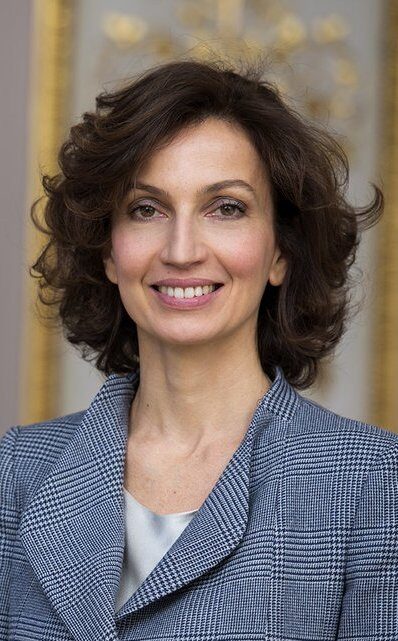
- Audrey Azoulay (2017–2025) · 1 reference; Irina Bokova (2009–2017) · 1 reference
- Part of
- United Nations · 1 reference
- Awards
- Peabody Awards (1958)
- Official website
- https://unesco.org/en
- Wikipedias with a page
- 223
Wikidata item Q7809 (wikidata.org/wiki/Q7809), public domain (CC0). Copied 2026-11-17.
What Wikipedia says · copied November 17, 2026 · revision 1385964548
The United Nations Educational, Scientific and Cultural Organization (UNESCO ) is a specialized agency of the United Nations (UN) with the aim of promoting world peace and security through international cooperation in education, arts, sciences and culture. It has 194 member states and 11 associate members, as well as partners in the non-governmental, intergovernmental and private sector. Headquartered in Paris, France, UNESCO has 53 regional field offices and 199 national commissions.
UNESCO was founded in 1945 as the successor to the League of Nations' International Committee on Intellectual Cooperation. UNESCO's founding mission, which was shaped by the events of World War II, is to advance peace, sustainable development and human rights by facilitating collaboration and dialogue among nations. It pursues this objective through five major programme areas: education, natural sciences, social/human sciences, culture, and communication/information. UNESCO sponsors projects that improve literacy, provide technical training and education, advance science, protect independent media and press freedom, preserve regional and cultural history, and promote cultural diversity. The organization prominently helps establish and secure World Heritage Sites of cultural and natural importance.
UNESCO is governed by the General Conference composed of member states and associate members, which meets biannually to set the agency's programmes and budget. It also elects members of the executive board, which manages UNESCO's work, and appoints every four years a Director-General, who is the UNESCO chief administrator.
From the Wikipedia article “UNESCO” (en.wikipedia.org/wiki/UNESCO), by its contributors, under CC BY-SA 4.0 (creativecommons.org/licenses/by-sa/4.0/). Copied 2026-11-17; not changed.
Confirmed Two sources agree. Cited One source, and it names where it got it. One source One source, without a reference of its own. Sources disagree The sources disagree. We show the best-supported value and keep theirs below.
People connected 7
Worked here
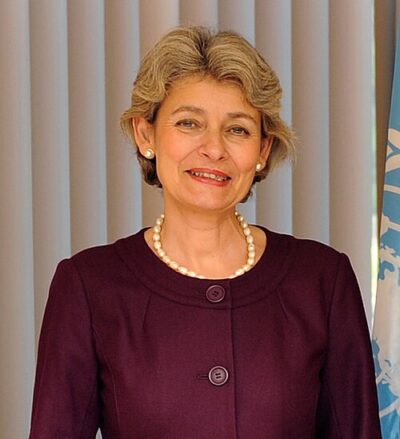 Irina BokovaBulgarian diplomat
 Jacob Bronowski (1947–1950)Polish-born British mathematician (1908–1974)
 Juan GelmanArgentine poet (1930-2014)
 Fernando SolanasArgentine film director, screenwriter and politician (1936–2020)
Amadou Mahtar M'Bow (1974–1987)Senegalese politician (1921–2024)
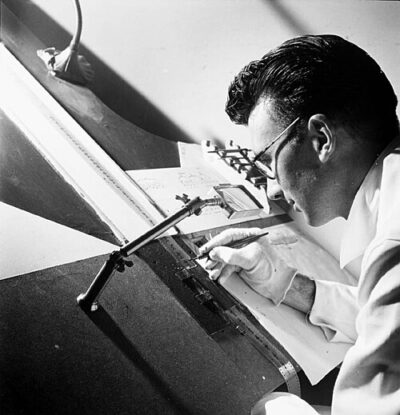 Norman McLarenScottish Canadian animator (1914-1987)