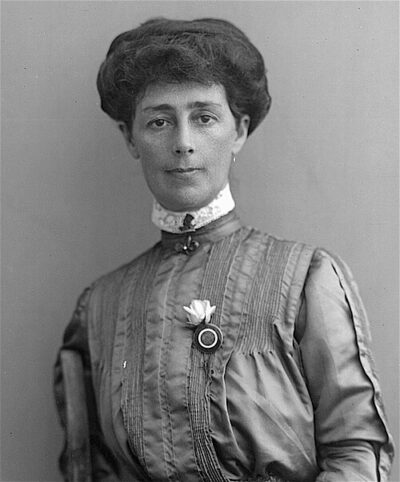
United Council for State Suffrage
United Council for State Suffrage is A council uniting women's suffrage lobby groups in Victoria, Australia (1894–1908).
- Founded
- 1894
- Country
- Australia
All 6 facts, and where they come from
Facts
6 facts · 0 confirmed by two sources · 1 cited · 5 from one source
Where this comes from
Papalocal keeps its own record. It started from these sources; what each one said is kept here as it was copied, so a change on their side never changes this page by itself. Tap one to read its version.
What Wikidata says · copied November 18, 2026 · revision 2414514134
- Described as
- A council uniting women's suffrage lobby groups in Victoria, Australia (1894–1908)
- Other names
- United Council for Woman's Suffrage, United Council for Woman Suffrage
- What it is
- organization
- Founded
- 1894 · 1 reference
- Ended
- 1908
- Country
- Australia
- Field
- feminism; active suffrage
- Wikipedias with a page
- 1
Wikidata item Q133281663 (wikidata.org/wiki/Q133281663), public domain (CC0). Copied 2026-11-18.
What Wikipedia says · copied November 18, 2026 · revision 1383427396
The United Council for State Suffrage (UCSS), formerly the United Council for Woman Suffrage, was founded in the Colony of Victoria, Australia, in 1894 by Annette Bear-Crawford, to unite the existing groups who were fighting for women's suffrage in Victoria, and to create a coordinated effort to agitate for legislative change. The UCSS was an umbrella organisation that did not disrupt the efforts, or broader agendas of the individual groups, but brought them together on the singular focus of gaining the vote for women first in the Colony of Victoria, and then after the Federation of Australia, the State of Victoria.
From the Wikipedia article “United Council for State Suffrage” (en.wikipedia.org/wiki/United_Council_for_State_Suffrage), by its contributors, under CC BY-SA 4.0 (creativecommons.org/licenses/by-sa/4.0/). Copied 2026-11-18; not changed.
Confirmed Two sources agree. Cited One source, and it names where it got it. One source One source, without a reference of its own. Sources disagree The sources disagree. We show the best-supported value and keep theirs below.