

United States Coast Guard
The United States Coast Guard is a security and rescue military service branch for U.S. waters. It was founded in 1790 by Alexander Hamilton.
- Founded
- August 4, 1790
- Founded by
- Alexander Hamilton
- Country
- United States
All 8 facts, and where they come from
Facts
8 facts · 0 confirmed by two sources · 1 cited · 7 from one source
Where this comes from
Papalocal keeps its own record. It started from these sources; what each one said is kept here as it was copied, so a change on their side never changes this page by itself. Tap one to read its version.
What Wikidata says · copied November 20, 2026 · revision 2565598561
- Described as
- security and rescue military service branch for U.S. waters
- Other names
- USCG, US Coast Guard, U.S. Coast Guard, United States Coast Guard, USCG
- What it is
- coast guard; federal law enforcement agency of the United States; sea rescue organization
- Founded
- August 4, 1790 · 1 reference
- Founded by
- Alexander Hamilton
- Country
- United States · 1 reference
- Part of
- United States Department of Homeland Security · 1 reference
- Official website
- https://www.uscg.mil/
- Wikipedias with a page
- 48
Wikidata item Q11224 (wikidata.org/wiki/Q11224), public domain (CC0). Copied 2026-11-20.
What Wikipedia says · copied November 20, 2026 · revision 1386290901
The United States Coast Guard (USCG) is the maritime security, search and rescue, and law enforcement service branch of the United States Armed Forces. It is one of the country's eight uniformed services. The service is a maritime, military, multi-mission service unique among the United States military branches for having a maritime law enforcement mission with jurisdiction in both domestic and international waters and a federal regulatory agency mission as part of its duties. It is the largest coast guard in the world.
The U.S. Coast Guard protects the United States' borders and economic and security interests abroad; and defends its sovereignty by safeguarding sea lines of communication and commerce across U.S. territorial waters and its exclusive economic zone. Like its United States Navy sibling, the U.S. Coast Guard maintains a global presence with permanently-assigned personnel throughout the world and forces routinely deploying to both littoral and blue-water regions. As a humanitarian service, it provides emergency response and disaster management for a wide range of human-made and natural catastrophic incidents in the U.S. and throughout the world.
The U.S. Coast Guard operates under the U.S. Department of Homeland Security during peacetime. During times of war, it can be transferred in whole or in part to the U.S. Department of the Navy under the Department of Defense by order of the U.S. president or by act of Congress. Prior to its transfer to Homeland Security, it operated under the Department of Transportation from 1967 to 2003 and the Department of the Treasury from its inception until 1967. A congressional authority transfer to the Navy has only happened once: in 1917, during World War I. As for World War II, the U.S. Coast Guard was transferred to the Navy by President Franklin Roosevelt one month before the country's entry into the war.
The U.S. Coast Guard was formed by a merger of the U.S. Revenue Cutter Service and the U.S. Life-Saving Service on 28 January 1915, under the Department of the Treasury. The Revenue Cutter Service was created by Congress as the Revenue-Marine on 4 August 1790 at the request of Alexander Hamilton, and is therefore the oldest continuously operating naval service of the United States. As secretary of the treasury, Hamilton headed the Revenue-Marine, whose original purpose was collecting customs duties at U.S. seaports. By the 1860s, the service was known as the U.S. Revenue Cutter Service and the term Revenue-Marine gradually fell into disuse.
In 1939, the U.S. Lighthouse Service was also merged into the U.S. Coast Guard. As one of the country's six armed services, the U.S. Coast Guard and its predecessor have participated in every major U.S. war since 1790, from the Quasi-War with France to the Global War on Terrorism.
As of December 2021, the U.S. Coast Guard's authorized force strength is 44,500 active duty personnel and 7,000 reservists. The service's force strength also includes 8,577 full-time civilian federal employees and 21,000 uniformed auxiliarists of the U.S. Coast Guard Auxiliary. The service maintains an extensive fleet of roughly 250 coastal and ocean-going cutters, patrol ships, buoy tenders, tugs, and icebreakers; as well as nearly 2,000 small boats and specialized craft. It also maintains an aviation division consisting of more than 200 helicopters and fixed-wing aircraft. While the U.S. Coast Guard is the second smallest of the U.S. military service branches in terms of membership, the service by itself is the world's 12th largest naval force.
From the Wikipedia article “United States Coast Guard” (en.wikipedia.org/wiki/United_States_Coast_Guard), by its contributors, under CC BY-SA 4.0 (creativecommons.org/licenses/by-sa/4.0/). Copied 2026-11-20; not changed.
Confirmed Two sources agree. Cited One source, and it names where it got it. One source One source, without a reference of its own. Sources disagree The sources disagree. We show the best-supported value and keep theirs below.
Picture: Wikimedia Commons: 04MAR - Formation Flight Nikon -18 (25602584545).jpg · See Commons file page
People connected 8
Military branch
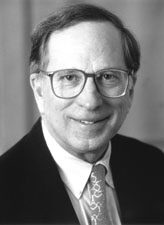 Sam Nunn (1959–1960)American lawyer and politician (born 1938)
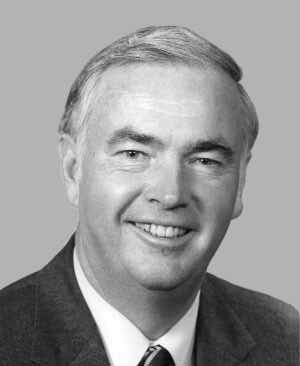 Frank Murkowski (1955–1956)American politician in Alaska (born 1933)
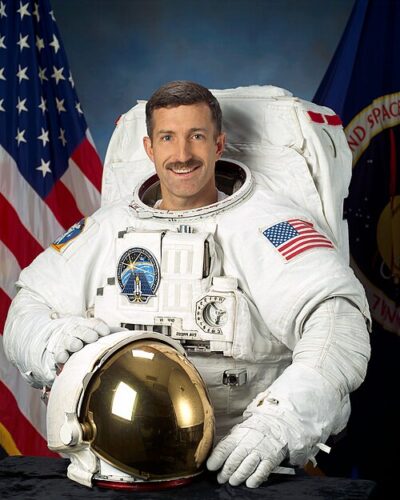 Daniel C. BurbankAmerican astronaut
 Joe SimonAmerican comic book writer, artist, editor, and publisher (1913–2011)
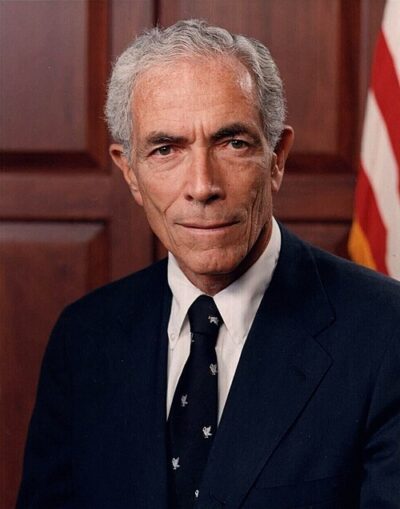 Claiborne Pell (1941–1945)American politician (1918–2009)
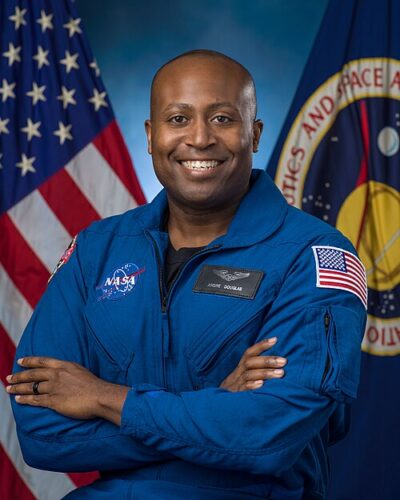 Andre DouglasAmerican engineer and NASA astronaut
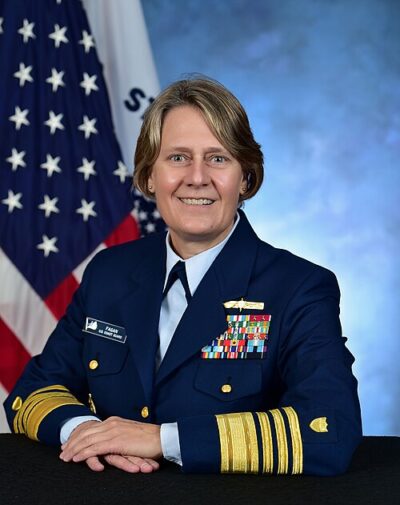 Linda L. FaganAmerican Coast Guard admiral
 Howard Coble (1952–1978)American politician (1931-2015)
