University of Baltimore
The University of Baltimore is a public university. It was founded in 1925. It has 761 employees (2020). 3,710 students study there (2021).
- Located in
- Baltimore
- Country
- United States
- Founded
- 1925
- Students
- 3,710 (2021)
- What it is
- public university
All 11 facts, and where they come from
Facts
11 facts · 0 confirmed by two sources · 9 cited · 2 from one source
Where this comes from
Papalocal keeps its own record. It started from these sources; what each one said is kept here as it was copied, so a change on their side never changes this page by itself. Tap one to read its version.
What Wikidata says · copied November 16, 2026 · revision 2511570733
- Described as
- namesake university of Baltimore, Maryland
- Other names
- UB, UBalt
- What it is
- public university; public educational institution of the United States (1975–) · 2 references
- Founded
- 1925 · 3 references
- Headquarters
- Baltimore
- Located in
- Baltimore · 3 references
- Country
- United States · 4 references
- Chair
- Kurt Schmoke (2014–) · 2 references
- Employees
- 761 (2020) · 1 reference
- Part of
- University System of Maryland (1988–) · 3 references
- Students
- 4,169 (2020) · 1 reference
- Official website
- http://www.ubalt.edu · 1 reference
- Wikipedias with a page
- 37
Wikidata item Q7895109 (wikidata.org/wiki/Q7895109), public domain (CC0). Copied 2026-11-16.
What Wikipedia says · copied November 16, 2026 · revision 1384504141
The University of Baltimore (UBalt, UB) is a public university in Baltimore, Maryland, United States. It is part of the University System of Maryland. UBalt consists of four colleges in applied arts and sciences, business, law, and public affairs. The University of Baltimore School of Law is one of Maryland's two law schools.
From the Wikipedia article “University of Baltimore” (en.wikipedia.org/wiki/University_of_Baltimore), by its contributors, under CC BY-SA 4.0 (creativecommons.org/licenses/by-sa/4.0/). Copied 2026-11-16; not changed.
Confirmed Two sources agree. Cited One source, and it names where it got it. One source One source, without a reference of its own. Sources disagree The sources disagree. We show the best-supported value and keep theirs below.
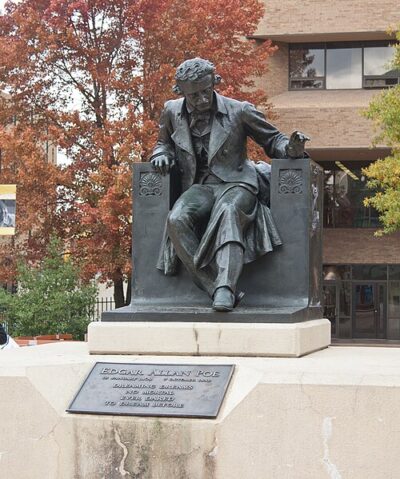
Picture: Frederic C. Chalfant, via Wikimedia Commons · Public domain