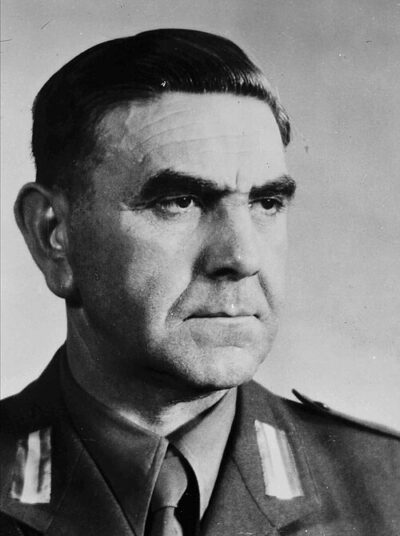
Ustaše
Ustaše is a Croatian UK. It was founded in 1929 by Ante Pavelić. Its headquarters are in Turin. It stands for clerical fascism, antisemitism and anti-Serb sentiment.
- Country
- Kingdom of Yugoslavia
- Founded
- January 7, 1929
- Ideology
- clerical fascism
- Chair
- Ante Pavelić
All 15 facts, and where they come from
Facts
15 facts · 0 confirmed by two sources · 0 cited · 15 from one source
Where this comes from
Papalocal keeps its own record. It started from these sources; what each one said is kept here as it was copied, so a change on their side never changes this page by itself. Tap one to read its version.
What Wikidata says · copied November 17, 2026 · revision 2557912866
- Described as
- Croatian UK
- Other names
- Ustaša – Croatian Revolutionary Movement, Ustashe, Ustashas, Ustashi, Rise – Croatian Revolutionary Movement, Arise – Croatian Revolutionary Movement
- What it is
- political organization; terrorist organization
- Comes after
- Party of Rights
- Followed by
- Crusaders
- Founded
- January 7, 1929
- Ended
- May 25, 1945
- Founded by
- Ante Pavelić
- Headquarters
- Turin (–1941)
- Country
- Kingdom of Yugoslavia; Independent State of Croatia
- Chair
- Ante Pavelić
- Ideology
- clerical fascism; antisemitism; anti-Serb sentiment; anti-Romanyism
- Wikipedias with a page
- 58
Wikidata item Q151179 (wikidata.org/wiki/Q151179), public domain (CC0). Copied 2026-11-17.
What Wikipedia says · copied November 17, 2026 · revision 1383724656
The Ustaše (pronounced [ûstaʃe]; anglicised as Ustasha or Ustashe) was a Croatian fascist and ultranationalist organization active, as one organization, between 1929 and 1945. It was formally known as the Ustaša – Croatian Revolutionary Movement (Croatian: Ustaša – Hrvatski revolucionarni pokret). From its inception and before the Second World War, the organization engaged in a series of terrorist activities against the Kingdom of Yugoslavia. It collaborated with IMRO to assassinate King Alexander I of Yugoslavia in 1934. During World War II in Yugoslavia, the Ustaše went on to perpetrate the Holocaust and genocide against its Jewish, Serb and Roma populations, killing hundreds of thousands of Serbs, Jews, Roma, as well as Muslim and Croat political dissidents. The ideology of the movement combined aspects of Clerical fascism (particularly derived from Roman Catholicism) and Croatian ultranationalism.
The Ustaše supported the creation of a Greater Croatia. The movement advocated a racially "pure" Croatia and promoted genocide against Serbs—due to the Ustaše's anti-Serb sentiment—and Holocaust against Jews and Roma via Nazi racial theory, and persecution of anti-fascist or dissident Croats and Bosniaks. They viewed the Bosniaks as "Muslim Croats" sparing their prosecution. After the invasion of Yugoslavia in April 1941, the Ustaše came to power with the Independent State of Croatia (NDH), established as an Italo-German quasi-protectorate in which German influence steadily increased over time as Italian influence waned. The state owed its creation and continued existence to the two Axis powers. The Ustaše Militia was its military wing. With the German surrender, end of World War II in Europe, and the establishment of socialist Yugoslavia in 1945, the Ustaše movement collapsed.
The militarily weak Ustaše failed to ever garner significant support among Croats. Many of those that did initially support the regime in the interwar period – who felt oppressed by the Serb-led Yugoslavia, were alienated by its brutality.
From the Wikipedia article “Ustaše” (en.wikipedia.org/wiki/Ustaše), by its contributors, under CC BY-SA 4.0 (creativecommons.org/licenses/by-sa/4.0/). Copied 2026-11-17; not changed.
Confirmed Two sources agree. Cited One source, and it names where it got it. One source One source, without a reference of its own. Sources disagree The sources disagree. We show the best-supported value and keep theirs below.