van der Waals equation
Van der Waals equation is an equation of state that generalizes the ideal gas law.
All 2 facts, and where they come from
Facts
2 facts · 0 confirmed by two sources · 0 cited · 2 from one source
Where this comes from
Papalocal keeps its own record. It started from these sources; what each one said is kept here as it was copied, so a change on their side never changes this page by itself. Tap one to read its version.
What Wikidata says · copied November 17, 2026 · revision 2559098600
- Described as
- equation of state that generalizes the ideal gas law
- Other names
- Van der Waals equation of state
- What it is
- gas law
- Named after
- Johannes Diderik van der Waals
- Wikipedias with a page
- 45
Wikidata item Q254329 (wikidata.org/wiki/Q254329), public domain (CC0). Copied 2026-11-17.
What Wikipedia says · copied November 17, 2026 · revision 1386070733
The van der Waals equation is an equation of state that relates the pressure, molar volume, and temperature in fluids. It describes both the liquid and gas states. It was the first successful thermodynamic model to treat fluids as being composed of molecules with finite size and with intermolecular interactions.
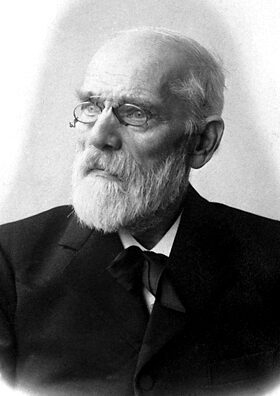
The equation is named after Dutch physicist Johannes Diderik van der Waals, who first derived it in 1873 as part of his doctoral thesis. Van der Waals based the equation on the idea that fluids are composed of discrete particles, which few scientists believed existed. However, the equation accurately predicted the behavior of a fluid around its critical point, which had been discovered a few years earlier. Its qualitative and quantitative agreement with experiments ultimately cemented its acceptance in the scientific community. These accomplishments won Van der Waals the 1910 Nobel Prize in Physics. Today the equation is recognized as an important model of phase change in fluids.
The van der Waals equation represents fluids whose intermolecular potential can be approximated as hard repulsion with weak attraction at a distance.
From the Wikipedia article “Van der Waals equation” (en.wikipedia.org/wiki/Van_der_Waals_equation), by its contributors, under CC BY-SA 4.0 (creativecommons.org/licenses/by-sa/4.0/). Copied 2026-11-17; not changed.
Confirmed Two sources agree. Cited One source, and it names where it got it. One source One source, without a reference of its own. Sources disagree The sources disagree. We show the best-supported value and keep theirs below.