Virgin of the Rocks
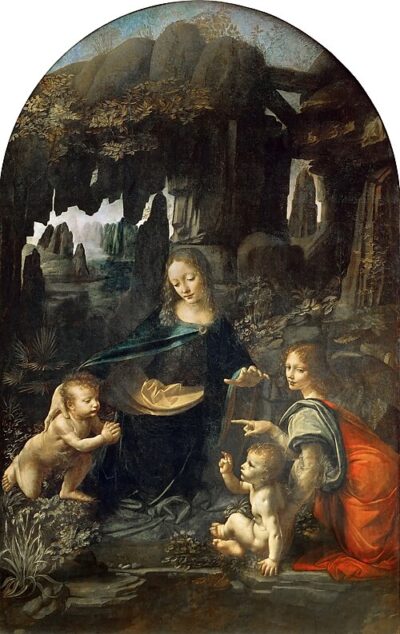
Virgin of the Rocks is a subject of two paintings by Leonardo da Vinci.
- Created by
- Leonardo da Vinci
- Genre
- religious painting
All 4 facts, and where they come from
Facts
4 facts · 0 confirmed by two sources · 1 cited · 3 from one source
Where this comes from
Papalocal keeps its own record. It started from these sources; what each one said is kept here as it was copied, so a change on their side never changes this page by itself. Tap one to read its version.
What Wikidata says · copied November 17, 2026 · revision 2558638449
- Described as
- subject of two paintings by Leonardo da Vinci
- Other names
- La virgen de las rocas, Madonna de las rocas, La madonna de las rocas, Virgin of the rocks, The Virgin of the Rocks
- What it is
- group of paintings · 1 reference; artistic theme
- Created by
- Leonardo da Vinci
- Genre
- religious painting
- Wikipedias with a page
- 48
Wikidata item Q269342 (wikidata.org/wiki/Q269342), public domain (CC0). Copied 2026-11-17.
What Wikipedia says · copied November 17, 2026 · revision 1375400186
The Virgin of the Rocks (Italian: Vergine delle rocce), sometimes the Madonna of the Rocks, is the name of two paintings by the Italian Renaissance artist Leonardo da Vinci, of the same subject, with a composition which is identical except for several significant details. The version generally considered the prime version, the earlier of the two, is unrestored and hangs in the Louvre in Paris. The other, which was restored between 2008 and 2010, hangs in the National Gallery, London. The works are often known as the Louvre Virgin of the Rocks and London Virgin of the Rocks respectively. The paintings are both nearly 2 metres (over 6 feet) high and are painted in oils. Both were originally painted on wooden panels, but the Louvre version has been transferred to canvas.
Both paintings show the Virgin Mary and child Jesus with the infant John the Baptist and an angel Uriel, in a rocky setting which gives the paintings their usual name. The significant compositional differences are in the gaze and right hand of the angel. There are many minor ways in which the works differ, including the colours, the lighting, the flora, and the way in which sfumato has been used. Although the date of an associated commission is documented, the complete histories of the two paintings are unknown, leading to speculation about which of the two is earlier.
Two further paintings are associated with the commission: side panels each containing an angel playing a musical instrument and completed by associates of Leonardo. These are both in the National Gallery, London.
From the Wikipedia article “Virgin of the Rocks” (en.wikipedia.org/wiki/Virgin_of_the_Rocks), by its contributors, under CC BY-SA 4.0 (creativecommons.org/licenses/by-sa/4.0/). Copied 2026-11-17; not changed.
Confirmed Two sources agree. Cited One source, and it names where it got it. One source One source, without a reference of its own. Sources disagree The sources disagree. We show the best-supported value and keep theirs below.
Picture: Leonardo da Vinci, via Wikimedia Commons · Public domain