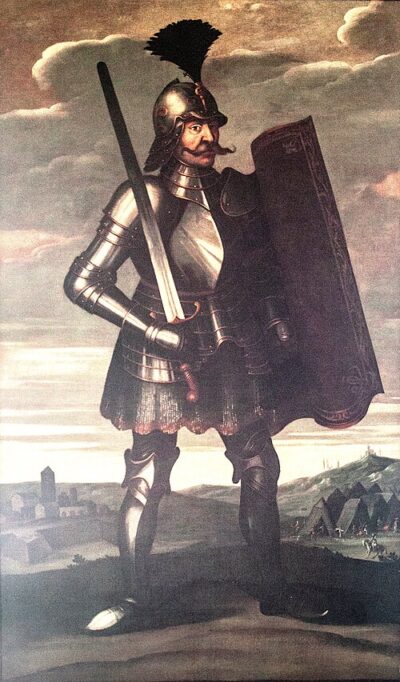
Voivode of Transylvania
Voivode of Transylvania is the highest-ranking official in Transylvania within the Kingdom of Hungary from the 12th century to the 16th century.
- Country
- Kingdom of Hungary
- Created
- 11th century
All 4 facts, and where they come from
Facts
4 facts · 0 confirmed by two sources · 0 cited · 4 from one source
Where this comes from
Papalocal keeps its own record. It started from these sources; what each one said is kept here as it was copied, so a change on their side never changes this page by itself. Tap one to read its version.
What Wikidata says · copied November 17, 2026 · revision 2493587152
- Described as
- the highest-ranking official in Transylvania within the Kingdom of Hungary from the 12th century to the 16th century
- What it is
- historical position
- Created
- 11th century
- Ended
- 1588
- Country
- Kingdom of Hungary
- Wikipedias with a page
- 7
Wikidata item Q1416040 (wikidata.org/wiki/Q1416040), public domain (CC0). Copied 2026-11-17.
What Wikipedia says · copied November 17, 2026 · revision 1344783930
The Voivode of Transylvania (German: Vojwode von Siebenbürgen; Hungarian: erdélyi vajda; Latin: voivoda Transsylvaniae; Romanian: voievodul Transilvaniei) was the highest-ranking official in Transylvania within the Kingdom of Hungary from the 12th century to the 16th century. Appointed by the monarchs, the voivodes – themselves also the heads or ispáns of Fehér County – were the superiors of the ispáns of all the other counties in the province.
They had wide-ranging administrative, military and judicial powers, but their jurisdiction never covered the whole province. The Saxon and Székely communities – organized into their own districts or "seats" from the 13th century – were independent of the voivodes. The kings also exempted some Transylvanian towns and villages from their authority over the centuries. Even so, the Voivodeship of Transylvania "was the largest single administrative entity" in the entire kingdom in the 15th century. Voivodes enjoyed income from the royal estates attached to their office, but the right to "grant lands, collect taxes and tolls, or coin money" was reserved for the monarchs. Although Roland Borsa, Ladislaus Kán and some other voivodes rebelled against the sovereign, most remained faithful royal officials.
Because of the gradual disintegration of the medieval Kingdom of Hungary in the 16th century, the last voivodes of Transylvania, who came from the Báthory family, ceased to be high-ranking officials. Instead they were the heads of state, although under Ottoman suzerainty, of a new principality emerging in the eastern territories of the kingdom. Accordingly, Stephen Báthory, the voivode elected by the Diet of the new realm, officially abandoned the title of voivode and adopted that of prince in 1576, upon his election as King of Poland.
From the Wikipedia article “Voivode of Transylvania” (en.wikipedia.org/wiki/Voivode_of_Transylvania), by its contributors, under CC BY-SA 4.0 (creativecommons.org/licenses/by-sa/4.0/). Copied 2026-11-17; not changed.
Confirmed Two sources agree. Cited One source, and it names where it got it. One source One source, without a reference of its own. Sources disagree The sources disagree. We show the best-supported value and keep theirs below.