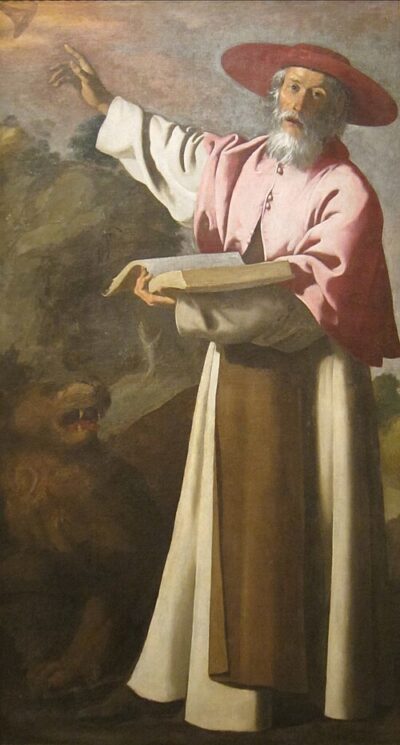
Vulgate
Vulgate is a 4th-century Latin translation of the Bible mainly by Jerome.
- Released
- 4th century
- Written by
- Jerome
All 4 facts, and where they come from
Facts
4 facts · 0 confirmed by two sources · 0 cited · 4 from one source
Where this comes from
Papalocal keeps its own record. It started from these sources; what each one said is kept here as it was copied, so a change on their side never changes this page by itself. Tap one to read its version.
What Wikidata says · copied November 17, 2026 · revision 2560755501
- Described as
- 4th-century Latin translation of the Bible mainly by Jerome
- Other names
- Latin Vulgate, Vulgate Bible, Vulgate Version, Vg
- What it is
- Bible translation
- Written by
- Jerome · 1 reference
- Released
- 4th century
- Language
- Latin
- Wikipedias with a page
- 76
Wikidata item Q131175 (wikidata.org/wiki/Q131175), public domain (CC0). Copied 2026-11-17.
What Wikipedia says · copied November 17, 2026 · revision 1384741381
The Vulgate () is a late-4th-century Latin translation of the Bible. It is largely the work of Saint Jerome, who was commissioned by Pope Damasus I in 382 to revise the Vetus Latina Gospels used by the Roman Church. Later, of his own initiative, Jerome extended this work of revision and translation to include most of the books of the Bible.
The Vulgate was progressively adopted as the Bible text within the Western Church. Over succeeding centuries, it eventually eclipsed the Vetus Latina texts. By the 13th century it had taken over from the former version the designation versio vulgata (the "version commonly used") or vulgata for short. The Vulgate also contains some Vetus Latina translations that Jerome did not work on.
The Catholic Church affirmed the Vulgate as its official Latin Bible at the Council of Trent (1545–1563), though there was no single authoritative edition of the book in any language at that time. Eventually an official edition of the Vulgate was produced, to be promulgated among the Catholic Church as the Sixtine Vulgate (1590), then as the Clementine Vulgate (1592), and then as the Nova Vulgata (1979). The Vulgate is still used in the Latin Church. The Clementine edition of the Vulgate became the standard Bible text of the Roman Rite of the Catholic Church, and remained so until 1979 when the Nova Vulgata was promulgated.
From the Wikipedia article “Vulgate” (en.wikipedia.org/wiki/Vulgate), by its contributors, under CC BY-SA 4.0 (creativecommons.org/licenses/by-sa/4.0/). Copied 2026-11-17; not changed.
Confirmed Two sources agree. Cited One source, and it names where it got it. One source One source, without a reference of its own. Sources disagree The sources disagree. We show the best-supported value and keep theirs below.
Picture: Wikimedia Commons: Cod. Sangallensis 63 (277).jpg · See Commons file page