

Waffen-SS
Waffen-SS is a military branch of the Nazi SS. It was founded in 1933. Its headquarters are in Berlin.
- Founded
- March 17, 1933
- Headquarters
- Berlin
- Country
- Nazi Germany
All 7 facts, and where they come from
Facts
7 facts · 0 confirmed by two sources · 0 cited · 6 from one source · 1 where the sources disagree
What’s different
- Ended: we show May 8, 1945 (Sources disagree). Wikidata also lists October 10, 1945
Where this comes from
Papalocal keeps its own record. It started from these sources; what each one said is kept here as it was copied, so a change on their side never changes this page by itself. Tap one to read its version.
What Wikidata says · copied November 17, 2026 · revision 2565407800
- Described as
- military branch of the Nazi SS
- What it is
- military branch
- Founded
- March 17, 1933
- Ended
- May 8, 1945; October 10, 1945
- Headquarters
- Berlin
- Country
- Nazi Germany; Germany · 1 reference
- Part of
- Schutzstaffel
- Wikipedias with a page
- 58
Wikidata item Q153626 (wikidata.org/wiki/Q153626), public domain (CC0). Copied 2026-11-17.
What Wikipedia says · copied November 17, 2026 · revision 1385980657
The Waffen-SS (German: [ˈvafn̩ʔɛsˌʔɛs]; lit. 'Armed SS') was the combat branch of the Nazi Party's paramilitary Schutzstaffel (SS) organisation. Its formations included men from Nazi Germany, along with volunteers and conscripts from both German-occupied Europe and unoccupied lands. With the start of World War II, tactical control was exercised by the Oberkommando der Wehrmacht (OKW, "High Command of the Armed Forces"), with some units being subordinated to the Kommandostab Reichsführer-SS (lit. 'Command Staff Reich Leader-SS') directly under Reichsführer-SS Heinrich Himmler's control. It was disbanded in May 1945.
The Waffen-SS grew from three regiments to over 38 divisions during World War II. Combining combat and police functions, it served alongside the German Army (Heer), Ordnungspolizei (Order Police), and other security units. Originally, it was under the control of the SS Führungshauptamt (SS operational command office) beneath Himmler.
Initially, in keeping with the racial policy of Nazi Germany, membership was open only to people of Germanic origin (so-called "Aryan ancestry"). The rules were partially relaxed in 1940, and after the invasion of the Soviet Union in June 1941, Nazi propaganda claimed that the war was a "European crusade against Bolshevism" and subsequently units consisting largely or solely of foreign volunteers and conscripts were also raised. These Waffen-SS units were made up of men mainly from among the nationals of Nazi-occupied Europe. Despite relaxation of the rules, the Waffen-SS was still based on the racist ideology of Nazism, and ethnic Poles (who were viewed as subhumans) were specifically barred from the formations.
The Waffen-SS was involved in numerous atrocities. As an "integral part" of the SS, it was declared a criminal organisation by the International Military Tribunal in Nuremberg in 1946, due to its involvement in the Holocaust, the Porajmos, and numerous war crimes, including executions of prisoners of war and mass killing of civilians, often carried out during anti-partisan operations. Therefore Waffen-SS members, with the exception of conscripts, who comprised about one-third of the membership, were denied many of the rights afforded to military veterans.
From the Wikipedia article “Waffen-SS” (en.wikipedia.org/wiki/Waffen-SS), by its contributors, under CC BY-SA 4.0 (creativecommons.org/licenses/by-sa/4.0/). Copied 2026-11-17; not changed.
Confirmed Two sources agree. Cited One source, and it names where it got it. One source One source, without a reference of its own. Sources disagree The sources disagree. We show the best-supported value and keep theirs below.
Picture: Wikimedia Commons: Bundesarchiv Bild 101III-Hoffmann-04-23, Waffen-SS-Div. "Das Reich", Russland.jpg · See Commons file page
People connected 31
Military branch 29
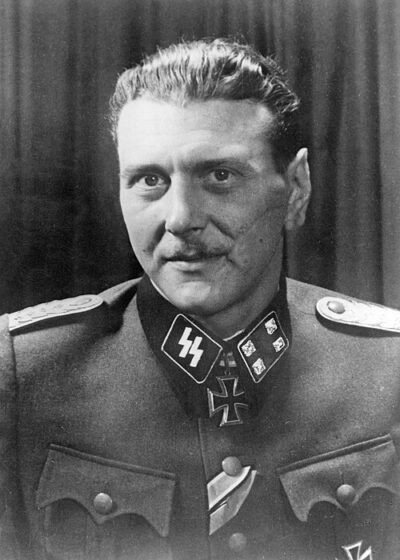 Otto SkorzenyAustrian Waffen-SS officer (1908–1975)
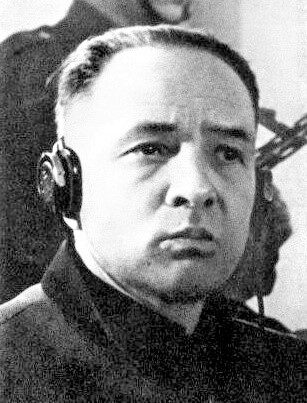 Rudolf Höss (1934–)German war criminal, commandant of Auschwitz (1901–1947)
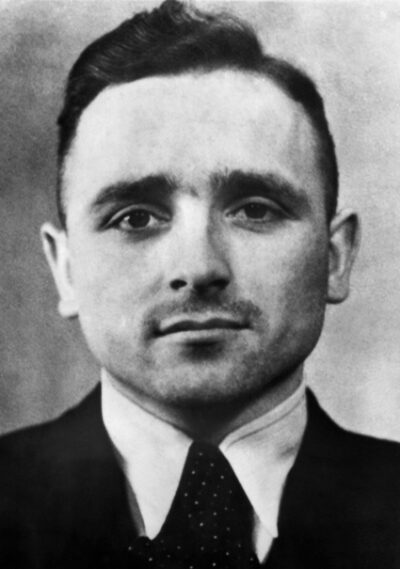 Klaus BarbieGerman SS officer, head of the Gestapo in Lyon and convicted war criminal (1913–1991)
 Karl Brandt (1939–)German Nazi SS officer and physician, executed for war crimes and crimes against humanity (1904–1948)
 Joachim PeiperSS officer and convicted Nazi war criminal (1915–1976)
 Sepp DietrichGerman Military Officer and Waffen-SS general and a convicted Nazi Military war criminal (1892-1966)
 Theodor EickeGerman SS general, commander of concentration camp Dachau and inspector of the concentration camps (1892–1943)
 Michael WittmannGerman Waffen-SS tank commander
 Paul HausserGerman Waffen SS general (1880-1972)
 Hermann FegeleinGerman lieutenant general in the Waffen-SS (1906–1945)
 Felix Steiner (1940–1943)German SS commander ; affiant in Pohl Trial (NMT 4)
 Oskar DirlewangerGerman Nazi military officer and SS Regiment/Brigade Commander (1895–1945)
 Otto GünscheHitler's personal adjutant (1917–2003)
 Erich von dem Bach-ZelewskiGerman politician and SS functionary (1899–1972)
 Karl WolffGerman Waffen-SS Army general and Nazi military war criminal (1900-1984)
 Rochus MischGerman SS non-commissioned officer (1917–2013)
 Kurt MeyerGerman general (1910–1961)
 Josef Kramer (1934–)German SS officer, concentration camp commandant, and convicted war criminal (1906–1945)
 Wilhelm MohnkeGerman Military Officer SS Regiment/Division Brigade commander (1911–2001)
 Lauri Törni (1945)Finnish military officer in the Finnish Army, Waffen-SS, and U.S. Army (1919-1965)
 Alfred NaujocksSS officer (1911–1966)
 Gottlob Berger (1936–1945)SS general (1896–1975)
 Ludwig StumpfeggerSS physician (1910–1945)
 Jürgen Stroop (1943)German SS and police general and convicted war criminal (1895-1952)
and 5 more

