Weyl equation
Weyl equation is a relativistic wave equation describing massless fermions.
All 2 facts, and where they come from
Facts
2 facts · 0 confirmed by two sources · 0 cited · 2 from one source
Where this comes from
Papalocal keeps its own record. It started from these sources; what each one said is kept here as it was copied, so a change on their side never changes this page by itself. Tap one to read its version.
What Wikidata says · copied November 16, 2026 · revision 2552711074
- Described as
- relativistic wave equation describing massless fermions
- Other names
- Weyl spinor
- What it is
- theory
- Named after
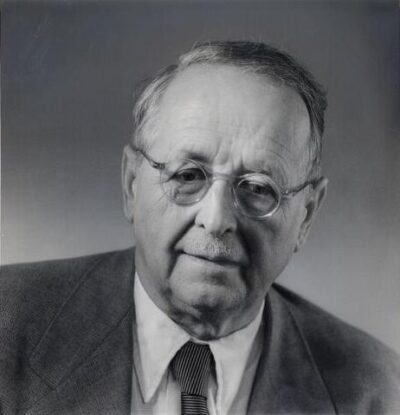
- Hermann Weyl
- Wikipedias with a page
- 11
Wikidata item Q2566340 (wikidata.org/wiki/Q2566340), public domain (CC0). Copied 2026-11-16.
What Wikipedia says · copied November 16, 2026 · revision 1384218776
In physics, particularly in quantum field theory, the Weyl equation ( VILE) is a relativistic wave equation for describing massless spin-1/2 particles which have an inherent handedness, or chirality, called Weyl fermions. The equation is named after Hermann Weyl. The Weyl fermions are one of the three possible types of elementary fermions, the other two being the Dirac and the Majorana fermions.
None of the elementary particles in the Standard Model are Weyl fermions. Previous to the confirmation of the neutrino oscillations, it was considered possible that the neutrino might be a Weyl fermion (it is now expected to be either a Dirac or a Majorana fermion). In condensed matter physics, some materials can display quasiparticles that behave as Weyl fermions, leading to the notion of Weyl semimetals.
Mathematically, any Dirac fermion can be decomposed as two Weyl fermions of opposite chirality coupled by the mass term.
From the Wikipedia article “Weyl equation” (en.wikipedia.org/wiki/Weyl_equation), by its contributors, under CC BY-SA 4.0 (creativecommons.org/licenses/by-sa/4.0/). Copied 2026-11-16; not changed.
Confirmed Two sources agree. Cited One source, and it names where it got it. One source One source, without a reference of its own. Sources disagree The sources disagree. We show the best-supported value and keep theirs below.