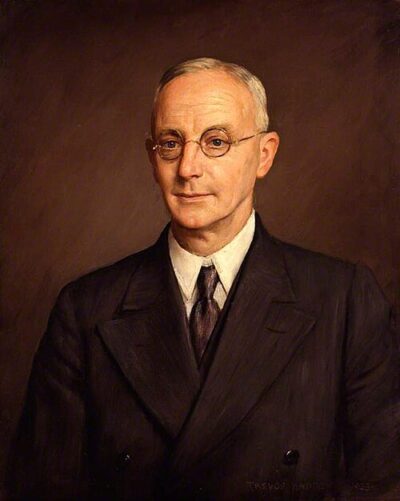
Whittaker and Watson
Whittaker and Watson is a Landmark textbook in mathematical analysis by E. T. Whittaker, originally published in 1902 with four editions. It was written by G. N. Watson.
- Came out
- 1902
- Written by
- E. T. Whittaker
All 5 facts, and where they come from
Facts
5 facts · 0 confirmed by two sources · 0 cited · 5 from one source
Where this comes from
Papalocal keeps its own record. It started from these sources; what each one said is kept here as it was copied, so a change on their side never changes this page by itself. Tap one to read its version.
What Wikidata says · copied November 19, 2026 · revision 2287447032
- Described as
- Landmark textbook in mathematical analysis by E. T. Whittaker, originally published in 1902 with four editions.
- Other names
- A Course of Modern Analysis, A Course of Modern Analysis: an introduction to the general theory of infinite processes and of analytic functions; with an account of the principal transcendental functions
- What it is
- textbook
- Written by
- E. T. Whittaker; G. N. Watson
- Language
- English · 1 reference
- Came out
- 1902
- Wikipedias with a page
- 3
Wikidata item Q7996825 (wikidata.org/wiki/Q7996825), public domain (CC0). Copied 2026-11-19.
What Wikipedia says · copied November 19, 2026 · revision 1384245943
A Course of Modern Analysis: an introduction to the general theory of infinite processes and of analytic functions; with an account of the principal transcendental functions (colloquially known as Whittaker and Watson) is a landmark textbook on mathematical analysis written by Edmund T. Whittaker and George N. Watson, first published by Cambridge University Press in 1915. The first edition was Whittaker's alone, but later editions were co-authored with Watson.
From the Wikipedia article “A Course of Modern Analysis” (en.wikipedia.org/wiki/A_Course_of_Modern_Analysis), by its contributors, under CC BY-SA 4.0 (creativecommons.org/licenses/by-sa/4.0/). Copied 2026-11-19; not changed.
Confirmed Two sources agree. Cited One source, and it names where it got it. One source One source, without a reference of its own. Sources disagree The sources disagree. We show the best-supported value and keep theirs below.
Picture: Wikimedia Commons: A Course of Modern Analysis plain cover.jpg · See Commons file page