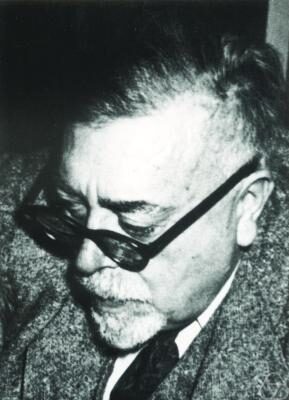
Wiener equation
Wiener equation is a mathematical representation of Brownian motion.
All 1 facts, and where they come from
Facts
1 facts · 0 confirmed by two sources · 0 cited · 1 from one source
Where this comes from
Papalocal keeps its own record. It started from these sources; what each one said is kept here as it was copied, so a change on their side never changes this page by itself. Tap one to read its version.
What Wikidata says · copied November 16, 2026 · revision 2540965688
- Described as
- mathematical representation of Brownian motion
- What it is
- mathematical concept
- Wikipedias with a page
- 4
Wikidata item Q12346869 (wikidata.org/wiki/Q12346869), public domain (CC0). Copied 2026-11-16.
What Wikipedia says · copied November 16, 2026 · revision 1213448828
A simple mathematical representation of Brownian motion, the Wiener equation, named after Norbert Wiener, assumes the current velocity of a fluid particle fluctuates randomly:
𝐯=d𝐱dt=g(t),
where v is velocity, x is position, d/dt is the time derivative, and g(t) may for instance be white noise.
Since velocity changes instantly in this formalism, the Wiener equation is not suitable for short time scales. In those cases, the Langevin equation, which looks at particle acceleration, must be used.
From the Wikipedia article “Wiener equation” (en.wikipedia.org/wiki/Wiener_equation), by its contributors, under CC BY-SA 4.0 (creativecommons.org/licenses/by-sa/4.0/). Copied 2026-11-16; not changed.
Confirmed Two sources agree. Cited One source, and it names where it got it. One source One source, without a reference of its own. Sources disagree The sources disagree. We show the best-supported value and keep theirs below.