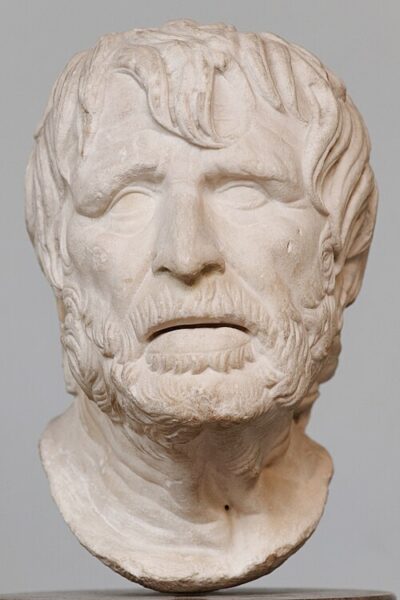
Works and Days
Works and Days is a didactic poem in 828 lines of dactylic hexameter by Hesiod in which Hesiod instructs his brother Perses in agriculture.
- Came out
- 8th century BC
- Written by
- Hesiod
- Genre
- didactic poetry
All 6 facts, and where they come from
Facts
6 facts · 0 confirmed by two sources · 1 cited · 5 from one source
Where this comes from
Papalocal keeps its own record. It started from these sources; what each one said is kept here as it was copied, so a change on their side never changes this page by itself. Tap one to read its version.
What Wikidata says · copied November 17, 2026 · revision 2565894240
- Described as
- didactic poem in 828 lines of dactylic hexameter by Hesiod in which Hesiod instructs his brother Perses in agriculture
- Other names
- Hes. WD, Opera et Dies
- What it is
- literary work
- Written by
- Hesiod
- Genre
- didactic poetry; poetry
- Language
- Homeric Greek · 1 reference
- Came out
- 8th century BC
- Wikipedias with a page
- 51
Wikidata item Q667285 (wikidata.org/wiki/Q667285), public domain (CC0). Copied 2026-11-17.
What Wikipedia says · copied November 17, 2026 · revision 1381351606
Works and Days (Ancient Greek: Ἔργα καὶ Ἡμέραι, romanized: Érga kaì Hēmérai) is a didactic poem written by ancient Greek poet Hesiod around 700 BC. It is in dactylic hexameter and contains 828 lines. At its center, the Works and Days is a farmer's almanac in which Hesiod instructs his brother Perses in the agricultural arts.
Scholars have seen this work against a background of agrarian crisis in mainland Greece, which inspired a wave of colonial expeditions in search of new land. In the poem, Hesiod also offers his brother extensive moralizing advice on how he should live his life. Works and Days is perhaps best known for its two mythological aetiologies for the toil and pain that define the human condition—the story of Prometheus and Pandora, and the so-called Myth of Five Ages.
From the Wikipedia article “Works and Days” (en.wikipedia.org/wiki/Works_and_Days), by its contributors, under CC BY-SA 4.0 (creativecommons.org/licenses/by-sa/4.0/). Copied 2026-11-17; not changed.
Confirmed Two sources agree. Cited One source, and it names where it got it. One source One source, without a reference of its own. Sources disagree The sources disagree. We show the best-supported value and keep theirs below.
Picture: Wikimedia Commons: Manuscrit des Œuvres Opportunes d’Hésiode.jpg · See Commons file page