Works Progress Administration
The Works Progress Administration is a United States government New Deal agency (1935–1939) employing millions of unemployed people to carry out public works projects.
- Founded
- May 6, 1935
- Country
- United States
All 6 facts, and where they come from
Facts
6 facts · 0 confirmed by two sources · 1 cited · 5 from one source
Where this comes from
Papalocal keeps its own record. It started from these sources; what each one said is kept here as it was copied, so a change on their side never changes this page by itself. Tap one to read its version.
What Wikidata says · copied November 17, 2026 · revision 2559243558
- Described as
- United States government New Deal agency (1935–1939) employing millions of unemployed people to carry out public works projects
- Other names
- WPA, Work Projects Administration
- What it is
- independent agency of the United States government
- Comes after
- Federal Emergency Relief Administration
- Founded
- May 6, 1935
- Ended
- June 30, 1943
- Country
- United States · 2 references
- Field
- public works · 1 reference
- Wikipedias with a page
- 21
Wikidata item Q1200079 (wikidata.org/wiki/Q1200079), public domain (CC0). Copied 2026-11-17.
What Wikipedia says · copied November 17, 2026 · revision 1384436785
The Works Progress Administration (WPA; from 1935 to 1939, then known as the Work Projects Administration from 1939 to 1943) was an American New Deal agency that employed millions of jobseekers (mostly men who were not formally educated) to carry out public works projects, including the construction of public buildings and roads. It was set up on May 6, 1935, by presidential order, as a key part of the Second New Deal.
The WPA's first appropriation in 1935 was $4.9 billion (about $15 per person in the U.S., around 6.7 percent of the 1935 GDP). Headed by Harry Hopkins, the WPA supplied paid jobs to the unemployed during the Great Depression in the United States, while building up the public infrastructure of the US, such as parks, schools, roads, and drains. Most of the jobs were in construction, building more than 620,000 miles (1,000,000 km) of streets and over 10,000 bridges, in addition to many airports and much housing. In 1942, the WPA played a key role in both building and staffing internment camps to incarcerate Japanese Americans.
At its peak in 1938, it supplied paid jobs for three million unemployed men and women, as well as youth in a separate division, the National Youth Administration. Between 1935 and 1943, the WPA employed 8.5 million people (about half the population of New York). Hourly wages were typically kept well below industry standards. Full employment, which was reached in 1942 and appeared as a long-term national goal around 1944, was not the goal of the WPA; rather, it tried to supply one paid job for all families in which the breadwinner suffered long-term unemployment.
In one of its most famous projects, Federal Project Number One, the WPA employed musicians, artists, writers, actors and directors in arts, drama, media, and literacy projects. The five projects dedicated to these were the Federal Writers' Project (FWP), the Historical Records Survey (HRS), the Federal Theatre Project (FTP), the Federal Music Project (FMP), and the Federal Art Project (FAP). In the Historical Records Survey, for instance, many former slaves in the South were interviewed; these documents are of immense importance to American history. Theater and music groups toured throughout the United States and gave more than 225,000 performances. Archaeological investigations under the WPA were influential in the rediscovery of pre-Columbian Native American cultures, and the development of professional archaeology in the US.
The WPA was a federal program that ran its own projects in cooperation with state and local governments, which supplied 10–30% of the costs. Usually, the local sponsor provided land and often trucks and supplies, with the WPA responsible for wages (and for the salaries of supervisors, who were not on relief). WPA sometimes took over state and local relief programs that had originated in the Reconstruction Finance Corporation (RFC) or Federal Emergency Relief Administration programs (FERA). It was liquidated on June 30, 1943, because of low unemployment during World War II. Robert D. Leininger asserted: "millions of people needed subsistence incomes. Work relief was preferred over public assistance (the dole) because it maintained self-respect, reinforced the work ethic, and kept skills sharp."
From the Wikipedia article “Works Progress Administration” (en.wikipedia.org/wiki/Works_Progress_Administration), by its contributors, under CC BY-SA 4.0 (creativecommons.org/licenses/by-sa/4.0/). Copied 2026-11-17; not changed.
Confirmed Two sources agree. Cited One source, and it names where it got it. One source One source, without a reference of its own. Sources disagree The sources disagree. We show the best-supported value and keep theirs below.
Picture: Wikimedia Commons: WPA-Work-Pays-America-Poster.jpg · See Commons file page
People connected 5
Worked here
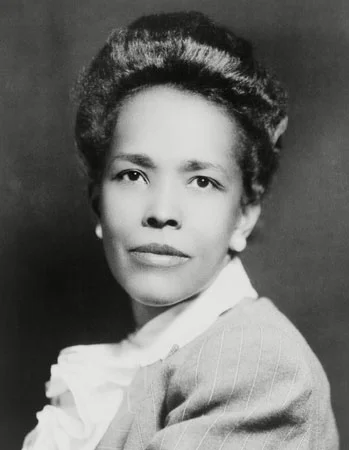 Ella Josephine BakerAfrican-American civil rights and human rights activist (1903–1986)
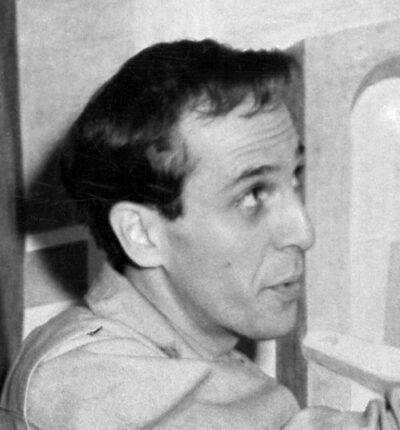 Philip GustonAmerican artist (1913-1980)
- EElizabeth CatlettBlack American-born Mexican artist (1915–2012)
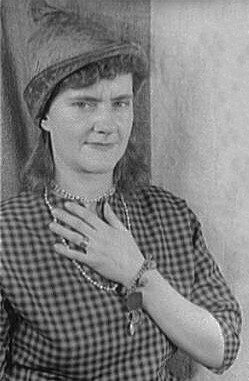 Gertrude Abercrombie (1934–1940)American painter (1909-1977)