

World Health Organization
The World Health Organization is a United Nations agency concerned with international public health. It was founded in 1948. Its headquarters are in Geneva. It has 7,000 employees (2014). It won the Princess of Asturias Award for International Cooperation and 1 more.
- Founded
- April 7, 1948
- Headquarters
- Geneva
- Industry
- medical research
- Employees
- 7,000 (2014)
- Country
- Switzerland
All 17 facts, and where they come from
Facts
17 facts · 0 confirmed by two sources · 8 cited · 9 from one source
Where this comes from
Papalocal keeps its own record. It started from these sources; what each one said is kept here as it was copied, so a change on their side never changes this page by itself. Tap one to read its version.
What Wikidata says · copied November 17, 2026 · revision 2568666938
- Described as
- United Nations agency concerned with international public health
- Other names
- World Health Organization (WHO), World Health Organisation, who.int
- What it is
- specialized agency of the United Nations · 1 reference; open-access publisher · 2 references; international organization · 1 reference
- Founded
- April 7, 1948 · 2 references
- Headquarters
- Geneva · 1 reference
- Country
- Switzerland · 1 reference
- Industry
- medical research; human health activities · 1 reference
- Employees
- 7,000 (2014)
- Part of
- United Nations Economic and Social Council · 1 reference; United Nations · 1 reference
- Field
- public health; medical research; medical classification
- Awards
- Princess of Asturias Award for International Cooperation (2009); Officer of the Order of the Condor of the Andes
- Official website
- https://www.who.int
- Wikipedias with a page
- 210
Wikidata item Q7817 (wikidata.org/wiki/Q7817), public domain (CC0). Copied 2026-11-17.
What Wikipedia says · copied November 17, 2026 · revision 1385965424
The World Health Organization (WHO) is a specialized agency of the United Nations (UN) which coordinates responses to international public health issues and emergencies. It is headquartered in Geneva, Switzerland, and has six regional offices and 150 field offices worldwide. Only sovereign states are eligible to join, and it is the largest intergovernmental health organization at the international level.
The WHO's stated purpose is to achieve the highest possible level of health for all the world's people, defining health as "a state of complete physical, mental and social well-being and not merely the absence of disease or infirmity." The main functions of the World Health Organization include promoting the control of epidemic and endemic diseases; providing and improving the teaching and training in public health, the medical treatment of disease, and related matters; and promoting the establishment of international standards for biological products.
The WHO was established on 7 April 1948, and formally began its work on 1 September 1948. It incorporated the assets, personnel, and duties of the League of Nations' Health Organization and the Paris-based Office International d'Hygiène Publique, including the International Classification of Diseases (ICD). The agency's work began in earnest in 1951 after a significant infusion of financial and technical resources.
The WHO's official mandate is to promote health and safety while helping the vulnerable worldwide. It provides technical assistance to countries, sets international health standards, collects data on global health issues, and serves as a forum for scientific or policy discussions related to health. Its official publication, the World Health Report, provides assessments of worldwide health topics.
The WHO has played a leading role in several public health achievements, most notably the eradication of smallpox, the near-eradication of polio, and the development of an Ebola vaccine. Its current priorities include communicable diseases, such as HIV/AIDS, Ebola, malaria and tuberculosis; non-communicable diseases such as heart disease and cancer; healthy diet, nutrition, and food security; occupational health; and substance abuse. The agency advocates for universal health care coverage, engagement with the monitoring of public health risks, coordinating responses to health emergencies, and promoting health and well-being generally.
The WHO is governed by the World Health Assembly (WHA), which is composed of its 193 member states. The WHA elects and advises an executive board made up of 34 health specialists; selects the WHO's chief administrator, the director-general (currently Tedros Adhanom Ghebreyesus of Ethiopia); sets goals and priorities; and approves the budget and activities. The WHO is funded primarily by contributions from member states (both assessed and voluntary), followed by private donors.
From the Wikipedia article “World Health Organization” (en.wikipedia.org/wiki/World_Health_Organization), by its contributors, under CC BY-SA 4.0 (creativecommons.org/licenses/by-sa/4.0/). Copied 2026-11-17; not changed.
Confirmed Two sources agree. Cited One source, and it names where it got it. One source One source, without a reference of its own. Sources disagree The sources disagree. We show the best-supported value and keep theirs below.
Picture: Wikimedia Commons: World Health Organisation headquarters, Geneva, north and west sides 2007.jpg · See Commons file page
People connected 8
Worked here
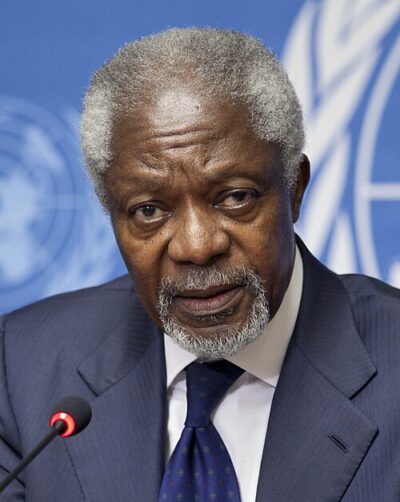 Kofi Annan7th Secretary-General of the United Nations (1938-2018)
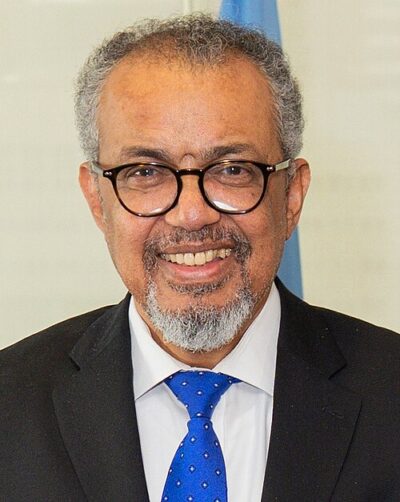 Tedros Adhanom Ghebreyesus (2017–)Ethiopian and politician, Director-General of the World Health Organization
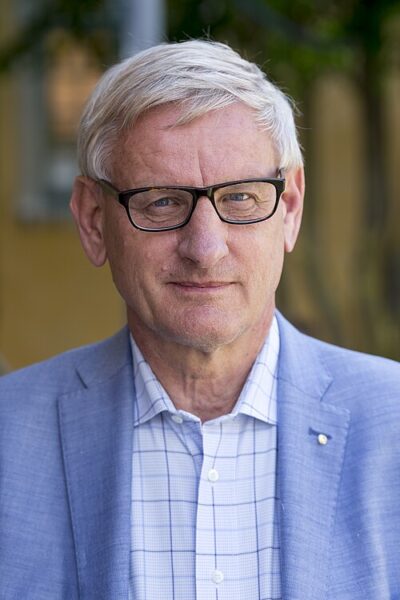 Carl BildtSwedish politician (1949-), prime minister 1991–1994, foreign minister 2006–2014
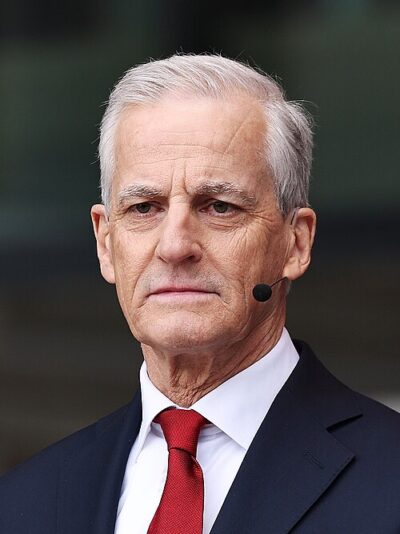 Jonas Gahr StørePrime Minister of Norway since 2021
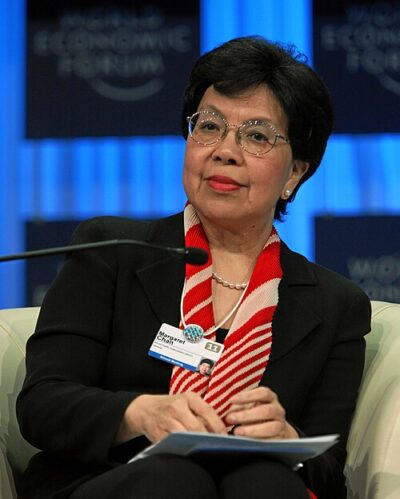 Margaret Chan (2003–)Chinese-Canadian physician (born 1947)
 Soumya Swaminathan (2017–2022)Indian paediatrician and clinical scientist
 Claude PironSwiss translator and Esperantist (1931-2008)
- MMaria Van Kerkhove (2009–)American infectious disease epidemiologist (1977-)
