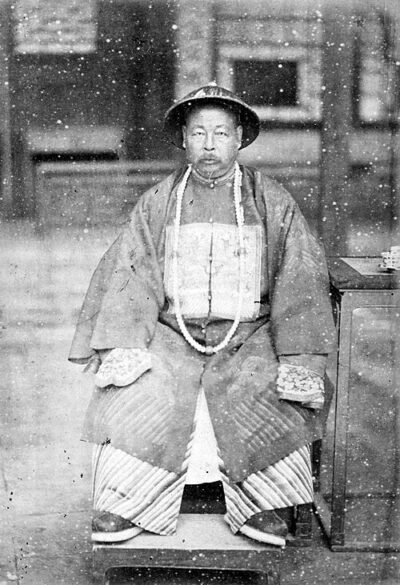
xunfu
Xunfu is a high government official of the Chinese Ming and Qing dynasties.
- Country
- Ming dynasty
All 3 facts, and where they come from
Facts
3 facts · 0 confirmed by two sources · 0 cited · 3 from one source
Where this comes from
Papalocal keeps its own record. It started from these sources; what each one said is kept here as it was copied, so a change on their side never changes this page by itself. Tap one to read its version.
What Wikidata says · copied November 18, 2026 · revision 2568860509
- Described as
- high government official of the Chinese Ming and Qing dynasties
- Other names
- coordinators, Provincial governor (of the Ming and Qing dynasties)
- What it is
- position
- Country
- Ming dynasty; Qing dynasty
- Wikipedias with a page
- 11
Wikidata item Q56911 (wikidata.org/wiki/Q56911), public domain (CC0). Copied 2026-11-18.
What Wikipedia says · copied November 18, 2026 · revision 1377107082
A xunfu was an important imperial Chinese provincial office under both the Ming (14th–17th centuries) and Qing (17th–20th centuries) dynasties. However, the purview of the office under the two dynasties differed markedly. Under the Ming dynasty, the post originated around 1430 as a kind of inspector-general and ad hoc provincial-level administrator; such a xunfu is usually translated as a grand coordinator. However, beginning in the mid-17th century, xunfu became the title of a regular provincial governor overseeing civil administration in the Qing dynasty.
Under both dynasties, the xunfu was subordinate in military affairs to the multi-provincial zongdu (總督), usually translated as "supreme commander" under the Ming and "governor-general" or "viceroy" under the Qing.
The Nguyễn dynasty of Vietnam also established the position (known as tuần phủ or tuần vũ 巡撫) based on the contemporaneous position of Qing China.
From the Wikipedia article “Grand coordinator and provincial governor” (en.wikipedia.org/wiki/Grand_coordinator_and_provincial_governor), by its contributors, under CC BY-SA 4.0 (creativecommons.org/licenses/by-sa/4.0/). Copied 2026-11-18; not changed.
Confirmed Two sources agree. Cited One source, and it names where it got it. One source One source, without a reference of its own. Sources disagree The sources disagree. We show the best-supported value and keep theirs below.