Young's modulus
Young's modulus is a mechanical property that measures stiffness of a solid material.
All 2 facts, and where they come from
Facts
2 facts · 0 confirmed by two sources · 0 cited · 2 from one source
Where this comes from
Papalocal keeps its own record. It started from these sources; what each one said is kept here as it was copied, so a change on their side never changes this page by itself. Tap one to read its version.
What Wikidata says · copied November 17, 2026 · revision 2551714778
- Described as
- mechanical property that measures stiffness of a solid material
- Other names
- elastic modulus, modulus of elasticity, Young modulus
- What it is
- physical law
- Named after
- Thomas Young
- Wikipedias with a page
- 53
Wikidata item Q2091584 (wikidata.org/wiki/Q2091584), public domain (CC0). Copied 2026-11-17.
What Wikipedia says · copied November 17, 2026 · revision 1383138229
Young's modulus (or the Young modulus) is a mechanical property of solid materials that measures the tensile or compressive stiffness when the force is applied lengthwise. It is the elastic modulus for tension or axial compression. Young's modulus is defined as the quotient of the stress (force per unit area) applied to the object and the resulting axial strain (a dimensionless quantity that quantifies relative deformation) in the linear elastic region of the material. As such, Young's modulus is similar and proportional to the spring constant in Hooke's law, but with dimensions of pressure instead of force per distance.
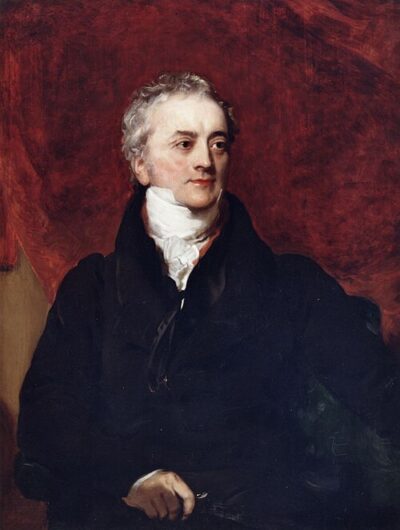
Although Young's modulus is named after the 19th-century British scientist Thomas Young, the concept was developed in 1727 by Leonhard Euler. The first experiments that used the concept of Young's modulus in its modern form were performed by the Italian scientist Giordano Riccati in 1782, pre-dating Young's work by 25 years. The term modulus is derived from the Latin root term modus, which means measure.
From the Wikipedia article “Young's modulus” (en.wikipedia.org/wiki/Young's_modulus), by its contributors, under CC BY-SA 4.0 (creativecommons.org/licenses/by-sa/4.0/). Copied 2026-11-17; not changed.
Confirmed Two sources agree. Cited One source, and it names where it got it. One source One source, without a reference of its own. Sources disagree The sources disagree. We show the best-supported value and keep theirs below.
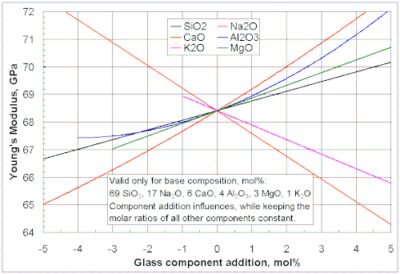
Picture: Afluegel at English Wikipedia, via Wikimedia Commons · CC BY-SA 3.0