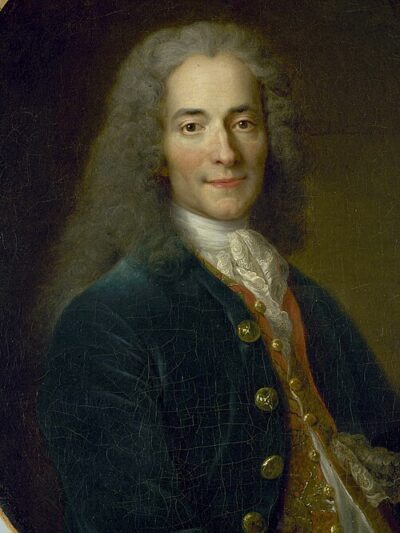
Zadig or Destiny
Zadig or Destiny is a novel by Voltaire. It came out in 1747.
All 7 facts, and where they come from
Facts
7 facts · 0 confirmed by two sources · 0 cited · 7 from one source
Where this comes from
Papalocal keeps its own record. It started from these sources; what each one said is kept here as it was copied, so a change on their side never changes this page by itself. Tap one to read its version.
What Wikidata says · copied November 17, 2026 · revision 2511909889
- Described as
- novel by Voltaire
- Other names
- Zadig
- What it is
- literary work
- Written by
- Voltaire
- Genre
- philosophical fiction; philosophical fable
- Language
- French
- Country of origin
- France
- Came out
- 1747
- Wikipedias with a page
- 23
Wikidata item Q140057 (wikidata.org/wiki/Q140057), public domain (CC0). Copied 2026-11-17.
What Wikipedia says · copied November 17, 2026 · revision 1384247226
Zadig; or, The Book of Fate (French: Zadig ou la Destinée; 1747) is a novella and work of philosophical fiction by the Enlightenment writer Voltaire. It tells the story of Zadig, a Zoroastrian philosopher in ancient Babylonia. The story of Zadig is a fictional story. Voltaire does not attempt any historical accuracy. The singular narrative and unique journey of Zadig still stands as a philosophical reference to “nothing is either good or bad without the comparison of one with the other.”
It was originally published as Memnon in Amsterdam (with a false imprint of London given) and first issued under its more familiar title in 1748.
The book makes use of the Persian tale The Three Princes of Serendip. It is philosophical in nature, and presents human life as in the hands of a destiny beyond human control. Voltaire challenges religious and metaphysical orthodoxy with his presentation of the moral revolution taking place in Zadig himself. Zadig is one of Voltaire's most celebrated works after Candide. Many literary critics have praised Voltaire's use of contradiction and juxtaposition.
The protagonist's name is derived from the Hebrew and Arabic terms tzadik and seddik, a title bestowed on a particularly righteous person – though Voltaire's character is not presented as a Jew and does not exactly fit the criteria set in Jewish tradition for use of the term. This combined with the geographic setting of Babylon indicates he is likely of Arabian descent.
From the Wikipedia article “Zadig” (en.wikipedia.org/wiki/Zadig), by its contributors, under CC BY-SA 4.0 (creativecommons.org/licenses/by-sa/4.0/). Copied 2026-11-17; not changed.
Confirmed Two sources agree. Cited One source, and it names where it got it. One source One source, without a reference of its own. Sources disagree The sources disagree. We show the best-supported value and keep theirs below.
Picture: Wikimedia Commons: VoltaireZadig.jpg · See Commons file page