Zeeman effect
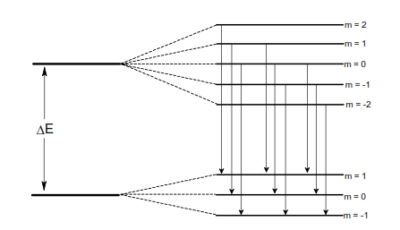
Zeeman effect is an effect of splitting a spectral line into several components in the presence of a static magnetic field.
All 1 facts, and where they come from
Facts
1 facts · 0 confirmed by two sources · 0 cited · 1 from one source
Where this comes from
Papalocal keeps its own record. It started from these sources; what each one said is kept here as it was copied, so a change on their side never changes this page by itself. Tap one to read its version.
What Wikidata says · copied November 17, 2026 · revision 2524125689
- Described as
- effect of splitting a spectral line into several components in the presence of a static magnetic field
- Other names
- Zeeman splitting
- Named after
- Pieter Zeeman
- Wikipedias with a page
- 52
Wikidata item Q201805 (wikidata.org/wiki/Q201805), public domain (CC0). Copied 2026-11-17.
What Wikipedia says · copied November 17, 2026 · revision 1385847053
The Zeeman effect (Dutch: [ˈzeːmɑn]) is the splitting of a spectral line into several components in the presence of a static magnetic field. It is caused by the interaction of the magnetic field with the magnetic moments of the atomic electrons associated with their orbital motion and spin; this interaction shifts some orbital energies more than others, resulting in the split spectrum.
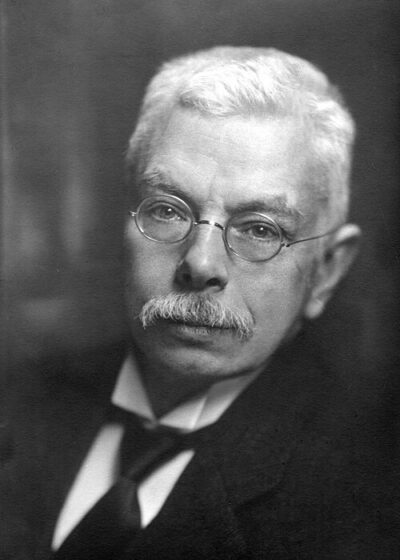
The effect is named after the Dutch physicist Pieter Zeeman, who discovered it in 1896 and received the Nobel Prize in Physics for it in 1902. It is analogous to the Stark effect, the splitting of a spectral line into several components in the presence of an electric field. Also, similar to the Stark effect, transitions between different components have, in general, different intensities, with some being entirely forbidden (in the dipole approximation), as governed by the selection rules.
Since the distance between the Zeeman sub-levels is a function of magnetic field strength, this effect can be used to measure magnetic field strength, e.g. that of the Sun and other stars or in laboratory plasmas.
From the Wikipedia article “Zeeman effect” (en.wikipedia.org/wiki/Zeeman_effect), by its contributors, under CC BY-SA 4.0 (creativecommons.org/licenses/by-sa/4.0/). Copied 2026-11-17; not changed.
Confirmed Two sources agree. Cited One source, and it names where it got it. One source One source, without a reference of its own. Sources disagree The sources disagree. We show the best-supported value and keep theirs below.
Picture: André Luis Bonfim Bathista e Silva, via Wikimedia Commons · CC BY-SA 3.0