
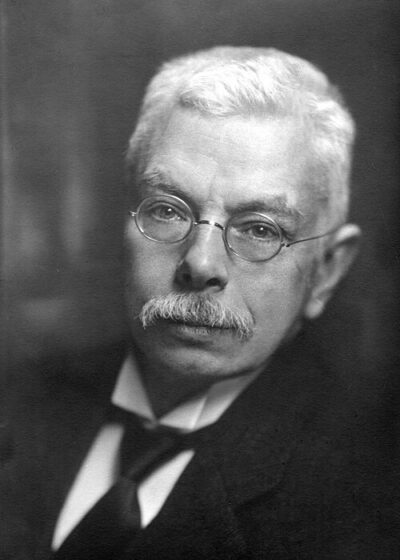
Pieter Zeeman
Pieter Zeeman was a Dutch physicist. Born May 25, 1865, in Zonnemaire. Died October 9, 1943, in Amsterdam. Positions held include Rector of the university of Amsterdam. Known for Zeeman effect. Educated at Leiden University. Awards include Nobel Prize in Physics, Henry Draper Medal and Rumford Medal.
Facts
38 facts · 2 confirmed by two sources · 22 cited · 13 from one source · 1 where the sources disagree
What’s different
- Born in: we show Zonnemaire (Sources disagree). Wikidata also lists Professor Zeemanstraat 15
Where this comes from
Papalocal keeps its own record. It started from these sources; what each one said is kept here as it was copied, so a change on their side never changes this page by itself. Tap one to read its version.
What Wikidata says · copied November 16, 2026 · revision 2567420144
- Described as
- Dutch physicist (1865–1943)
- Other names
- P. Zeeman
- Born
- May 25, 1865 · 14 references
- Died
- October 9, 1943 · 15 references
- Born in
- Zonnemaire · 3 references; Professor Zeemanstraat 15 · 1 reference
- Died in
- Amsterdam · 4 references
- Buried in
- Algemene Begraafplaats Kleverlaan · 1 reference
- Citizen of
- Kingdom of the Netherlands · 2 references
- Occupation
- physicist · 1 reference; university teacher · 2 references; photographer · 1 reference
- Positions held
- Rector of the university of Amsterdam
- Worked for
- Delft University of Technology (1884–1902) · 1 reference; University of Amsterdam (1896–1935) · 1 reference; Leiden University · 1 reference
- Education
- Leiden University
- Member of
- Royal Society of London; Bavarian Academy of Sciences and Humanities; Hungarian Academy of Sciences; Royal Netherlands Academy of Arts and Sciences; Pontifical Academy of Sciences · 1 reference; Royal Prussian Academy of Sciences; Academy of Sciences of Turin (1910–) · 1 reference; Göttingen Academy of Sciences and Humanities in Lower Saxony; Accademia Nazionale dei Lincei (1909–) · 1 reference
- Known for
- Zeeman effect · 1 reference
- Awards
- Nobel Prize in Physics (1902) · 2 references; Henry Draper Medal (1921) · 1 reference; Rumford Medal (1922) · 1 reference; Matteucci Medal (1969); Franklin Medal (1925); Foreign Member of the Royal Society (1921) · 1 reference; doctor honoris causa from the University of Paris (1930) · 1 reference; honorary doctorate from the University of Strasbourg (1934) · 2 references
- Field
- physics · 1 reference; Zeeman effect · 1 reference; magnetism · 1 reference; magnetic field · 1 reference
- Spouse
- Johanna Elisabeth Lebret · 1 reference
- Lived in
- Professor Zeemanstraat 15 · 1 reference
- Wikipedias with a page
- 102
Wikidata item Q79000 (wikidata.org/wiki/Q79000), public domain (CC0). Copied November 16, 2026.
What Wikipedia says · copied November 16, 2026 · revision 1381607242
Pieter Zeeman (25 May 1865 – 9 October 1943) was a Dutch experimental physicist who shared the 1902 Nobel Prize in Physics with Hendrik Lorentz for their discovery and theoretical explanation of the Zeeman effect.
- Born, in its opening lines
- May 25, 1865
- Died, in its opening lines
- October 9, 1943
From the Wikipedia article “Pieter Zeeman” (en.wikipedia.org/wiki/Pieter_Zeeman), by its contributors, under CC BY-SA 4.0 (creativecommons.org/licenses/by-sa/4.0/). Copied November 16, 2026; not changed.
Confirmed Two sources agree. Cited One source, and it names where it got it. One source One source, without a reference of its own. Sources disagree The sources disagree. We show the best-supported value and keep theirs below.
