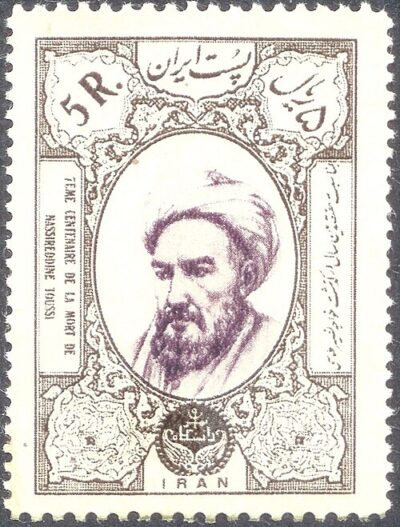
Zij-i Ilkhani
Zij-i Ilkhani is a medieval astronomical tables. It was written by Nasir al-Din al-Tusi. It is based on al-Zij al-Kabir al-Hakimi.
- Written by
- Nasir al-Din al-Tusi
- Genre
- treatise
All 5 facts, and where they come from
Facts
5 facts · 0 confirmed by two sources · 3 cited · 2 from one source
Where this comes from
Papalocal keeps its own record. It started from these sources; what each one said is kept here as it was copied, so a change on their side never changes this page by itself. Tap one to read its version.
What Wikidata says · copied November 17, 2026 · revision 2529930252
- Described as
- medieval astronomical tables
- Other names
- Ilkhanic Tables
- What it is
- literary work
- Written by
- Nasir al-Din al-Tusi · 1 reference
- Genre
- treatise
- Based on
- al-Zij al-Kabir al-Hakimi · 1 reference
- Named after
- Hulegu Khan · 1 reference
- Wikipedias with a page
- 13
Wikidata item Q8071845 (wikidata.org/wiki/Q8071845), public domain (CC0). Copied 2026-11-17.
What Wikipedia says · copied November 17, 2026 · revision 1255525410
Zīj-i Īlkhānī (Persian: زیجِ ایلخانی) or Ilkhanic Tables (literal translation: "The Ilkhan Stars", after ilkhan Hulagu, who was the patron of the author at that time) is a Zij book with astronomical tables of planetary movements. It was compiled by the Muslim astronomer Nasir al-Din al-Tusi in collaboration with his research team of astronomers at the Maragha observatory. It was written in Persian and later translated into Arabic.
The book contains tables for calculating the positions of the planets and the names of the stars. It included data derived from the observations made over the course of 12 years in the Maragha observatory, completed in 1272. The planetary positions of the Zij-i Ilkhani, derived from the zijs of Ibn al-A'lam and Ibn Yunus (10/11th cent. AD), were so faulty that later astronomers, such as al-Wabkanawi and Rukn al-Din al-Amuli, criticized it severely.
The Zīj-i Īlkhānī set the precession of the equinoxes at 51 arcseconds per year, which is very close to the modern value of 50.2 arcseconds. The book also describes a method of interpolation between the observed positions, which in modern terms may be described as a second-order interpolation scheme.
From the Wikipedia article “Zij-i Ilkhani” (en.wikipedia.org/wiki/Zij-i_Ilkhani), by its contributors, under CC BY-SA 4.0 (creativecommons.org/licenses/by-sa/4.0/). Copied 2026-11-17; not changed.
Confirmed Two sources agree. Cited One source, and it names where it got it. One source One source, without a reference of its own. Sources disagree The sources disagree. We show the best-supported value and keep theirs below.