
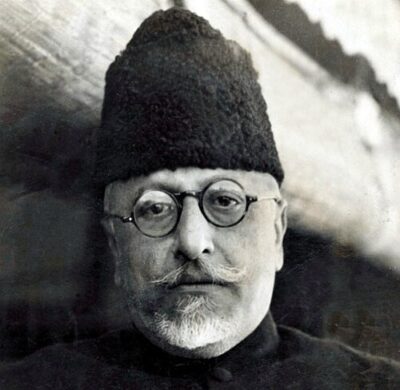
Abul Kalam Azad
Abul Kalam Azad was an Indian politician and writer. Born November 11, 1888, in Mecca. Died February 22, 1958, in Delhi. Positions held include Minister of Education (1947–1958), Member of the Constituent Assembly of India (1946–1950) and Member of the Lok Sabha. Awards include Bharat Ratna.
Facts
27 facts · 2 confirmed by two sources · 7 cited · 18 from one source
Where this comes from
Papalocal keeps its own record. It started from these sources; what each one said is kept here as it was copied, so a change on their side never changes this page by itself. Tap one to read its version.
What Wikidata says · copied November 16, 2026 · revision 2568110659
- Described as
- Indian politician and writer (1888–1958)
- Other names
- Maulana Sayyid Abul Kalam Ghulam Muhiyuddin Ahmed bin Khairuddin Al-Hussaini Azad, Maulana Abul Kalam Azad, Maulana Azad, Aḥmad Abū al-Kalām al-Dahlawī
- Born
- November 11, 1888 · 2 references
- Died
- February 22, 1958 · 4 references
- Born in
- Mecca · 2 references
- Died in
- Delhi · 2 references
- Citizen of
- British Raj (–1947); Dominion of India (1947–1950); India (1950–)
- Occupation
- politician · 1 reference; journalist · 3 references; writer; scholar; freedom fighter; journal editor · 2 references; Qur'anic exegete · 1 reference; motivational speaker · 1 reference
- Positions held
- Minister of Education (1947–1958); Member of the Constituent Assembly of India (1946–1950); Member of the Lok Sabha; member of the Negotiating Committee of the Constituent Assembly of India (1946–); member of the Steering Committee of the Constituent Assembly of India (1947–); Member of the Advisory Committee of the Constituent Assembly of India (1947–)
- Political party
- Indian National Congress
- Awards
- Bharat Ratna (1992)
- Spouse
- Zulekha Begum
- Father
- Maulana Khairuddin
- Religion
- Islam; Sunni Islam
- Wikipedias with a page
- 61
Wikidata item Q196617 (wikidata.org/wiki/Q196617), public domain (CC0). Copied November 16, 2026.
What Wikipedia says · copied November 16, 2026 · revision 1379623518
Abul Kalam Ghulam Muhiyuddin (11 November 1888 – 22 February 1958), better known as Maulana Azad and sometimes referred to as Abul Kalam Azad, was an Indian writer, activist of the Indian independence movement and statesman. A senior leader of the Indian National Congress, following India's independence, he became the first and the longest serving Minister of Education in the Indian government. His contribution to establishing the education foundation in India is recognised by celebrating his birthday as National Education Day across India.
As a young man, Azad composed poetry in Urdu, as well as treatises on religion and philosophy. He rose to prominence through his work as a journalist, publishing works critical of the British Raj and espousing the causes of Indian nationalism. Azad became the leader of the Khilafat Movement, during which he came into close contact with the Indian leader Mahatma Gandhi. After the failure of the Khilafat Movement, he became closer to the Congress. Azad became an enthusiastic supporter of Gandhi's ideas of non-violent civil disobedience, and worked to organise the non-co-operation movement in protest of the 1919 Rowlatt Acts. Azad committed himself to Gandhi's ideals, including promoting Swadeshi (indigenous) products and the cause of Swaraj (Self-rule) for India. In 1923, at an age of 35, he became the youngest person to serve as the President of the Indian National Congress.
In October 1920, Azad was elected as a member of foundation committee to establish Jamia Millia Islamia at Aligarh in U. P. without taking help from British colonial government. He assisted in shifting the campus of the university from Aligarh to New Delhi in 1934. The main gate (Gate No. 7) to the main campus of the university is named after him.
Azad was one of the main organizers of the Dharasana Satyagraha in 1931, and emerged as one of the most important national leaders of the time, prominently leading the causes of Hindu–Muslim unity as well as espousing secularism and socialism. He served as Congress president from 1940 to 1945, during which the Quit India rebellion was launched. Azad was imprisoned, together with the entire Congress leadership. He also worked for Hindu–Muslim unity through the Al-Hilal newspaper.
- Born, in its opening lines
- November 11, 1888
- Died, in its opening lines
- February 22, 1958
From the Wikipedia article “Maulana Azad” (en.wikipedia.org/wiki/Maulana_Azad), by its contributors, under CC BY-SA 4.0 (creativecommons.org/licenses/by-sa/4.0/). Copied November 16, 2026; not changed.
Confirmed Two sources agree. Cited One source, and it names where it got it. One source One source, without a reference of its own. Sources disagree The sources disagree. We show the best-supported value and keep theirs below.
