
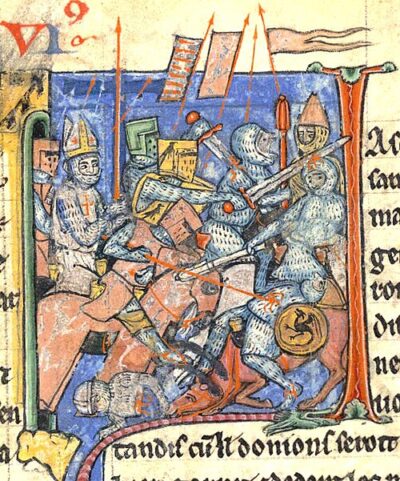
Adhemar of Le Puy
Adhemar of Le Puy was a French bishop. Born 1055, in Valentinois. Died August 1, 1098, in Antioch. Positions held include bishop of Le Puy-en-Velay (1077–1098) and papal legate.
Facts
12 facts · 1 confirmed by two sources · 0 cited · 11 from one source
Where this comes from
Papalocal keeps its own record. It started from these sources; what each one said is kept here as it was copied, so a change on their side never changes this page by itself. Tap one to read its version.
What Wikidata says · copied November 16, 2026 · revision 2568893244
- Described as
- French bishop
- Born
- 1055
- Died
- August 1, 1098
- Born in
- Valentinois
- Died in
- Antioch
- Citizen of
- France
- Occupation
- papal legate; Catholic priest; Catholic bishop
- Positions held
- bishop of Le Puy-en-Velay (1077–1098); papal legate
- Member of
- Adhémar de Monteil
- Religion
- Catholic Church
- Wikipedias with a page
- 29
Wikidata item Q49967 (wikidata.org/wiki/Q49967), public domain (CC0). Copied November 16, 2026.
What Wikipedia says · copied November 16, 2026 · revision 1377798072
Adhemar (also known as Adémar, Aimar, or Aelarz) de Monteil (died 1 August 1098) was one of the principal figures of the First Crusade and was bishop of Puy-en-Velay from before 1087. He was the chosen representative of Pope Urban II for the expedition to the Holy Land. Remembered for his martial prowess, he led knights and men into battle and fought beside them, particularly at the Battle of Dorylaeum and Siege of Antioch. Adhemar is said to have carried the Holy Lance in the Crusaders’ desperate breakout at Antioch on 28 June 1098, in which superior Islamic forces under the atabeg Kerbogha were routed, securing the city for the Crusaders. He died in 1098 due to illness.
- Died, in its opening lines
- August 1, 1098
From the Wikipedia article “Adhemar of Le Puy” (en.wikipedia.org/wiki/Adhemar_of_Le_Puy), by its contributors, under CC BY-SA 4.0 (creativecommons.org/licenses/by-sa/4.0/). Copied November 16, 2026; not changed.
Confirmed Two sources agree. Cited One source, and it names where it got it. One source One source, without a reference of its own. Sources disagree The sources disagree. We show the best-supported value and keep theirs below.
