
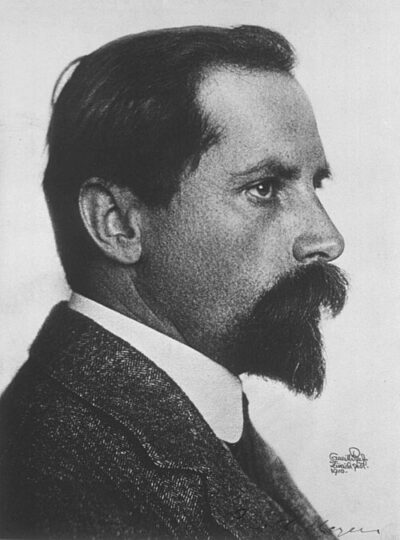
Adolf Meyer
Adolf Meyer was a Swiss-American psychiatrist. Born September 13, 1866, in Niederweningen. Died March 17, 1950, in Baltimore. Positions held include President of the American Psychiatric Association (1927–1928). Educated at University of Zurich. Awards include Thomas William Salmon Medal.
Facts
17 facts · 2 confirmed by two sources · 6 cited · 9 from one source
Where this comes from
Papalocal keeps its own record. It started from these sources; what each one said is kept here as it was copied, so a change on their side never changes this page by itself. Tap one to read its version.
What Wikidata says · copied November 16, 2026 · revision 2564038888
- Described as
- Swiss-American psychiatrist (1866-1950)
- Born
- September 13, 1866 · 4 references
- Died
- March 17, 1950 · 4 references
- Born in
- Niederweningen · 1 reference
- Died in
- Baltimore · 1 reference
- Buried in
- Druid Ridge Cemetery · 1 reference
- Citizen of
- United States; Switzerland
- Occupation
- psychiatrist · 1 reference; university teacher
- Positions held
- President of the American Psychiatric Association (1927–1928) · 1 reference
- Worked for
- Cornell University; University of Chicago · 1 reference
- Education
- University of Zurich
- Member of
- German Academy of Sciences Leopoldina; American Psychoanalytic Association
- Awards
- Thomas William Salmon Medal (1942)
- Religion
- reformed · 1 reference
- Wikipedias with a page
- 22
Wikidata item Q363417 (wikidata.org/wiki/Q363417), public domain (CC0). Copied November 16, 2026.
What Wikipedia says · copied November 16, 2026 · revision 1379406333
Adolf Meyer (September 13, 1866 – March 17, 1950) was a Swiss-born psychiatrist who rose to prominence as the first psychiatrist-in-chief of the Johns Hopkins Hospital (1910–1941). He was president of the American Psychiatric Association in 1927–28 and was one of the most influential figures in psychiatry in the first half of the twentieth century. His focus on collecting detailed case histories on patients was one of the most prominent of his contributions. He oversaw the construction and development of the Henry Phipps Psychiatric Clinic at Johns Hopkins Hospital, which opened in April 1913, ensuring it was suitable for scientific research, training, and treatment. Meyer's work at the Phipps Clinic is possibly the most significant aspect of his career.
Meyer's main theoretical contribution was his idea of ergasiology (a term he derived from the Greek for "working" and "doing") to describe psychobiology. This brought together all the biological, social, and psychological factors and symptoms pertaining to a patient. He considered mental illnesses to be a product of dysfunctional personality, not a pathology of the brain. Believing that whole-life social and biological factors should be central to both diagnosis and treatment, Meyer was one of the earliest psychiatrists to support occupational therapy as an important connection between the activities of an individual and their mental health, and incorporated community-based activities and services to develop people's everyday living skills.
- Born, in its opening lines
- September 13, 1866
- Died, in its opening lines
- March 17, 1950
From the Wikipedia article “Adolf Meyer (psychiatrist)” (en.wikipedia.org/wiki/Adolf_Meyer_(psychiatrist)), by its contributors, under CC BY-SA 4.0 (creativecommons.org/licenses/by-sa/4.0/). Copied November 16, 2026; not changed.
Confirmed Two sources agree. Cited One source, and it names where it got it. One source One source, without a reference of its own. Sources disagree The sources disagree. We show the best-supported value and keep theirs below.
