
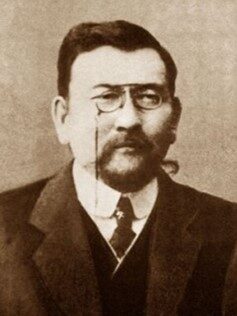
Ahmet Baitursynuly
Ahmet Baitursynuly was a Kazakh intellectual. Born January 28, 1872, in Turgay Oblast. Died December 8, 1937, in Almaty. Positions held include Member of the Russian Constituent Assembly.
Facts
13 facts · 1 confirmed by two sources · 1 cited · 10 from one source · 1 where the sources disagree
What’s different
- Born: we show January 28, 1872 (Sources disagree). Wikipedia says September 5, 1872
Where this comes from
Papalocal keeps its own record. It started from these sources; what each one said is kept here as it was copied, so a change on their side never changes this page by itself. Tap one to read its version.
What Wikidata says · copied November 18, 2026 · revision 2564467152
- Described as
- Kazakh intellectual (1872-1937)
- Other names
- Ahmed Baitursynov, Ahmet Baytursynuly, Ahmet Baytursınulı, Akhmet Baitursynuly, Akhmet Baitursynov
- Born
- January 28, 1872
- Died
- December 8, 1937
- Born in
- Turgay Oblast
- Died in
- Almaty
- Citizen of
- Russian Empire; Soviet Union
- Occupation
- poet; journalist; politician; writer · 1 reference
- Positions held
- Member of the Russian Constituent Assembly
- Political party
- Communist Party of the Soviet Union
- Member of
- All-Russian Central Executive Committee
- Wikipedias with a page
- 23
Wikidata item Q1047477 (wikidata.org/wiki/Q1047477), public domain (CC0). Copied November 18, 2026.
What Wikipedia says · copied November 18, 2026 · revision 1383316337
Ahmet Baitursynuly (c. 5 September 1872 — 8 December 1937) was a Kazakh intellectual who worked in the fields of politics, poetry, linguistics, and education.
Ahmet reformed the Kazakh alphabet. In 1912, he excluded all the purely Arabic letters not used in the Kazakh language and added letters specific to the Kazakh language. Ahmet's orthographic reform resulted in a script that functions like a true phonetic alphabet, with one letter for every sound in the Kazakh language, compared to the basic Arabic abjad. The new alphabet, named Töte jazu (meaning straight writing), is still used by Kazakhs living in China, Afghanistan, and in Iran. Ahmet also developed the basics of Kazakh and the scientific terminology for the definition of Kazakh grammar. In 1937, due to his outspoken patriotism, he was executed by a firing squad during the Great Purge. He is considered a national hero by Kazakhs for his efforts in increasing literacy among his people, and a şahid for his unjust execution at the hands of the Stalinist regime.
- Born, in its opening lines
- September 5, 1872
- Died, in its opening lines
- December 8, 1937
From the Wikipedia article “Ahmet Baitursynuly” (en.wikipedia.org/wiki/Ahmet_Baitursynuly), by its contributors, under CC BY-SA 4.0 (creativecommons.org/licenses/by-sa/4.0/). Copied November 18, 2026; not changed.
Confirmed Two sources agree. Cited One source, and it names where it got it. One source One source, without a reference of its own. Sources disagree The sources disagree. We show the best-supported value and keep theirs below.
