
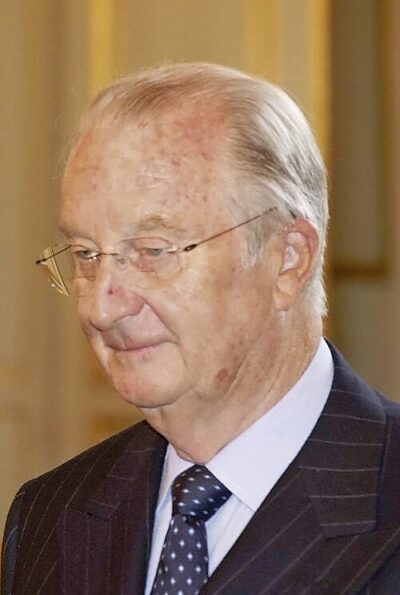
Albert II of Belgium
Albert II of Belgium is a sixth king of the Belgians. Born June 6, 1934, in Laeken. Positions held include King of the Belgians (1993–2013) and Senator by Right (1958–1993). Educated at Institut Le Rosey. Awards include Knight of the Order of the Golden Fleece (2 times), Knight Grand Cross of the Order of Leopold II and Grand Cross of the Order of the Crown.
Facts
38 facts · 1 confirmed by two sources · 6 cited · 31 from one source
Where this comes from
Papalocal keeps its own record. It started from these sources; what each one said is kept here as it was copied, so a change on their side never changes this page by itself. Tap one to read its version.
What Wikidata says · copied November 16, 2026 · revision 2568843537
- Described as
- sixth king of the Belgians
- Other names
- Albert II, Roi des Belges, Albert II van België, King Albert II
- Born
- June 6, 1934 · 6 references
- Born in
- Laeken
- Citizen of
- Belgium
- Occupation
- monarch; diplomat
- Positions held
- King of the Belgians (1993–2013); Senator by Right (1958–1993)
- Education
- Institut Le Rosey
- Awards
- Knight of the Order of the Golden Fleece (2 times) (1962, 1994) · 1 reference; Knight Grand Cross of the Order of Leopold II; Grand Cross of the Order of the Crown; Order of the White Eagle; Knight Grand Cross of the Order of the Falcon; Order of the Three Stars, 1st Class; Grand Cross Special Class of the Order of Merit of the Federal Republic of Germany; Grand Cross of the Order of Orange-Nassau; Knight Grand Cross of the Order of Merit of the Italian Republic (1973) · 1 reference; Collar of the Order of the Cross of Terra Mariana; Grand Collar of the Order of Prince Henry (2000) · 1 reference; Knight Grand Cross in the Order of the Netherlands Lion; Grand Cross with Chain of the Order of Merit of the Republic of Hungary (civil); Grand Cross with Collar of the Order of the White Rose of Finland (1996) · 1 reference; Collar of the Order of the Star of Romania
- Spouse
- Queen Paola of Belgium (1959–) · 1 reference
- Children
- Philippe of Belgium · 1 reference; Princess Astrid, Archduchess of Austria-Este; Prince Laurent of Belgium; Princess Delphine of Belgium · 1 reference
- Father
- Leopold III of Belgium · 1 reference
- Mother
- Astrid of Sweden · 1 reference
- Siblings
- Baudouin I of Belgium; Prince Alexandre of Belgium; Princess Joséphine-Charlotte of Belgium; Ingeborg Verdun; Princess Marie-Esméralda, Lady Moncada; Princess Marie-Christine of Belgium
- Religion
- Catholic Church
- Military rank
- general
- Wikipedias with a page
- 84
Wikidata item Q3911 (wikidata.org/wiki/Q3911), public domain (CC0). Copied November 16, 2026.
What Wikipedia says · copied November 16, 2026 · revision 1382203788
Albert II (born 6 June 1934) is a member of the Belgian royal family who reigned as King of the Belgians from 1993 until his abdication in 2013.
Albert II is the son of King Leopold III and the last living child of Queen Astrid, born a princess of Sweden. He is the younger brother of the late Grand Duchess Joséphine-Charlotte of Luxembourg and King Baudouin, whom he succeeded following Baudouin's death in 1993. He married Donna Paola Ruffo di Calabria (now Queen Paola), with whom he had three children. Albert's eldest son, Philippe, is the current King of the Belgians.
On 3 July 2013, King Albert II attended a midday session of the Belgian cabinet. He then announced that, on 21 July, Belgian National Day, he would abdicate the throne for health reasons. He was succeeded by his son Philippe on 21 July 2013. In doing so, he was also the second Belgian monarch to abdicate, following his father, Leopold III, who abdicated in 1951. His nephew is former Grand Duke of Luxembourg, Henri.
- Born, in its opening lines
- June 6, 1934
From the Wikipedia article “Albert II of Belgium” (en.wikipedia.org/wiki/Albert_II_of_Belgium), by its contributors, under CC BY-SA 4.0 (creativecommons.org/licenses/by-sa/4.0/). Copied November 16, 2026; not changed.
Confirmed Two sources agree. Cited One source, and it names where it got it. One source One source, without a reference of its own. Sources disagree The sources disagree. We show the best-supported value and keep theirs below.
