
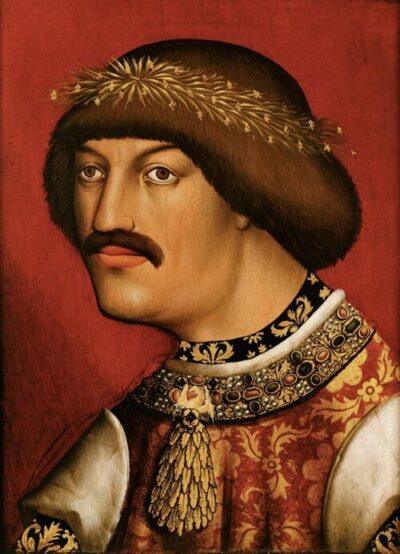
Albert II of Germany
Albert II of Germany was a King of Germany, Hungary and Bohemia. Born August 16, 1397, in Vienna. Died October 27, 1439, in Neszmély. Positions held include King of the Romans (1438–1439), King of Bohemia (1438–1439) and Apostolic King of Hungary (1437–1439). Awards include Knight of the Garter.
Facts
20 facts · 1 confirmed by two sources · 4 cited · 14 from one source · 1 where the sources disagree
What’s different
- Born: we show August 16, 1397 (Sources disagree). Wikipedia says August 10, 1397
Where this comes from
Papalocal keeps its own record. It started from these sources; what each one said is kept here as it was copied, so a change on their side never changes this page by itself. Tap one to read its version.
What Wikidata says · copied November 16, 2026 · revision 2569839393
- Described as
- King of Germany, Hungary and Bohemia
- Other names
- Albert the Magnanimous, Albert II, Albrecht II
- Born
- August 16, 1397 · 5 references
- Died
- October 27, 1439 · 3 references
- Born in
- Vienna · 3 references
- Died in
- Neszmély · 1 reference
- Buried in
- Székesfehérvár Basilica
- Cause of death
- dysentery
- Citizen of
- Holy Roman Empire · 1 reference
- Occupation
- monarch
- Positions held
- King of the Romans (1438–1439); King of Bohemia (1438–1439); Apostolic King of Hungary (1437–1439) · 1 reference
- Awards
- Knight of the Garter (1438) · 1 reference
- Spouse
- Elizabeth of Luxembourg (1421–1439) · 1 reference
- Children
- Ladislaus the Posthumous; Duchess Anna I, Duchess of Luxembourg; Elisabeth of Habsburg; George of Habsburg, Heir of Austria · 2 references
- Father
- Albert IV, Duke of Austria
- Mother
- Joanna Sophia of Bavaria
- Siblings
- Margarete of Austria
- Wikipedias with a page
- 52
Wikidata item Q157112 (wikidata.org/wiki/Q157112), public domain (CC0). Copied November 16, 2026.
What Wikipedia says · copied November 16, 2026 · revision 1384004112
Albert II (German: Albrecht II., 10 August 1397 – 27 October 1439) was King of the Romans and a member of the House of Habsburg. By inheritance he became Albert V, Duke of Austria. Through his wife Elizabeth of Luxembourg (jure uxoris), he also became King of Hungary, King of Croatia, King of Bohemia, and inherited a claim to the Duchy of Luxembourg.
He played a significant role in the Hussite Wars, assisting his father-in-law Sigismund and suffering defeats like the Battle of Domažlice in 1431. Crowned King of Hungary in 1438, he struggled to control Bohemia and fought against Polish-Bohemian forces. He later became King of the Romans but died in 1439 while defending Hungary from the Ottomans. His reign saw anti-Hussite and anti-Jewish persecutions, continuing medieval crusades against perceived heretics. Austrian Jews faced increased taxation and expulsions, culminating in the 1420 Vienna pogrom, partly driven by accusations of aiding the Hussites.
- Born, in its opening lines
- August 10, 1397
- Died, in its opening lines
- October 27, 1439
From the Wikipedia article “Albert II of Germany” (en.wikipedia.org/wiki/Albert_II_of_Germany), by its contributors, under CC BY-SA 4.0 (creativecommons.org/licenses/by-sa/4.0/). Copied November 16, 2026; not changed.
Confirmed Two sources agree. Cited One source, and it names where it got it. One source One source, without a reference of its own. Sources disagree The sources disagree. We show the best-supported value and keep theirs below.
