
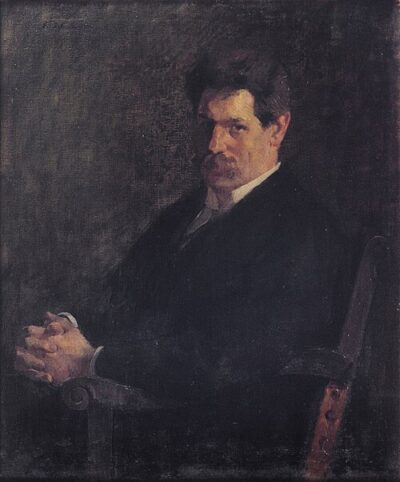
Albert Schweitzer
Albert Schweitzer was a French-German physician, theologian, musician, and philosopher. Born January 14, 1875, in Kaysersberg. Died September 4, 1965, in Lambaréné. Known for The Quest of the Historical Jesus. Educated at University of Strasbourg and University of Tübingen. Awards include Nobel Peace Prize, Officer of the Legion of Honour and honorary citizen of Frankfurt am Main.
Facts
55 facts · 2 confirmed by two sources · 20 cited · 33 from one source
Where this comes from
Papalocal keeps its own record. It started from these sources; what each one said is kept here as it was copied, so a change on their side never changes this page by itself. Tap one to read its version.
What Wikidata says · copied November 16, 2026 · revision 2568741785
- Described as
- French-German physician, theologian, musician, and philosopher (1875-1965)
- Other names
- Швейцер, Альберт, Docteur Schweitzer, Альберт Швейцер, Schweitzer, Ludwig Philipp Albert Schweitzer
- Born
- January 14, 1875 · 20 references
- Died
- September 4, 1965 · 18 references
- Born in
- Kaysersberg · 4 references
- Died in
- Lambaréné · 2 references
- Buried in
- Albert Schweitzer Hospital
- Name at birth
- Ludwig Philipp Albert Schweitzer · 2 references
- Citizen of
- German Reich (1875–1920) · 2 references; France (1920–1965)
- Occupation
- theologian · 2 references; philosopher · 2 references; physician · 2 references; organist · 1 reference; physician writer; university teacher; musicologist · 1 reference; music historian
- Worked for
- University of Strasbourg
- Education
- University of Strasbourg; University of Tübingen; philosophy faculty of the German university of Prague · 1 reference
- Member of
- Académie des Sciences Morales et Politiques; American Academy of Arts and Sciences; Bavarian Academy of Fine Arts; Royal Prussian Academy of Sciences; Order of Saint Lazarus; Schwarzburgbund; German Academy for Language and Literature
- Record label
- Columbia Records; Philips Records
- Known for
- The Quest of the Historical Jesus
- Awards
- Nobel Peace Prize (1952) · 2 references; Officer of the Legion of Honour (1950); honorary citizen of Frankfurt am Main; Peace Prize of the German Publishers' and Booksellers' Association (1951) · 1 reference; Goethe Prize of the City of Frankfurt (1928); Pour le Mérite; Goethe Plaque of the City of Frankfurt (1932); Paracelsus Medal of the German Medical Association (1952); James Cook Medal (1959) · 1 reference; Pour le Mérite for Sciences and Arts order (1954) · 1 reference; honorary citizen of Pfaffenhoffen · 1 reference; Goethe Medal for Art and Science; Great Gold medal of the Société d'Encouragement au Progrès (1959); Sonning Prize (1959) · 1 reference; Honorary member of the Order of Merit (1955) · 1 reference
- Field
- philosophy
- Spouse
- Helene Bresslau · 1 reference
- Children
- Rhena Schweitzer Miller · 1 reference
- Father
- Louis Théophile Schweitzer · 1 reference
- Mother
- Adèle Schillinger · 1 reference
- Religion
- Protestantism; reformed · 1 reference
- Lived in
- Strasbourg; Gunsbach (–1913); Lambaréné (1924–)
- Wikipedias with a page
- 122
Wikidata item Q49325 (wikidata.org/wiki/Q49325), public domain (CC0). Copied November 16, 2026.
What Wikipedia says · copied November 16, 2026 · revision 1385748755
Ludwig Philipp Albert Schweitzer (German: [ˈalbɛʁt ˈʃvaɪtsɐ] ; 14 January 1875 – 4 September 1965) was a German polymath from Alsace. He was a theologian, organist, musicologist, writer, humanitarian, philosopher, and physician. As a Lutheran minister, Schweitzer challenged both the secular view of the historical Jesus as depicted by the historical-critical method current at this time, as well as the traditional Christian view. His contributions to the interpretation of Pauline Christianity concern the role of Paul's mysticism of "being in Christ" as primary and the doctrine of justification by faith as secondary.
He received the 1952 Nobel Peace Prize for his philosophy of "Reverence for Life". His philosophy was expressed in many ways, but most famously in founding and sustaining the Hôpital Albert Schweitzer in Lambaréné, French Equatorial Africa (now Gabon). As a music scholar and organist, he studied the music of German composer Johann Sebastian Bach and influenced the Organ Reform Movement (Orgelbewegung).
- Born, in its opening lines
- January 14, 1875
- Died, in its opening lines
- September 4, 1965
From the Wikipedia article “Albert Schweitzer” (en.wikipedia.org/wiki/Albert_Schweitzer), by its contributors, under CC BY-SA 4.0 (creativecommons.org/licenses/by-sa/4.0/). Copied November 16, 2026; not changed.
Confirmed Two sources agree. Cited One source, and it names where it got it. One source One source, without a reference of its own. Sources disagree The sources disagree. We show the best-supported value and keep theirs below.
