
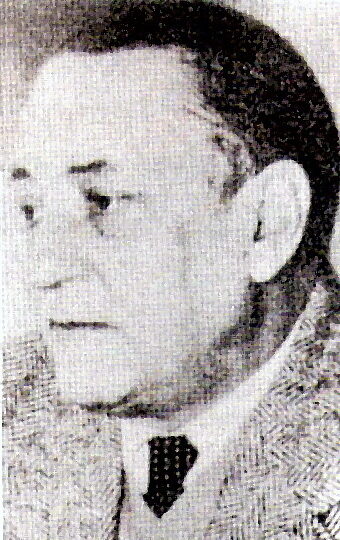
Alejo Carpanter
Alejo Carpanter was a Cuban-French writer and musicologist. Born December 26, 1904, in Lausanne. Died April 24, 1980, in 7th arrondissement of Paris. Positions held include ambassador and cultural attaché (1966–). Known for The Kingdom of this World, Explosion in a Cathedral and The Harp and the Shadow. Awards include Miguel de Cervantes Prize, Prix mondial Cino Del Duca and Prix Médicis étranger.
Facts
30 facts · 2 confirmed by two sources · 15 cited · 13 from one source
Where this comes from
Papalocal keeps its own record. It started from these sources; what each one said is kept here as it was copied, so a change on their side never changes this page by itself. Tap one to read its version.
What Wikidata says · copied November 16, 2026 · revision 2568498630
- Described as
- Cuban-French writer and musicologist (1904–1980)
- Other names
- Alejo Carpentier y Valmont, Alejo F. Carpentier y Valmont, Alekho Karpentér, Alekho Karpenter, Alejo Carpentier Piconcio
- Born
- December 26, 1904 · 13 references
- Died
- April 24, 1980 · 9 references
- Born in
- Lausanne · 2 references
- Died in
- 7th arrondissement of Paris · 2 references
- Buried in
- Colón Cemetery, Havana · 1 reference
- Cause of death
- cancer
- Name at birth
- tiline
- Citizen of
- Cuba; France · 1 reference
- Occupation
- writer · 3 references; journalist · 1 reference; essayist · 2 references; musicologist · 2 references; literary critic · 1 reference; diplomat · 1 reference; university teacher · 1 reference; publisher · 2 references
- Positions held
- ambassador; cultural attaché (1966–) · 1 reference
- Worked for
- El Mundo · 1 reference
- Known for
- The Kingdom of this World · 1 reference; Explosion in a Cathedral · 2 references; The Harp and the Shadow · 2 references; Praised Be God! · 1 reference; Guerra del tiempo · 1 reference
- Awards
- Miguel de Cervantes Prize (1977) · 1 reference; Prix mondial Cino Del Duca (1975) · 1 reference; Prix Médicis étranger (1979) · 1 reference; prix du meilleur livre étranger - roman ou poésie (1956) · 1 reference; Alfonso Reyes International Prize (1975) · 1 reference
- Wikipedias with a page
- 72
Wikidata item Q216466 (wikidata.org/wiki/Q216466), public domain (CC0). Copied November 16, 2026.
What Wikipedia says · copied November 16, 2026 · revision 1378036654
Alejo Carpentier y Valmont (Spanish pronunciation: [karpanˈtje], French pronunciation: [kaʁpɑ̃tje]; December 26, 1904 – April 24, 1980) was a Cuban novelist, essayist, and musicologist who greatly influenced Latin American literature during its famous "boom" period. Born in Lausanne, Switzerland, of French and Russian parentage, Carpentier grew up in Havana, Cuba, and despite his European birthplace, he strongly identified as Cuban throughout his life. He traveled extensively, particularly in France, and to South America and Mexico, where he met prominent members of the Latin American cultural and artistic community. Carpentier took a keen interest in Latin American politics and often aligned himself with revolutionary movements, such as Fidel Castro's Communist Revolution in Cuba in the mid-20th century. Carpentier was jailed and exiled for his leftist political philosophies.
With a developed knowledge of music, Carpentier explored musicology, publishing an in-depth study of the music of Cuba, La música en Cuba and integrated musical themes and literary techniques throughout his works. He explored elements of Afro-Cubanism and incorporated the cultural aspects into the majority of his writings. Although Carpentier wrote in a myriad of genres, such as journalism, radio drama, playwrighting, academic essays, opera and libretto, he is best known for his novels. He was among the first practitioners of magical realism using the technique, lo real maravilloso to explore the fantastic quality of Latin American history and culture. The most famous example of Afro-Cuban influence and use of lo real maravilloso is Carpentier's 1949 novel El reino de este mundo (The Kingdom of this World) about the Haitian revolution of the late 18th century.
Carpentier's writing style integrated the resurgent Baroque style, or New World Baroque style that Latin American artists adopted from the European model and assimilated to the Latin American artistic vision. With a first-hand experience of the French Surrealist movement, Carpentier also adapted the Surrealist theory to Latin American literature. Always eager to explore more than Cuban identity, Carpentier used his traveling experiences throughout Europe and Latin America to expand his understanding of Latin American identity. Carpentier wove elements of Latin American political history, music, social injustice and art into the tapestries of his writings, all of which exerted a decisive influence on the works of younger Latin American and Cuban writers like Lisandro Otero, Leonardo Padura and Fernando Velázquez Medina.
Carpentier died in Paris, France, in 1980 and was buried in Havana's Colon Cemetery with other Cuban political and artistic luminaries.
- Born, in its opening lines
- December 26, 1904
- Died, in its opening lines
- April 24, 1980
From the Wikipedia article “Alejo Carpentier” (en.wikipedia.org/wiki/Alejo_Carpentier), by its contributors, under CC BY-SA 4.0 (creativecommons.org/licenses/by-sa/4.0/). Copied November 16, 2026; not changed.
Confirmed Two sources agree. Cited One source, and it names where it got it. One source One source, without a reference of its own. Sources disagree The sources disagree. We show the best-supported value and keep theirs below.
