
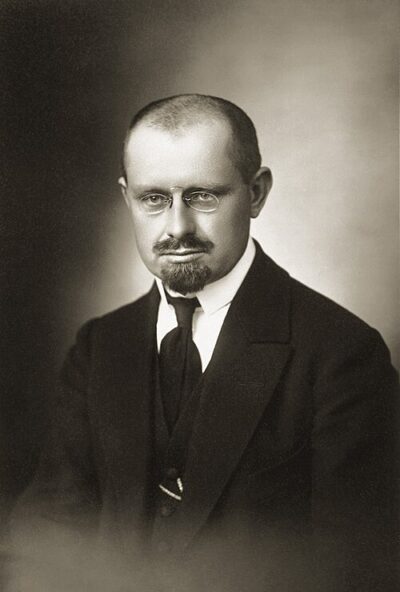
Aleksandras Stulginskis
Aleksandras Stulginskis was a Second President of Lithuania (from 19 June 1920 until 7 June 1926). Born February 26, 1885, in Kutaliai. Died September 22, 1969, in Kaunas. Positions held include Speaker of the Seimas and President of the Republic of Lithuania (1920–1926). Educated at University of Innsbruck and Kaltinėnai Aleksandras Stulginskis Gymnasium.
Facts
16 facts · 2 confirmed by two sources · 3 cited · 11 from one source
Where this comes from
Papalocal keeps its own record. It started from these sources; what each one said is kept here as it was copied, so a change on their side never changes this page by itself. Tap one to read its version.
What Wikidata says · copied November 16, 2026 · revision 2563065763
- Described as
- Second President of Lithuania (from 19 June 1920 until 7 June 1926)
- Born
- February 26, 1885 · 1 reference
- Died
- September 22, 1969 · 1 reference
- Born in
- Kutaliai
- Died in
- Kaunas · 1 reference
- Buried in
- Cemetery in Panemunė
- Citizen of
- Lithuania · 1 reference
- Occupation
- diplomat; journalist; farmer; politician · 1 reference
- Positions held
- Speaker of the Seimas; President of the Republic of Lithuania (1920–1926)
- Political party
- Lithuanian Christian Democrats
- Education
- University of Innsbruck; Kaltinėnai Aleksandras Stulginskis Gymnasium; Liepāja Gymnasium
- Wikipedias with a page
- 38
Wikidata item Q380985 (wikidata.org/wiki/Q380985), public domain (CC0). Copied November 16, 2026.
What Wikipedia says · copied November 16, 2026 · revision 1365443629
Aleksandras Stulginskis [ɐlʲɛkˈsɐ̂ˑndrɐs stʊlʲˈɡʲɪ̂nʲsʲkʲɪs] (26 February 1885 – 22 September 1969) was the second President of Lithuania (1920–1926). Stulginskis was also acting President of Lithuania for a few hours later in 1926, following a military coup that was led by his predecessor, President Antanas Smetona, and which had brought down Stulginskis's successor, Kazys Grinius. The coup returned Smetona to office after Stulginskis's brief formal assumption of the Presidency.
He began his theological studies in Kaunas and continued in Innsbruck, Austria. However, he decided not to become a priest and moved to the Institute of Agricultural Sciences in University of Halle. He graduated in 1913 and returned to Lithuania. There, he started to work as a farmer. He published many articles on agronomy in Lithuanian press. In 1918, he started to publish journals Ūkininkas ("Farmer") and Ūkininko kalendorius ("Farmer's Calendar").
During World War I, he moved to Vilnius. He was one of the founders of the Lithuanian Christian Democratic Party and the head of its Central Committee in 1917. He signed the memorandum for the president Woodrow Wilson, addressing the question of the recognition of the Lithuanian statehood by the United States. Contrary to Smetona's views, Stulginskis was oriented towards the Entente. He was one of the co-organizers of the Vilnius Conference. After, he was elected to the Council of Lithuania.
On 16 February 1918, he signed the Act of Independence of Lithuania. He was an advocate of the democratic republic as the form of the Lithuanian state. Thus, he strongly opposed the idea of monarchy (actually, Mindaugas II was the King of Lithuania from 11 July to 2 November 1918). In independent Lithuania, Stulginskis was in charge of organizing the national army to defend the country against the aggressions of Bolsheviks and Poles.
He served as a minister many times. Between May 1920 and 1922, he was Speaker of the Constituent Assembly of Lithuania and thus acting president of the republic. From 1922 to 1926, he was the second President of Lithuania. Stulginskis was Speaker of the Seimas from 1926 to 1927.
He withdrew from politics in 1927, and worked on his farm. In 1941, Stulginskis and his wife were arrested by the Soviet NKVD and deported to a gulag in the Krasnoyarsk Krai, while his wife was deported to the Komi Republic. After World War II, in 1952, he was officially sentenced by the Soviet authorities to 25 years in prison for his anti-socialist and clerical policies in pre-war Lithuania.
Released after Joseph Stalin's death in 1956, he was allowed to emigrate, yet he refused and returned to the Lithuanian SSR. Stulginskis settled in Kaunas, where he died on 22 September 1969, aged 84, the last of the Signatories of the Act of Independence of Lithuania.
- Born, in its opening lines
- February 26, 1885
- Died, in its opening lines
- September 22, 1969
From the Wikipedia article “Aleksandras Stulginskis” (en.wikipedia.org/wiki/Aleksandras_Stulginskis), by its contributors, under CC BY-SA 4.0 (creativecommons.org/licenses/by-sa/4.0/). Copied November 16, 2026; not changed.
Confirmed Two sources agree. Cited One source, and it names where it got it. One source One source, without a reference of its own. Sources disagree The sources disagree. We show the best-supported value and keep theirs below.
