
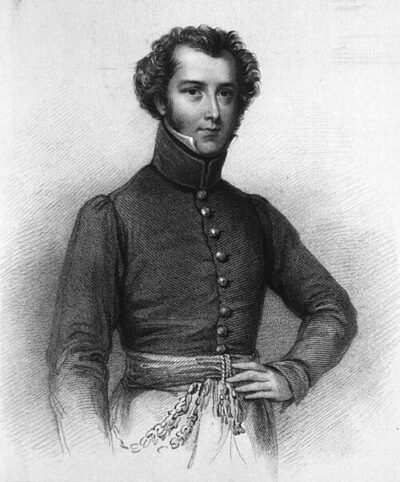
Alexander Gordon Laing
Alexander Gordon Laing was a Scottish explorer. Born December 27, 1793, in Edinburgh. Died September 26, 1826, in Araouane. Positions held include military officer. Educated at University of Edinburgh. Awards include Grande Médaille d'Or des Explorations.
Facts
12 facts · 1 confirmed by two sources · 2 cited · 8 from one source · 1 where the sources disagree
What’s different
- Born: we show December 27, 1793 (Sources disagree). Wikipedia says December 27, 1794
Where this comes from
Papalocal keeps its own record. It started from these sources; what each one said is kept here as it was copied, so a change on their side never changes this page by itself. Tap one to read its version.
What Wikidata says · copied November 17, 2026 · revision 2557646120
- Described as
- Scottish explorer (1793–1826)
- Born
- December 27, 1793 · 1 reference
- Died
- September 26, 1826 · 3 references
- Born in
- Edinburgh · 2 references
- Died in
- Araouane · 1 reference
- Citizen of
- United Kingdom of Great Britain and Ireland
- Occupation
- explorer; military personnel
- Positions held
- military officer
- Education
- University of Edinburgh
- Awards
- Grande Médaille d'Or des Explorations (1830)
- Military branch
- British Army
- Lived in
- Gordon Laing House (1826)
- Wikipedias with a page
- 24
Wikidata item Q587573 (wikidata.org/wiki/Q587573), public domain (CC0). Copied November 17, 2026.
What Wikipedia says · copied November 17, 2026 · revision 1372450257
Major Alexander Gordon Laing (27 December 1794 – 26 September 1826) was a Scottish explorer and the first European to reach Timbuktu, arriving there via the north-to-south route in August 1826. He was killed five weeks after he departed Timbuktu.
- Born, in its opening lines
- December 27, 1794
- Died, in its opening lines
- September 26, 1826
From the Wikipedia article “Alexander Gordon Laing” (en.wikipedia.org/wiki/Alexander_Gordon_Laing), by its contributors, under CC BY-SA 4.0 (creativecommons.org/licenses/by-sa/4.0/). Copied November 17, 2026; not changed.
Confirmed Two sources agree. Cited One source, and it names where it got it. One source One source, without a reference of its own. Sources disagree The sources disagree. We show the best-supported value and keep theirs below.
