
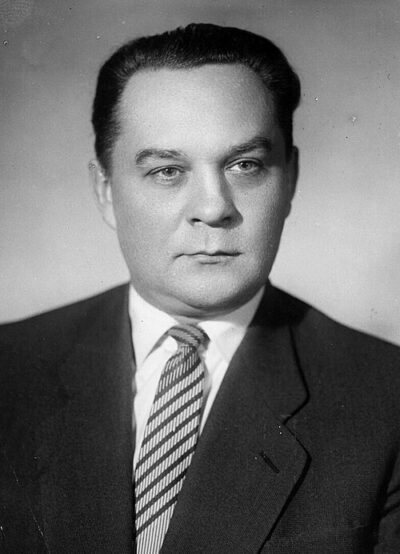
Alexander Shelepin
Alexander Shelepin was a Soviet politician, KGB chairman. Born August 18, 1918, in Voronezh. Died October 24, 1994, in Moscow. Positions held include Chairman of the KGB (1958–1961), deputy of the Supreme Soviet of the Soviet Union and First secretary of the VLKSM Central committee (1952–1958). Educated at Moscow Institute of Philosophy, Literature, and History. Awards include Medal "For the Victory over Germany in the Great Patriotic War 1941–1945", Order of Lenin and Order of the Patriotic War, 2nd class.
Facts
31 facts · 2 confirmed by two sources · 2 cited · 27 from one source
Where this comes from
Papalocal keeps its own record. It started from these sources; what each one said is kept here as it was copied, so a change on their side never changes this page by itself. Tap one to read its version.
What Wikidata says · copied November 17, 2026 · revision 2562708597
- Described as
- Soviet politician, KGB chairman (1918-1994)
- Other names
- Alexander Nikolayevich Shelepin
- Born
- August 18, 1918 · 3 references
- Died
- October 24, 1994 · 3 references
- Born in
- Voronezh
- Died in
- Moscow
- Buried in
- Novodevichy Cemetery · 1 reference
- Citizen of
- Soviet Union; Russia
- Occupation
- politician · 1 reference
- Positions held
- Chairman of the KGB (1958–1961); deputy of the Supreme Soviet of the Soviet Union; First secretary of the VLKSM Central committee (1952–1958); Secretary of the Communist Party of the Soviet Union (1961–1967); Deputy Chairman of the Council of Ministers (1962–1965); Member of the Politburo of the CPSU Central Committee (1964–1975) · 1 reference
- Political party
- Communist Party of the Soviet Union
- Education
- Moscow Institute of Philosophy, Literature, and History
- Member of
- Central Committee of the Communist Party of the Soviet Union; Politburo of the Central Committee of the Communist Party of the Soviet Union
- Awards
- Medal "For the Victory over Germany in the Great Patriotic War 1941–1945"; Order of Lenin; Order of the Patriotic War, 2nd class; Order of the Red Banner of Labour; Order of the Red Star; Medal "For Valiant Labour in the Great Patriotic War 1941–1945"; Medal "For the Defence of Moscow"; Jubilee Medal "In Commemoration of the 100th Anniversary of the Birth of Vladimir Ilyich Lenin" · 1 reference; Medal "To a Partisan of the Patriotic War" · 1 reference; Medal "To a Partisan of the Patriotic War", 1st class · 1 reference; Jubilee Medal "Twenty Years of Victory in the Great Patriotic War 1941–1945" · 1 reference; Jubilee Medal "Thirty Years of Victory in the Great Patriotic War 1941–1945" · 1 reference; Jubilee Medal "Forty Years of Victory in the Great Patriotic War 1941–1945" · 1 reference
- Wikipedias with a page
- 25
Wikidata item Q533890 (wikidata.org/wiki/Q533890), public domain (CC0). Copied November 17, 2026.
What Wikipedia says · copied November 17, 2026 · revision 1378226817
Alexander Nikolayevich Shelepin (Russian: Алекса́ндр Никола́евич Шеле́пин; 18 August 1918 – 24 October 1994) was a Soviet politician and intelligence officer. A long-time member of the Central Committee of the Communist Party of the Soviet Union, Shelepin served as a First Deputy Premier, a full member of the Politburo and as the chairman of the KGB from December 1958 to November 1961. Even after ostensibly leaving the KGB, he continued to hold considerable influence over the agency well until 1967 through his protégé, Vladimir Semichastny, who succeeded him as KGB Chairman.
Ambitious and well-educated, Alexander Shelepin was the leader of a hard-line faction within the Communist Party that played a decisive role in ousting Soviet premier and First Secretary, Nikita Khrushchev, in 1964. Opposed to the policy of détente, he was eventually outmaneuvered by Leonid Brezhnev and gradually stripped of his power, thus failing in his ambition to lead the Soviet Union.
- Born, in its opening lines
- August 18, 1918
- Died, in its opening lines
- October 24, 1994
From the Wikipedia article “Alexander Shelepin” (en.wikipedia.org/wiki/Alexander_Shelepin), by its contributors, under CC BY-SA 4.0 (creativecommons.org/licenses/by-sa/4.0/). Copied November 17, 2026; not changed.
Confirmed Two sources agree. Cited One source, and it names where it got it. One source One source, without a reference of its own. Sources disagree The sources disagree. We show the best-supported value and keep theirs below.
