
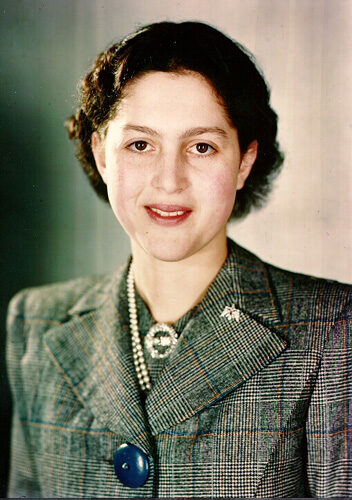
Alexandra of Yugoslavia
Alexandra of Yugoslavia was a queen consort of Yugoslavia from 1944 to 1945. Born March 25, 1921, in Athens. Died January 30, 1993, in East Sussex. Educated at Heathfield School. Awards include Order of Saints Olga and Sophia, Order of the Star of Karađorđe and Order of the White Eagle.
Facts
21 facts · 2 confirmed by two sources · 3 cited · 16 from one source
Where this comes from
Papalocal keeps its own record. It started from these sources; what each one said is kept here as it was copied, so a change on their side never changes this page by itself. Tap one to read its version.
What Wikidata says · copied November 16, 2026 · revision 2564638552
- Described as
- queen consort of Yugoslavia from 1944 to 1945
- Other names
- Alexandra of Greece, Alexandra Oldenburg Karadjordjevic, Alexandra of Greece, Queen of Yugoslavia
- Born
- March 25, 1921 · 4 references
- Died
- January 30, 1993 · 4 references
- Born in
- Athens · 1 reference
- Died in
- East Sussex
- Buried in
- Tatoi Royal Cemetery (1993–2013) · 1 reference; Oplenac (2013–)
- Cause of death
- cancer
- Citizen of
- Kingdom of Yugoslavia
- Occupation
- consort
- Education
- Heathfield School
- Member of
- Serbian Royal Family; Greek Royal Family; Yugoslav Royal Family (1944–1992)
- Awards
- Order of Saints Olga and Sophia · 1 reference; Order of the Star of Karađorđe · 1 reference; Order of the White Eagle · 1 reference
- Spouse
- Peter II of Yugoslavia (1944–1970) · 1 reference
- Children
- Alexander, Crown Prince of Serbia · 1 reference
- Father
- Alexander of Greece
- Mother
- Aspasia Manos
- Religion
- Eastern Orthodox Church
- Wikipedias with a page
- 40
Wikidata item Q167423 (wikidata.org/wiki/Q167423), public domain (CC0). Copied November 16, 2026.
What Wikipedia says · copied November 16, 2026 · revision 1384393120
Alexandra (Greek: Αλεξάνδρα, Serbo-Croatian: Александра/Aleksandra, in 1922 retroactively recognised as Princess Alexandra of Greece and Denmark; 25 March 1921 – 30 January 1993) was the last Queen of Yugoslavia as the wife of King Peter II.
Posthumous daughter of King Alexander of Greece and his morganatic wife, Aspasia Manos, Alexandra was not part of the Greek royal family until July 1922 when, at the behest of Queen Sophia, Alexander's mother, a law was passed which retroactively recognized marriages of members of the royal family, although on a non-dynastic basis; in consequence, she obtained the style and name of Her Royal Highness Princess Alexandra of Greece and Denmark. At the same time, a serious political and military crisis, linked to the defeat of Greece by Turkey in Anatolia, led to the deposition and exile of the royal family, beginning in 1924. Being the only members of the dynasty allowed to remain in the country by the Second Hellenic Republic, the princess and her mother later found refuge in Italy with Dowager Queen Sophia.
After three years with her paternal grandmother, Alexandra left Florence to continue her studies in the United Kingdom, while her mother settled in Venice. Separated from her mother, the princess fell ill, forcing Aspasia to make her leave the boarding school where she was studying. After the restoration of her uncle, King George II, on the Hellenic throne in 1935, Alexandra stayed in her native country several times but the outbreak of the Greco-Italian War, in 1940, forced her and her mother to settle in Athens. The invasion of Greece by the Axis powers in April–May 1941, however, led to their moving to the United Kingdom. Again exiled, Alexandra met in London the young King Peter II of Yugoslavia, who also went into exile after the invasion of his country by the Germans.
Quickly, Alexandra and Peter II fell in love and planned to marry. Opposition from both Peter's mother, Maria, and the Yugoslav government in exile forced the couple to delay their marriage plans until 1944, when they finally celebrated their wedding. A year later, Alexandra gave birth to her only son, Alexander, Crown Prince of Yugoslavia. However, the happiness of the family was short-lived: on 29 November 1945, Marshal Tito proclaimed the Federal People's Republic of Yugoslavia and Alexandra, who had never set foot in her adopted country, was left without a crown. The abolition of the Yugoslav monarchy had very serious consequences for the royal couple. Penniless and unable to adapt to the role of citizen, Peter II turned to alcoholism and multiple affairs with other women. Depressed by the behavior of her husband, Alexandra neglected her son and made several suicide attempts. After the death of Peter II in 1970, Alexandra's health continued to deteriorate. She died of cancer in 1993. Her remains were buried in the Royal Cemetery Plot in the park of Tatoi, in Greece, before being transferred to the Royal Mausoleum of Oplenac in 2013.
- Born, in its opening lines
- March 25, 1921
- Died, in its opening lines
- January 30, 1993
From the Wikipedia article “Alexandra of Yugoslavia” (en.wikipedia.org/wiki/Alexandra_of_Yugoslavia), by its contributors, under CC BY-SA 4.0 (creativecommons.org/licenses/by-sa/4.0/). Copied November 16, 2026; not changed.
Confirmed Two sources agree. Cited One source, and it names where it got it. One source One source, without a reference of its own. Sources disagree The sources disagree. We show the best-supported value and keep theirs below.
