
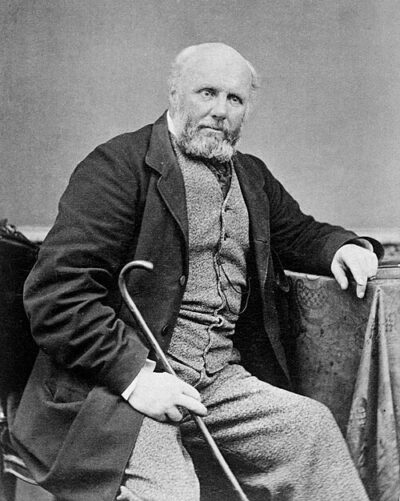
Alfred Domett
Alfred Domett was a Prime Minister of New Zealand. Born May 20, 1811, in Camberwell. Died November 2, 1887, in London. Positions held include Prime Minister of New Zealand (1862–1863). Educated at St John's College. Awards include Companion of the Order of St Michael and St George.
Facts
13 facts · 2 confirmed by two sources · 3 cited · 8 from one source
Where this comes from
Papalocal keeps its own record. It started from these sources; what each one said is kept here as it was copied, so a change on their side never changes this page by itself. Tap one to read its version.
What Wikidata says · copied November 18, 2026 · revision 2562793176
- Described as
- Prime Minister of New Zealand (1811-1887)
- Born
- May 20, 1811 · 2 references
- Died
- November 2, 1887 · 2 references
- Born in
- Camberwell
- Died in
- London · 1 reference
- Buried in
- Kensal Green Cemetery · 1 reference
- Citizen of
- New Zealand
- Occupation
- politician; poet; barrister; writer · 1 reference
- Positions held
- Prime Minister of New Zealand (1862–1863) · 1 reference
- Education
- St John's College
- Awards
- Companion of the Order of St Michael and St George
- Wikipedias with a page
- 21
Wikidata item Q1360069 (wikidata.org/wiki/Q1360069), public domain (CC0). Copied November 18, 2026.
What Wikipedia says · copied November 18, 2026 · revision 1370093700
Alfred Domett (20 May 1811 – 2 November 1887) was the fourth premier of New Zealand, a close friend of the poet Robert Browning and author of the epic poem Ranolf and Amohia, a South Sea Day Dream. Born in England, he emigrated to New Zealand in 1842 and remained there for a further thirty years, holding many significant political posts.
- Born, in its opening lines
- May 20, 1811
- Died, in its opening lines
- November 2, 1887
From the Wikipedia article “Alfred Domett” (en.wikipedia.org/wiki/Alfred_Domett), by its contributors, under CC BY-SA 4.0 (creativecommons.org/licenses/by-sa/4.0/). Copied November 18, 2026; not changed.
Confirmed Two sources agree. Cited One source, and it names where it got it. One source One source, without a reference of its own. Sources disagree The sources disagree. We show the best-supported value and keep theirs below.
