
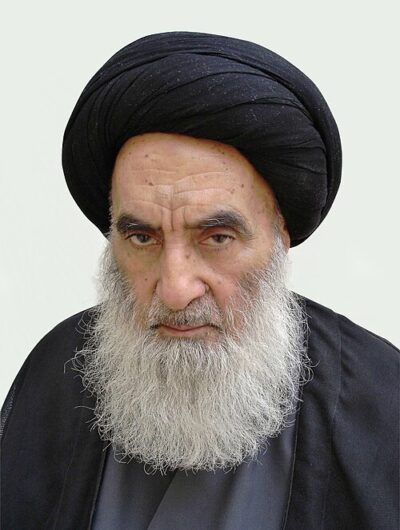
Ali Sistani is an Iranian cleric. Born August 4, 1930, in Mashhad. Educated at Hawza ‘Ilmiyya Khorasan and Qom Hawza. Awards include Time 100 (2 times).
Facts
17 facts · 1 confirmed by two sources · 3 cited · 13 from one source
Where this comes from
Papalocal keeps its own record. It started from these sources; what each one said is kept here as it was copied, so a change on their side never changes this page by itself. Tap one to read its version.
What Wikidata says · copied November 16, 2026 · revision 2569084093
- Described as
- Iranian cleric
- Born
- August 4, 1930 · 2 references
- Born in
- Mashhad · 1 reference
- Citizen of
- Iran (1930–) · 1 reference
- Occupation
- ulema; Islamic jurist; marji'
- Education
- Hawza ‘Ilmiyya Khorasan; Qom Hawza; Najaf Seminary
- Awards
- Time 100 (2 times) (2004, 2005) · 1 reference
- Field
- fiqh; Usul al-fiqh
- Children
- Mohammed Ridha al-Sistani
- Religion
- Islam; Shia Islam
- Lived in
- Najaf (1950–)
- Website
- http://www.sistani.org/
- Wikipedias with a page
- 46
Wikidata item Q337489 (wikidata.org/wiki/Q337489), public domain (CC0). Copied November 16, 2026.
What Wikipedia says · copied November 16, 2026 · revision 1375826900
Ali al-Husayni al-Sistani (Arabic: علي الحسيني السيستاني; born 4 August 1930) is an Islamic scholar and the dean of the Hawza in Najaf, Iraq. A Grand Ayatollah, Sistani is considered one of the leading religious leaders of Twelver Shia Muslims. After the invasion of Iraq and the subsequent overthrow of the authoritarian Baathist regime, Sistani advocated for democratization instead of the system of Wilayat al-Faqih. He has likewise endorsed rule of law, Iraqi nationalism, non-sectarianism and popular sovereignty. He has been a vocal critic of foreign interference in Iraqi affairs and has warned foreign actors against imposing their will on the Iraqi people.
Born in Mashhad, Iran to a Sayyid family, Sistani studied in Qom under Hossein Borujerdi and later in Najaf under Abu al-Qasim al-Khu'i. An Usuli, Sistani rose to the rank of mujtahid in 1960 and succeeded Abd al-A'la al-Sabziwari as Grand Ayatollah. Sistani was included in top positions of The Muslim 500: The World's Most Influential Muslims from 2004 to 2024 and named one of the 100 most influential people in the world by Time magazine in 2004 and 2005.
- Born, in its opening lines
- August 4, 1930
From the Wikipedia article “Ali al-Sistani” (en.wikipedia.org/wiki/Ali_al-Sistani), by its contributors, under CC BY-SA 4.0 (creativecommons.org/licenses/by-sa/4.0/). Copied November 16, 2026; not changed.
Confirmed Two sources agree. Cited One source, and it names where it got it. One source One source, without a reference of its own. Sources disagree The sources disagree. We show the best-supported value and keep theirs below.
