
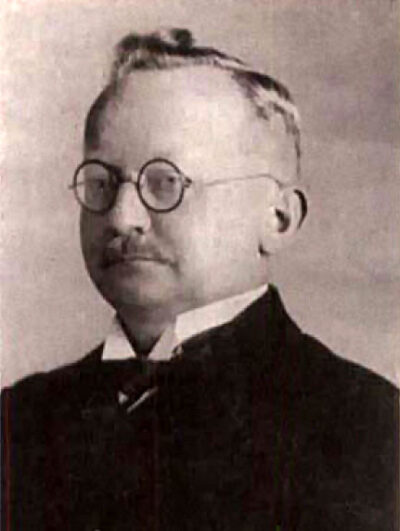
Alwin Mittasch
Alwin Mittasch was a German chemist. Born December 27, 1869, in Großdehsa. Died June 4, 1953, in Heidelberg. Educated at Leipzig University. Awards include Carus medal, Bunsen Medal and Emil Fischer Medal.
Facts
15 facts · 2 confirmed by two sources · 7 cited · 6 from one source
Where this comes from
Papalocal keeps its own record. It started from these sources; what each one said is kept here as it was copied, so a change on their side never changes this page by itself. Tap one to read its version.
What Wikidata says · copied November 17, 2026 · revision 2569165055
- Described as
- German chemist (1869-1953)
- Other names
- Paul Alwin Mittasch
- Born
- December 27, 1869 · 3 references
- Died
- June 4, 1953 · 2 references
- Born in
- Großdehsa · 1 reference
- Died in
- Heidelberg · 1 reference
- Citizen of
- Germany
- Occupation
- chemist · 1 reference; university teacher · 1 reference
- Education
- Leipzig University
- Member of
- Heidelberg Academy of Sciences and Humanities (1939–) · 1 reference; German Academy of Sciences Leopoldina
- Awards
- Carus medal (1942); Bunsen Medal (1929); Emil Fischer Medal (1927) · 1 reference; Fresenius Prize (1927) · 1 reference
- Field
- chemistry · 1 reference
- Wikipedias with a page
- 24
Wikidata item Q85500 (wikidata.org/wiki/Q85500), public domain (CC0). Copied November 17, 2026.
What Wikipedia says · copied November 17, 2026 · revision 1371966384
Paul Alwin Mittasch (Sorbian: Pawoł Alwin Mitaš; 27 December 1869 – 4 June 1953) was a German chemist and scientific historian of Sorbian descent. He is well known by his pioneering and systematic research in the development of catalysts for the industrial ammonia synthesis using the Haber–Bosch process.
- Born, in its opening lines
- December 27, 1869
- Died, in its opening lines
- June 4, 1953
From the Wikipedia article “Alwin Mittasch” (en.wikipedia.org/wiki/Alwin_Mittasch), by its contributors, under CC BY-SA 4.0 (creativecommons.org/licenses/by-sa/4.0/). Copied November 17, 2026; not changed.
Confirmed Two sources agree. Cited One source, and it names where it got it. One source One source, without a reference of its own. Sources disagree The sources disagree. We show the best-supported value and keep theirs below.
