
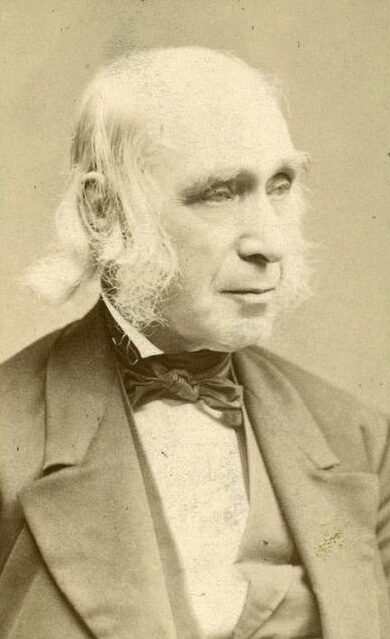
Amos Bronson Alcott
Amos Bronson Alcott was an American teacher, writer, philosopher, and reformer. Born November 29, 1799, in Wolcott. Died March 4, 1888, in Concord. Positions held include professor.
Facts
26 facts · 2 confirmed by two sources · 14 cited · 9 from one source · 1 where the sources disagree
What’s different
- Buried in: we show Sleepy Hollow Cemetery (Sources disagree). Wikidata also lists Massachusetts
Where this comes from
Papalocal keeps its own record. It started from these sources; what each one said is kept here as it was copied, so a change on their side never changes this page by itself. Tap one to read its version.
What Wikidata says · copied November 15, 2026 · revision 2568730319
- Described as
- American teacher, writer, philosopher, and reformer (1799-1888)
- Other names
- Bronson Alcott
- Born
- November 29, 1799 · 6 references
- Died
- March 4, 1888 · 6 references
- Born in
- Wolcott · 3 references
- Died in
- Concord · 3 references
- Buried in
- Massachusetts; Sleepy Hollow Cemetery · 1 reference
- Name at birth
- Amos Bronson Alcott
- Citizen of
- United States
- Occupation
- poet; philosopher · 1 reference; teacher · 1 reference; writer · 2 references; pedagogue · 1 reference
- Positions held
- professor
- Political party
- Republican Party
- Field
- philosophy
- Spouse
- Abby May (1830–1877) · 1 reference
- Children
- Anna Alcott Pratt; Louisa May Alcott · 1 reference; Elizabeth Sewall Alcott; Abigail May Alcott Nieriker
- Mother
- Anna Alcott · 1 reference
- Lived in
- Boston (2 times) (1834–1855) · 1 reference; Concord (2 times) (1840–1848) · 1 reference; Fruitlands (1843–1844) · 1 reference; Walpole (1855–1858) · 1 reference; Orchard House (1858–1877) · 1 reference
- Wikipedias with a page
- 37
Wikidata item Q474235 (wikidata.org/wiki/Q474235), public domain (CC0). Copied November 15, 2026.
What Wikipedia says · copied November 15, 2026 · revision 1375457592
Amos Bronson Alcott (; November 29, 1799 – March 4, 1888) was an American teacher, writer, philosopher, and reformer. As an educator, Alcott pioneered new ways of interacting with young students, focusing on a conversational style, and avoided traditional punishment. He hoped to perfect the human spirit and, to that end, advocated a plant-based diet. He was also an abolitionist and an advocate for women's rights.
Born in Wolcott, Connecticut, in 1799, Alcott had only minimal formal schooling before attempting a career as a traveling salesman. Worried that the itinerant life might have a negative impact on his soul, he turned to teaching. His innovative methods, however, were controversial, and he rarely stayed in one place very long. His most well-known teaching position was at the Temple School in Boston. His experience there was turned into two books: Records of a School and Conversations with Children on the Gospels. Alcott became friends with Ralph Waldo Emerson and became a major figure in transcendentalism. His writings on behalf of that movement, however, are heavily criticized for being incoherent. Based on his ideas for human perfection, Alcott founded Fruitlands, a transcendentalist experiment in community living. The project failed after seven months. Alcott and his family struggled financially for most of his life. Nevertheless, he continued focusing on educational projects and opened a new school at the end of his life in 1879. He died in 1888.
Alcott married Abigail (Abba) May in 1830, and they had four surviving children, all daughters. Their second was Louisa May, who fictionalized her experience with the family in her novel Little Women in 1868.
- Born, in its opening lines
- November 29, 1799
- Died, in its opening lines
- March 4, 1888
From the Wikipedia article “Amos Bronson Alcott” (en.wikipedia.org/wiki/Amos_Bronson_Alcott), by its contributors, under CC BY-SA 4.0 (creativecommons.org/licenses/by-sa/4.0/). Copied November 15, 2026; not changed.
Confirmed Two sources agree. Cited One source, and it names where it got it. One source One source, without a reference of its own. Sources disagree The sources disagree. We show the best-supported value and keep theirs below.
