
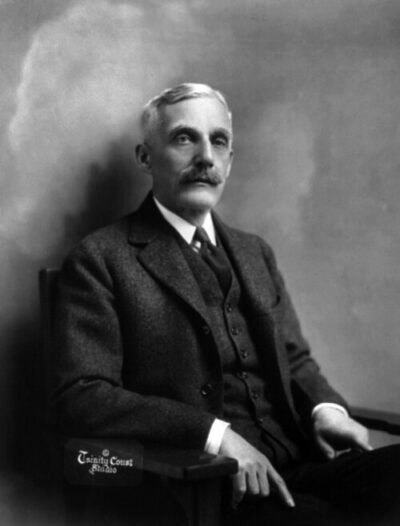
Andrew W. Mellon
Andrew W. Mellon was an American diplomat, banker, businessman, industrialist, philanthropist, and art collector. Born March 24, 1855, in Pittsburgh. Died August 26, 1937, in Southampton. Positions held include United States Ambassador to the United Kingdom (1932–1933) and United States Secretary of the Treasury (1921–1932). Educated at University of Pittsburgh. Awards include American Institute of Chemists Gold Medal.
Facts
25 facts · 2 confirmed by two sources · 11 cited · 12 from one source
Where this comes from
Papalocal keeps its own record. It started from these sources; what each one said is kept here as it was copied, so a change on their side never changes this page by itself. Tap one to read its version.
What Wikidata says · copied November 15, 2026 · revision 2562714044
- Described as
- American diplomat, banker, businessman, industrialist, philanthropist, and art collector (1855–1937)
- Other names
- Hon. A. W. Mellon, A. W. Mellon, Andrew William Mellon, Andrew Mellon
- Born
- March 24, 1855 · 10 references
- Died
- August 26, 1937 · 6 references
- Born in
- Pittsburgh · 1 reference
- Died in
- Southampton
- Buried in
- Trinity Episcopal Church Cemetery · 1 reference
- Citizen of
- United States
- Occupation
- art collector · 1 reference; diplomat; banker · 1 reference; politician · 1 reference; entrepreneur · 1 reference; finance minister · 1 reference
- Positions held
- United States Ambassador to the United Kingdom (1932–1933); United States Secretary of the Treasury (1921–1932)
- Political party
- Republican Party
- Worked for
- United States Department of the Treasury
- Education
- University of Pittsburgh
- Awards
- American Institute of Chemists Gold Medal (1931) · 1 reference
- Spouse
- Nora Mary McMullen (1900–) · 2 references
- Children
- Paul Mellon · 1 reference; Ailsa Mellon Bruce · 1 reference
- Father
- Thomas Mellon
- Mother
- Sarah Jane Negley · 1 reference
- Siblings
- Richard B. Mellon
- Religion
- Episcopal Church
- Wikipedias with a page
- 36
Wikidata item Q446858 (wikidata.org/wiki/Q446858), public domain (CC0). Copied November 15, 2026.
What Wikipedia says · copied November 15, 2026 · revision 1378693034
Andrew William Mellon (; March 24, 1855 – August 26, 1937), known also as A. W. Mellon, was an American banker, businessman, industrialist, philanthropist, art collector, and politician. The son of Mellon family patriarch Thomas Mellon, he established a vast business empire before moving into politics. He served as United States Secretary of the Treasury from March 9, 1921, to February 12, 1932, presiding over the boom years of the 1920s and the Wall Street crash of 1929. A conservative Republican, Mellon favored policies that reduced taxation and the national debt of the United States in the aftermath of World War I. Mellon also helped fund and manage Kennywood Park in West Mifflin, Pennsylvania.
Andrew began working at his father's Pittsburgh, Pennsylvania, bank, T. Mellon & Sons, in the early 1870s, eventually becoming the leading figure in the institution. He later renamed T. Mellon & Sons as Mellon National Bank and established another financial institution, the Union Trust Company in Pittsburgh in 1889. By the end of 1913, Mellon National Bank held more money in deposits than any other bank in Pittsburgh, and the second-largest bank in the region was controlled by Union Trust. In the course of his business career, Mellon owned or helped finance large companies including Alcoa, the New York Shipbuilding Corporation, Old Overholt whiskey, Standard Steel Car Company, Westinghouse Electric Corporation, Koppers, the Pittsburgh Coal Company, the Carborundum Company, Union Steel Company, the McClintic-Marshall Construction Company, Gulf Oil, and numerous others. He was also an influential donor to the Republican Party during the Gilded Age and the Progressive Era.
In 1921, newly elected president Warren G. Harding chose Mellon as his secretary of the treasury. Mellon would remain in office until 1932, serving under Harding, Calvin Coolidge, and Herbert Hoover, all three of whom were members of the Republican Party. Mellon sought to reform federal taxation in the aftermath of World War I. He argued cutting tax rates on top earners would generate more tax revenue for the government, but otherwise left in place a progressive income tax. Some of Mellon's proposals were enacted by the Revenue Act of 1921 and the Revenue Act of 1924, but it was not until the passage of the Revenue Act of 1926 that the "Mellon plan" was fully realized. He also presided over a reduction in the national debt, which dropped substantially in the 1920s. Mellon's influence in state and national politics reached its zenith during Coolidge's presidency. Journalist William Allen White noted that "so completely did Andrew Mellon dominate the White House in the days when the Coolidge administration was at its zenith that it would be fair to call the administration the reign of Coolidge and Mellon."
Mellon's national reputation collapsed following the Wall Street crash of 1929 and the onset of the Great Depression. He participated in various efforts by the Hoover administration to revive the economy and maintain the international economic order, but opposed direct government intervention in the economy. After Congress began impeachment proceedings against Mellon, President Hoover shifted Mellon to the position of United States ambassador to the United Kingdom. Mellon returned to private life after Hoover's defeat in the 1932 presidential election by Franklin D. Roosevelt. Beginning in 1933, the federal government launched a tax fraud investigation on Mellon, leading to a high-profile case that ended with Mellon's estate paying significant sums to settle the matter. Shortly before his death, in 1937, Mellon helped establish the National Gallery of Art. His philanthropic efforts also played a major role in the later establishment of Carnegie Mellon University and the National Portrait Gallery.
- Born, in its opening lines
- March 24, 1855
- Died, in its opening lines
- August 26, 1937
From the Wikipedia article “Andrew Mellon” (en.wikipedia.org/wiki/Andrew_Mellon), by its contributors, under CC BY-SA 4.0 (creativecommons.org/licenses/by-sa/4.0/). Copied November 15, 2026; not changed.
Confirmed Two sources agree. Cited One source, and it names where it got it. One source One source, without a reference of its own. Sources disagree The sources disagree. We show the best-supported value and keep theirs below.
