
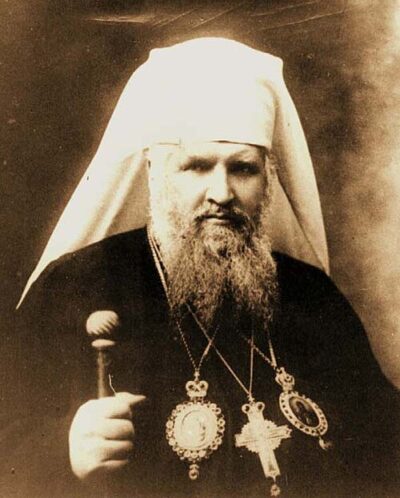
Andrey Sheptytsky
Andrey Sheptytsky was a Metropolitan Archbishop of the Ukrainian Greek Catholic Church. Born July 29, 1865, in Prylbychi. Died November 1, 1944, in Lviv. Positions held include Catholic archbishop (1900–), Member of the Diet of Galicia and Lodomeria (1900–1914) and diocesan bishop (1899–). Educated at University of Wrocław. Awards include Knight Grand Cross of the Iron Crown (Austria), Grand Cross of the Imperial Order of Leopold and honorary citizenship.
Facts
35 facts · 2 confirmed by two sources · 12 cited · 21 from one source
Where this comes from
Papalocal keeps its own record. It started from these sources; what each one said is kept here as it was copied, so a change on their side never changes this page by itself. Tap one to read its version.
What Wikidata says · copied November 18, 2026 · revision 2569008098
- Described as
- Metropolitan Archbishop of the Ukrainian Greek Catholic Church (1865-1944)
- Other names
- Andrew Szeptycki, Andreas Sheptytsky, Andrei Sheptyts’kyi, Andrey Sheptytskyi, Andrei Sheptytsky, Andrew Sheptytsky, Patriarch Andrej Sheptytskyj, Andriy Sheptytsky, Andrzej Szeptycki, Andriy Sheptytskyi, Andrej Sheptytskyj, Andrej Szeptycki
- Born
- July 29, 1865 · 4 references
- Died
- November 1, 1944 · 4 references
- Born in
- Prylbychi · 1 reference
- Died in
- Lviv · 3 references
- Buried in
- Saint George's Cathedral · 1 reference
- Cause of death
- influenza
- Citizen of
- Cisleithania; West Ukrainian People's Republic; Ukrainian People's Republic; Poland · 1 reference
- Occupation
- Catholic priest (1892–) · 1 reference; politician; transitional deacon (1892–) · 1 reference; Catholic bishop (1899–) · 1 reference; metropolitan · 2 references; theologian · 2 references
- Positions held
- Catholic archbishop (1900–) · 2 references; Member of the Diet of Galicia and Lodomeria (1900–1914); diocesan bishop (1899–) · 2 references; Member of the House of Lords (Austria) (1901–)
- Education
- University of Wrocław
- Awards
- Knight Grand Cross of the Iron Crown (Austria) · 1 reference; Grand Cross of the Imperial Order of Leopold; honorary citizenship · 1 reference
- Field
- Christian Church · 1 reference; spiritual literature · 1 reference; monasticism · 1 reference
- Father
- Jan Kanty Szeptycki
- Mother
- Zofia Szeptycka
- Siblings
- Stanisław Szeptycki; Klymentiy Sheptytsky; Aleksander Szeptycki; Leon Józef Maria Szeptycki
- Religion
- Ukrainian Greek Catholic Church; Catholic Church · 1 reference
- Wikipedias with a page
- 22
Wikidata item Q24194 (wikidata.org/wiki/Q24194), public domain (CC0). Copied November 18, 2026.
What Wikipedia says · copied November 18, 2026 · revision 1384908021
Andrey Sheptytsky OSBM (Polish: Andrzej Szeptycki; Ukrainian: Андрей Шептицький, romanized: Andrey Sheptytsky; 29 July 1865 – 1 November 1944) was a prelate and theologian of the Ukrainian Greek Catholic Church who served as Metropolitan of Galicia and Archbishop of Lviv from 1901 until his death in 1944. His tenure in office spanned two world wars and seven political regimes: Austrian, Russian, Ukrainian, Polish, Soviet, Nazi German, and again Soviet.
He was born as Roman Szeptycki in Prylbychi, a village outside of Lviv in the Kingdom of Galicia and Lodomeria (Austrian Galicia), to on his father's side the Roman Catholic Szeptycki family who were part of the Polish szlachta (nobility) of Ruthenian origin, and on his mother's side to the very famous in Poland Fredro family, who also were part of the Roman Catholic Polish szlachta. Although he was baptized in the Latin Church, Sheptytsky joined the Greek-Catholic Order of Saint Basil the Great in 1888, and took the monastic name Andrey. In 1892 he took his solemn vows and was also ordained to the deaconate and the priesthood. He went on to serve as a hegumen and seminary professor in the Basilian Order. In 1899 Sheptytsky was nominated by Emperor Franz Joseph to become the Bishop of Stanislau, and his consecration took place that year. In 1900 he was selected to be the Metropolitan Archbishop of Galicia (also the leading bishop of the Ukrainian Greek Catholic Church), and he was enthroned in 1901.
Sheptytsky had a major role in raising Ukrainian national consciousness in modern-day western Ukraine and expanded the Ukrainian Catholic Church. He defended the interests of Ukrainians to the Austro-Hungarian House of Lords and Emperor Franz Joseph, established schools and a hospital society, and founded a seminary and the order of the Ukrainian Studite Monks. He also facilitated the appointment of the Ukrainian Catholic hierarchy for Ukrainian immigrants in Canada and the United States. Sheptytsky was a member of the National Council of the Western Ukrainian People's Republic after World War I, and when Galicia became part of Poland, he defended the Ukrainian Orthodox from persecution. He also became the main sponsor of the nascent Russian Greek Catholic Church in 1907 with the approval of the Holy See, and was responsible for the Russian Catholic hierarchy until shortly before his death.
According to the church historian Jaroslav Pelikan, "Arguably, Metropolitan Andrey Sheptytsky was the most influential figure ...in the entire history of the Ukrainian Church in the twentieth century". Several locations and organizations in Ukraine have been named after him, including the city of Sheptytskyi in Lviv Oblast and the Andrey Sheptytsky National Museum of Ukrainian culture in the city of Lviv. In 2015, Pope Francis recognized his life as one of heroic virtue by declaring him Venerable.
- Born, in its opening lines
- July 29, 1865
- Died, in its opening lines
- November 1, 1944
From the Wikipedia article “Andrey Sheptytsky” (en.wikipedia.org/wiki/Andrey_Sheptytsky), by its contributors, under CC BY-SA 4.0 (creativecommons.org/licenses/by-sa/4.0/). Copied November 18, 2026; not changed.
Confirmed Two sources agree. Cited One source, and it names where it got it. One source One source, without a reference of its own. Sources disagree The sources disagree. We show the best-supported value and keep theirs below.
