
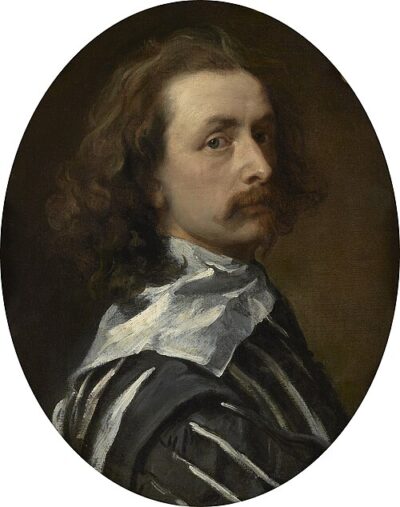
Anthony van Dyck
Anthony van Dyck was a Flemish Baroque artist. Born March 22, 1599, in Antwerp. Died December 9, 1641, in Blackfriars. Positions held include court painter (1632–). Known for Jupiter and Antiope, Charles I at the Hunt and Charles I in Three Positions. Awards include Knight Bachelor.
Facts
39 facts · 2 confirmed by two sources · 19 cited · 18 from one source
Where this comes from
Papalocal keeps its own record. It started from these sources; what each one said is kept here as it was copied, so a change on their side never changes this page by itself. Tap one to read its version.
What Wikidata says · copied November 16, 2026 · revision 2569377667
- Described as
- Flemish Baroque artist (1599–1641)
- Other names
- A. v. Dyk, Antonie van Dyck, Vandicche, Van-Deyck, Anthony van Dyck Sir, Antonis van Dyck, Wan Dick, Chevaliér van Dyk, jan van dyck, Kopie naar Anthony van Dyck, Ant. Vandyck, & Vandyck
- Born
- March 22, 1599 · 16 references
- Died
- December 9, 1641 · 18 references
- Born in
- Antwerp · 3 references
- Died in
- Blackfriars · 1 reference
- Buried in
- St Paul's Cathedral
- Name at birth
- Anthonio · 2 references
- Citizen of
- Spanish Netherlands
- Occupation
- painter · 5 references; etcher · 2 references; dramaturge; theatre director · 1 reference; translator · 1 reference; playwright · 1 reference; court painter · 1 reference; draftsperson · 1 reference
- Positions held
- court painter (1632–) · 1 reference
- Member of
- Antwerp Guild of Saint Luke
- Genre
- portrait painting; religious painting · 1 reference; mythological painting · 1 reference; allegory · 1 reference; history painting · 1 reference; portrait · 1 reference
- Known for
- Jupiter and Antiope; Charles I at the Hunt; Charles I in Three Positions; Portrait of Catarina Balbi Durazzo · 1 reference; Double portrait of Cornelis and Lucas de Wael · 1 reference; Christ of the Coin · 1 reference; Engravings after the portrait · 1 reference; Portrait of Marcello Durazzo · 1 reference; Paolina Adorno Brignole-Sale · 1 reference; Portrait of a Young Patrician · 1 reference
- Awards
- Knight Bachelor
- Field
- painting
- Spouse
- Mary Ruthven (1640–) · 3 references
- Children
- Justiniana van Dyck · 1 reference
- Father
- Franchois Van Dyck · 1 reference
- Mother
- Maria Cuypers · 1 reference
- Wikipedias with a page
- 84
Wikidata item Q150679 (wikidata.org/wiki/Q150679), public domain (CC0). Copied November 16, 2026.
What Wikipedia says · copied November 16, 2026 · revision 1376967235
Sir Anthony van Dyck (; Dutch: Antoon van Dijck [ˈɑntoːɱ‿vɑn ˈdɛik]; 22 March 1599 – 9 December 1641) was a Flemish Baroque artist, who became the leading court painter in England after success in the Spanish Netherlands and Italy.
The seventh child of Frans van Dyck, a wealthy silk merchant in Antwerp, Anthony painted from an early age. He was successful as an independent painter in his late teens and became a master in the Guild of Saint Luke of Antwerp on 18 October 1617. By this time, he was working in the studio of the leading northern painter of the day, Peter Paul Rubens, who became a major influence on his work.
Van Dyck worked in London for some months in 1621, then returned to Flanders for a brief time, before travelling to Italy, where he stayed until 1627, mostly in Genoa. In the late 1620s he completed his greatly admired Iconography series of portrait etchings of mainly other artists and other famous contemporaries. He spent five years in Flanders after his return from Italy, and from 1630 was court painter for the Archduchess Isabella, Habsburg Governor of Flanders. At the request of Charles I he returned in 1632 to London as the main court painter.
With the exception of Holbein, van Dyck and his contemporary Diego Velázquez were the first painters of pre-eminent talent to work mainly as court portraitists, revolutionising the genre. Van Dyck is best known for his portraits of the aristocracy, most notably Charles I, and his family and associates. He was the dominant influence on English portrait-painting for over 150 years. He also painted mythological, allegorical and biblical subjects, including altarpieces, displayed outstanding facility as a draughtsman, and was an important innovator in watercolour and etching.
His influence extends into the modern period. The Van Dyke beard is named after him. During his lifetime, Charles I granted him a knighthood, and he was buried in St Paul's Cathedral, an indication of his standing at the time of his death.
- Born, in its opening lines
- March 22, 1599
- Died, in its opening lines
- December 9, 1641
From the Wikipedia article “Anthony van Dyck” (en.wikipedia.org/wiki/Anthony_van_Dyck), by its contributors, under CC BY-SA 4.0 (creativecommons.org/licenses/by-sa/4.0/). Copied November 16, 2026; not changed.
Confirmed Two sources agree. Cited One source, and it names where it got it. One source One source, without a reference of its own. Sources disagree The sources disagree. We show the best-supported value and keep theirs below.
