
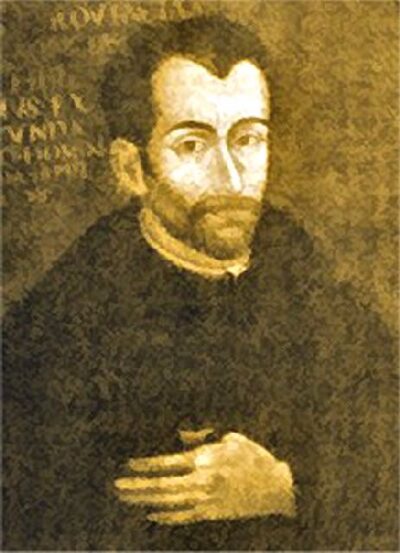
António de Andrade
António de Andrade was a Portuguese Jesuit priest, missionary, and explorer. Born 1580, in Oleiros. Died March 19, 1634, in Old Goa.
Facts
11 facts · 2 confirmed by two sources · 4 cited · 5 from one source
Where this comes from
Papalocal keeps its own record. It started from these sources; what each one said is kept here as it was copied, so a change on their side never changes this page by itself. Tap one to read its version.
What Wikidata says · copied November 18, 2026 · revision 2549160967
- Described as
- Portuguese Jesuit priest, missionary, and explorer (1580–1634)
- Other names
- Antonio de Andrade, António Andrade, Antonio Andrade, A. de Andrade, A. Andrade, Andrade, Andrada, Antonio Andrada, A. Andrada, De Andrade, De Andrada, A. de Andrada
- Born
- 1580 · 8 references
- Died
- March 19, 1634 · 2 references
- Born in
- Oleiros
- Died in
- Old Goa
- Citizen of
- Kingdom of Portugal
- Occupation
- Catholic priest · 1 reference; missionary · 1 reference; explorer; monk · 1 reference; Christian missionary · 1 reference
- Religion
- Catholic Church
- Wikipedias with a page
- 21
Wikidata item Q602090 (wikidata.org/wiki/Q602090), public domain (CC0). Copied November 18, 2026.
What Wikipedia says · copied November 18, 2026 · revision 1368557335
António de Andrade (Tibetan: ཨང་ཋོ་ནཱི་་དྷུ་་ཨང་དྷུ་ཝ་དྷུ།; 1580 – March 19, 1634), also known as António d'Andrade or Andrada, was a Jesuit priest and explorer from Portugal. He entered the Society of Jesus in 1596. From 1600 until his death in 1634, he was engaged in missionary activity in India. Andrade was the first known European to have crossed the Himalayas and reached Tibet, establishing the first Catholic mission on Tibetan soil.
- Born, in its opening lines
- 1580
- Died, in its opening lines
- March 19, 1634
From the Wikipedia article “António de Andrade” (en.wikipedia.org/wiki/António_de_Andrade), by its contributors, under CC BY-SA 4.0 (creativecommons.org/licenses/by-sa/4.0/). Copied November 18, 2026; not changed.
Confirmed Two sources agree. Cited One source, and it names where it got it. One source One source, without a reference of its own. Sources disagree The sources disagree. We show the best-supported value and keep theirs below.
