
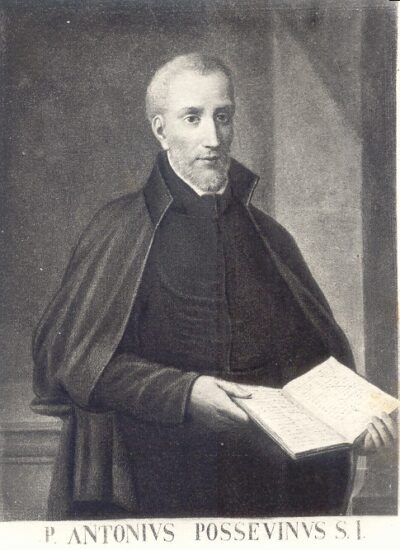
Antonio Possevino
Antonio Possevino was an Italian diplomat. Born July 10, 1533, in Mantua. Died February 26, 1611, in Ferrara. Known for Bibliotheca selecta.
Facts
12 facts · 2 confirmed by two sources · 7 cited · 3 from one source
Where this comes from
Papalocal keeps its own record. It started from these sources; what each one said is kept here as it was copied, so a change on their side never changes this page by itself. Tap one to read its version.
What Wikidata says · copied November 17, 2026 · revision 2564351764
- Described as
- Italian diplomat (1533–1611)
- Other names
- Antonius Possevinus
- Born
- July 10, 1533 · 1 reference
- Died
- February 26, 1611 · 4 references
- Born in
- Mantua · 2 references
- Died in
- Ferrara
- Citizen of
- Papal States
- Occupation
- diplomat · 1 reference; presbyter · 1 reference; university teacher · 1 reference
- Worked for
- University of Padua · 1 reference
- Known for
- Bibliotheca selecta
- Siblings
- Giovanni Battista Possevino · 1 reference
- Religion
- Catholicism · 1 reference
- Wikipedias with a page
- 26
Wikidata item Q548115 (wikidata.org/wiki/Q548115), public domain (CC0). Copied November 17, 2026.
What Wikipedia says · copied November 17, 2026 · revision 1377114637
Antonio Possevino (Latin: Antonius Possevinus; 10 July 1533 – 26 February 1611) was a Jesuit protagonist of Counter-Reformation, serving as a papal diplomat, Jesuit controversialist, polemicist, encyclopedist, and bibliographer. He was the first Jesuit to visit Russia, Sweden, Denmark, Livonia, Hungary, Pomerania, and Saxony in amply documented papal missions between 1578 and 1586 where he championed the enterprising policies of Pope Gregory XIII.
- Born, in its opening lines
- July 10, 1533
- Died, in its opening lines
- February 26, 1611
From the Wikipedia article “Antonio Possevino” (en.wikipedia.org/wiki/Antonio_Possevino), by its contributors, under CC BY-SA 4.0 (creativecommons.org/licenses/by-sa/4.0/). Copied November 17, 2026; not changed.
Confirmed Two sources agree. Cited One source, and it names where it got it. One source One source, without a reference of its own. Sources disagree The sources disagree. We show the best-supported value and keep theirs below.
