
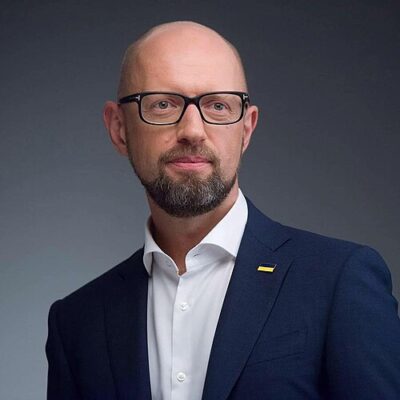
Arsenii Yatseniuk
Arsenii Yatseniuk is an Ukrainian lawyer, economist and politician. Born May 22, 1974, in Chernivtsi. Positions held include Prime Minister of Ukraine (2014–2016), Chairman of the Verkhovna Rada (2007–2008) and Ukrainian Minister of Foreign Affairs (2007). Educated at State University of Trade and Economics and Chernivtsi University. Awards include Order of Prince Yaroslav the Wise, Medal "For the Glory of Chernivtsi" and Order of Prince Yaroslav the Wise, 5th class.
Facts
35 facts · 1 confirmed by two sources · 4 cited · 30 from one source
Where this comes from
Papalocal keeps its own record. It started from these sources; what each one said is kept here as it was copied, so a change on their side never changes this page by itself. Tap one to read its version.
What Wikidata says · copied November 16, 2026 · revision 2569564032
- Described as
- Ukrainian lawyer, economist and politician
- Other names
- Arsenii Petrovych Yatseniuk, Arsenij Petrovyč Jacenjuk
- Born
- May 22, 1974 · 4 references
- Born in
- Chernivtsi · 1 reference
- Name at birth
- Арсеній Петрович Яценюк
- Citizen of
- Soviet Union; Ukraine; Vanuatu · 1 reference
- Occupation
- economist; politician · 1 reference; diplomat; lawyer; banker
- Positions held
- Prime Minister of Ukraine (2014–2016); Chairman of the Verkhovna Rada (2007–2008); Ukrainian Minister of Foreign Affairs (2007); People's Deputy of Ukraine (2007–2014) · 1 reference; Minister of Economy of Ukraine (2005–2006)
- Political party
- Batkivshchyna; Front for Change; People's Front
- Education
- State University of Trade and Economics (–2001); Chernivtsi University
- Member of
- 8th Verkhovna Rada; 7th Verkhovna Rada; 6th Verkhovna Rada
- Awards
- Order of Prince Yaroslav the Wise; Medal "For the Glory of Chernivtsi"; Order of Prince Yaroslav the Wise, 5th class · 1 reference; Order of Prince Yaroslav the Wise, 4th class · 1 reference
- Spouse
- Terezia Yatseniuk
- Father
- Petro Yatseniuk
- Mother
- Maria Yatseniuk
- Religion
- Ukrainian Greek Catholic Church
- Military branch
- Ukrainian Ground Forces
- Military rank
- captain
- Website
- http://yatsenyuk.org.ua
- Wikipedias with a page
- 62
Wikidata item Q471730 (wikidata.org/wiki/Q471730), public domain (CC0). Copied November 16, 2026.
What Wikipedia says · copied November 16, 2026 · revision 1379597649
Arseniy Petrovych Yatsenyuk (born 22 May 1974) is a Ukrainian politician, economist and lawyer who served two terms as Prime Minister of Ukraine – from 27 February 2014 to 27 November 2014 and from 27 November 2014 to 14 April 2016. He was the youngest foreign affairs minister in Ukraine's history.
Yatsenyuk's first government post was as minister of economy from 2005 to 2006; subsequently he was Foreign Minister of Ukraine in 2007 and Chairman of the Verkhovna Rada (parliament) from 2007 to 2008. Yatsenyuk was one of the leaders of Ukraine's second largest party All-Ukrainian Union "Fatherland", and former leader of its parliamentary faction. He became the prime minister of Ukraine following the 2014 revolution that removed Viktor Yanukovych from power. In September 2014, Yatsenyuk started the new party People's Front. On 16 February 2016, the president of Ukraine, Petro Poroshenko, asked Yatsenyuk to resign saying he had lost the support of the coalition and the same day, the Ukrainian parliament voted the cabinet's work unsatisfactory but rejected a call for a vote of no confidence. On 10 April 2016, Yatsenyuk announced that he would report to parliament on 12 April and resign as prime minister. On 14 April 2016, Yatsenyuk was replaced by new prime minister Volodymyr Groysman. As of December 2025, he is the Chairman of the Kyiv Security Forum and the founder of the Open Ukraine Foundation. He holds the diplomatic rank of extraordinary and plenipotentiary ambassador.
- Born, in its opening lines
- May 22, 1974
From the Wikipedia article “Arseniy Yatsenyuk” (en.wikipedia.org/wiki/Arseniy_Yatsenyuk), by its contributors, under CC BY-SA 4.0 (creativecommons.org/licenses/by-sa/4.0/). Copied November 16, 2026; not changed.
Confirmed Two sources agree. Cited One source, and it names where it got it. One source One source, without a reference of its own. Sources disagree The sources disagree. We show the best-supported value and keep theirs below.
