
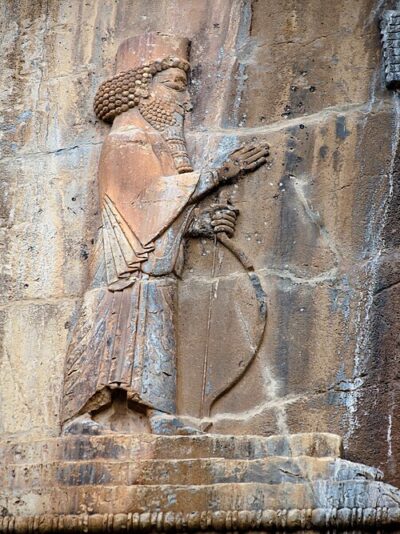
Artaxerxes III
Artaxerxes III was the 11th Achaemenid Emperor. Born 425 BC. Died August 338 BC, in Babylon. Positions held include pharaoh and King of Kings (–-338).
Facts
19 facts · 0 confirmed by two sources · 2 cited · 16 from one source · 1 where the sources disagree
What’s different
- Died: we show August 338 BC (Sources disagree). Wikidata also lists September 338 BC
Where this comes from
Papalocal keeps its own record. It started from these sources; what each one said is kept here as it was copied, so a change on their side never changes this page by itself. Tap one to read its version.
What Wikidata says · copied November 16, 2026 · revision 2566533264
- Described as
- 11th Achaemenid Emperor (358–338 BC)
- Other names
- Artaxerxes III Ochus
- Born
- 425 BC · 1 reference
- Died
- August 338 BC · 1 reference; September 338 BC · 1 reference
- Died in
- Babylon
- Buried in
- Persepolis
- Cause of death
- poison
- Citizen of
- Achaemenid Empire · 1 reference
- Occupation
- sovereign
- Positions held
- pharaoh; King of Kings (–-338) · 1 reference
- Spouse
- Atossa
- Children
- Arses; Parysatis II · 1 reference; Bisthanes
- Father
- Artaxerxes II · 1 reference
- Mother
- Stateira
- Siblings
- Arsames; Apama; Rhodogune; Atossa
- Wikipedias with a page
- 60
Wikidata item Q192867 (wikidata.org/wiki/Q192867), public domain (CC0). Copied November 16, 2026.
What Wikipedia says · copied November 16, 2026 · revision 1381273613
Ochus (Ancient Greek: Ὦχος Ochos), known by his dynastic name Artaxerxes III (Old Persian: 𐎠𐎼𐎫𐎧𐏁𐏂𐎠 Artaxšaçāʰ; Ancient Greek: Ἀρταξέρξης), was King of Kings of the Achaemenid Empire from 359/58 to 338 BC. He was the son and successor of Artaxerxes II and his mother was Stateira.
Before ascending the throne Artaxerxes was a satrap and commander of his father's army. Artaxerxes came to power after one of his brothers was executed, another committed suicide, the last murdered and his father, Artaxerxes II died. Soon after becoming king, Artaxerxes murdered all of the royal family to secure his place as king. He started two major campaigns against Egypt. The first campaign failed, and was followed up by rebellions throughout the western part of his empire. During the second invasion, Artaxerxes finally defeated Nectanebo II, the Pharaoh of Egypt, bringing the country back into the Persian fold after six decades.
In Artaxerxes's later years, Philip II of Macedon's power was increasing in Greece, where he tried to convince the Greeks to revolt against the Achaemenid Empire. His activities were opposed by Artaxerxes, and with his support, the city of Perinthus resisted a Macedonian siege.
There is evidence for a renewed building policy at Persepolis in his later life, where Artaxerxes erected a new palace and built his own tomb, and began long-term projects such as the Unfinished Gate. His assassination and the instability which followed put an end to any hopes of a Persian revival and the empire would soon after fall to the invading armies of Alexander the Great.
From the Wikipedia article “Artaxerxes III” (en.wikipedia.org/wiki/Artaxerxes_III), by its contributors, under CC BY-SA 4.0 (creativecommons.org/licenses/by-sa/4.0/). Copied November 16, 2026; not changed.
Confirmed Two sources agree. Cited One source, and it names where it got it. One source One source, without a reference of its own. Sources disagree The sources disagree. We show the best-supported value and keep theirs below.
